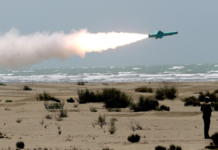
Tehran/Washington — Iranian state media claimed Monday that a US warship was struck by two missiles as it attempted to pass through the Strait of Hormuz, a charge the American military swiftly and categorically rejected. The allegation, carried by Fars News Agency — a outlet affiliated with the Islamic Revolutionary Guard Corps — added a volatile new dimension to an already combustible standoff between the two countries.
Iran Hormuz Tensions — According to the Iranian account, the unnamed vessel was forced to withdraw from waters near the port of Jask and flee the area following the alleged strike. The US military issued a denial via social media, offering no further elaboration. Neither side has provided independent verification of events in the strait.
The claim emerged just one day after US President Donald Trump announced that American forces would ‘guide’ commercial vessels through the Strait of Hormuz — a declaration that drew an immediate and pointed response from Iranian military leadership. Major General Ali Abdollahi warned that any US forces entering the strait would face attack, framing the passage as a red line for Iranian defence forces.
Recommended Reading
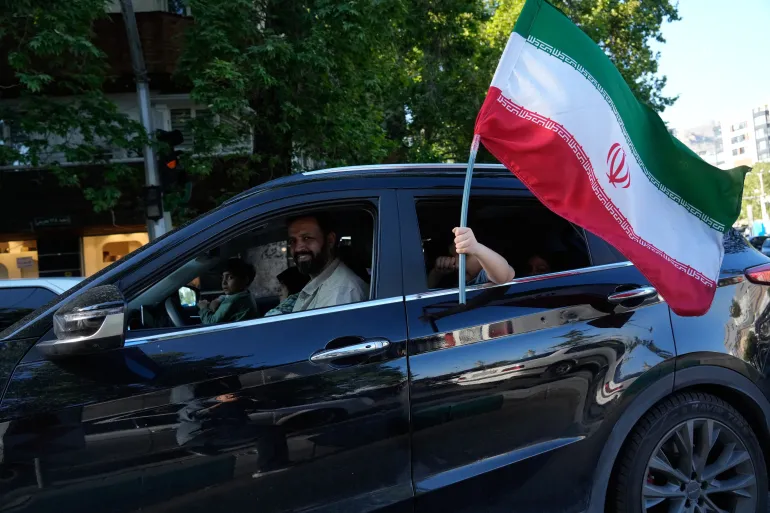
The standoff is unfolding against the backdrop of a war that Iranian authorities say began on February 28, with a ceasefire suspending large-scale hostilities roughly one month ago. Despite that pause in fighting, diplomatic progress remains elusive. The Iranian Ministry of Foreign Affairs confirmed Monday that Tehran is reviewing the latest proposal from Washington, relayed through Pakistan. Ministry spokesman Esmaeil Baghaei made clear, however, that Iran’s negotiating position remains unyielding: the country will discuss ‘nothing except for the full end to the war at this stage.’
While diplomats exchange texts through intermediaries, Iran’s military establishment is working to rebuild its degraded capabilities. Authorities are reportedly digging out bombed entrances to underground bases in an effort to reconstitute missile and drone stockpiles — a sign that Tehran is preparing for the possibility that negotiations collapse entirely.
Inside Iran, the government has imposed a near-total internet blackout that has now lasted more than 1,550 hours — well over ten consecutive weeks — cutting off more than 90 million people from the global internet. Officials have cited ‘security considerations’ as justification, though the shutdown has drawn widespread condemnation and severely restricted the flow of independent information from within the country.
Amid the information vacuum, the Iranian government has been aggressively promoting the Jan Fadaa campaign, a state-backed mobilisation drive whose name translates roughly to ‘sacrifice of life.’ Volunteers register through a government website using only a phone number, pledging readiness to sacrifice themselves for the cause. A text message attributed to Supreme Leader Mojtaba Khamenei described the campaign as ‘one of the key impactful elements in negotiations with the enemy,’ while Judiciary Chief Gholam-Hossein Mohseni-Ejei called it ‘historic.’
Official figures claim Jan Fadaa has attracted more than 31 million active members — just over a third of Iran’s total population. Newly designated campaign spokesman Sasan Zare stated this week that more than 60 percent of registered members are women, and that a majority fall between the ages of 20 and 45.
Iran Hormuz Tensions: Regional Implications
Those figures face serious scrutiny. Ali Sharifi Zarchi, a former academic turned dissident, analysed exposed code from the campaign’s website and concluded that fewer than four million people had actually registered — a fraction of the government’s claimed total. Critics also noted that major events, including the start of the ceasefire on April 8, produced no measurable spike in registration numbers, undermining the narrative of a spontaneous groundswell of popular support.
The atmosphere on the streets of Tehran and other major cities remains tense. Armed, state-backed motorcades continue to patrol urban areas at night, a visible reminder of the security apparatus’s grip on public space. The government’s hold has been maintained at considerable cost: thousands of people were killed during nationwide protests in January, according to available accounts.
The Strait of Hormuz, through which a significant share of the world’s seaborne oil passes, sits at the centre of the crisis. Any sustained military confrontation in those waters would carry severe consequences for global energy markets and regional stability. With ceasefire talks stalled, missile capabilities being rebuilt, and competing claims of naval confrontation now circulating, the risk of miscalculation — or deliberate escalation — appears to be growing by the day.