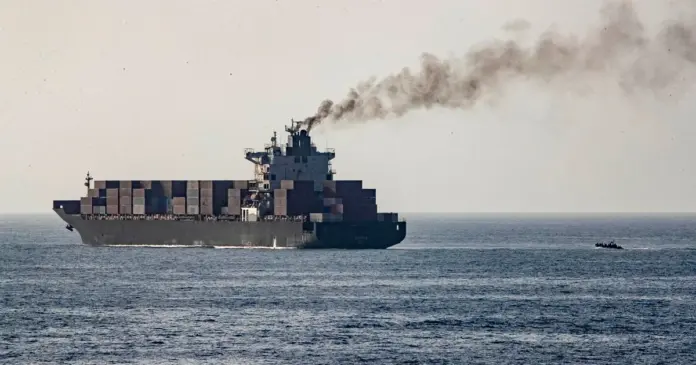
Iran Hormuz Tensions — Twenty-two Iranian sailors from the seized container ship MV Touska arrived in Pakistan on Sunday night and were handed over to Iranian authorities the following day, in a carefully coordinated repatriation that underscores the fragile diplomatic equilibrium now governing one of the world’s most strategically vital waterways.
Pakistan’s Ministry of Foreign Affairs announced the crew transfer on Monday, confirming that US Central Command (CENTCOM) played a direct role in facilitating the handover. CENTCOM spokesperson Captain Tim Hawkins confirmed the transfer of all 22 crew members, marking a significant, if cautious, step toward de-escalation following weeks of naval confrontation in the Gulf of Oman.
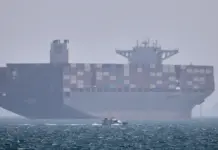
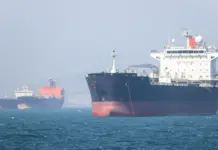
The MV Touska, a vessel belonging to the Islamic Republic of Iran Shipping Lines (IRISL) group — a conglomerate long targeted by US sanctions — was boarded and seized by American forces on April 19 off the coast of Iran’s Chabahar port in the Gulf of Oman. CENTCOM stated the ship’s crew failed to comply with repeated warnings issued over a six-hour period, citing the vessel’s non-compliance with a US blockade on Iranian ports as justification for the seizure.
Recommended Reading
Iran swiftly condemned the action as unlawful and a flagrant violation of international law, demanding the immediate release of the vessel, its sailors, and their families. Six additional passengers — identified as family members of several crew members — had been transferred to a regional country for repatriation the week prior to the main crew handover, a detail first disclosed by Iranian state media.
The MV Touska itself is expected to be brought into Pakistani territorial waters for repairs before being returned to its original owners, a logistical arrangement that further cements Islamabad’s role as a neutral intermediary in the broader US-Iran standoff.
That role is not incidental. Pakistan brokered the ceasefire that ended a US-Israeli military campaign against Iran, a conflict that erupted in February and ground to a fragile halt roughly four weeks ago. Despite that agreement, naval confrontations and the seizure of commercial vessels have continued, casting doubt on the durability of the truce and raising alarm among shipping operators dependent on the Gulf of Oman and the Strait of Hormuz — through which roughly a fifth of the world’s oil supply transits.
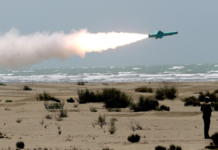
Iran’s military sharpened those concerns on Monday, warning it would attack US forces if they attempted to approach or enter the Strait of Hormuz. The threat came on the same day as the crew handover, illustrating the contradictory currents of tactical cooperation and strategic hostility that now define the relationship between Washington and Tehran.
Iran Hormuz Tensions: Regional Implications
US President Donald Trump has announced a naval initiative dubbed Project Freedom, described as a mission to escort stranded commercial vessels out of the Strait of Hormuz. The announcement has drawn no public endorsement from Iran, and Tehran’s Monday warning appears to be a direct response to the initiative’s stated objectives.
The IRISL group, to which the MV Touska belongs, has been subject to successive rounds of US sanctions designed to curtail Iran’s ability to conduct international trade and generate revenue for its military programs. Washington has long argued that vessels operating under the IRISL umbrella are instruments of sanctions evasion and state-directed commerce that funds Iran’s nuclear and ballistic missile activities — charges Tehran consistently rejects.
The crew transfer, while humanitarian in nature, carries broader diplomatic weight. Pakistan’s willingness to serve as both ceasefire mediator and repatriation conduit positions Islamabad as an indispensable back-channel between two powers with no formal diplomatic relations and a history of near-direct military confrontation. For the 22 sailors now en route home, the ordeal that began with a six-hour standoff in the Gulf of Oman has ended — but the geopolitical contest that ensnared them shows little sign of resolution.