Motorcycle-riding gunmen attacked a group of Hazara Shia Muslims gathered at a shrine and picnic area in the Enjil district of Herat province, western Afghanistan, on Friday afternoon, killing at least seven people and wounding more than a dozen others in an assault that drew immediate condemnation and raised fresh fears for the country’s most persecuted minority.
The attack unfolded at approximately 15:00 local time near the village of Deh Mehri, a predominantly Shiite community home to a revered shrine that draws daily visitors. Fridays typically see the area crowded with families and worshippers seeking leisure and religious observance — a pattern the attackers appeared to exploit.
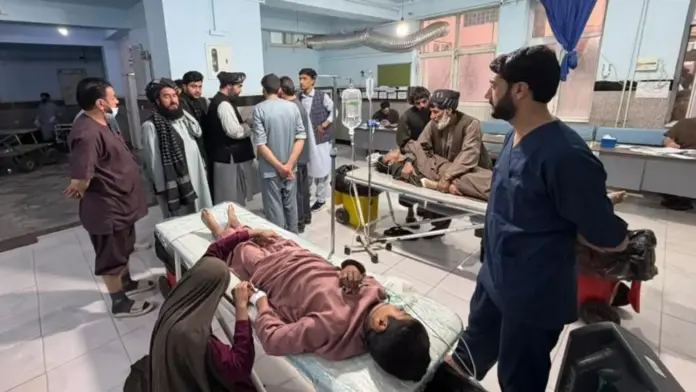
Casualty figures diverged sharply across official and medical accounts. Abdul Mateen Qani, the Taliban interior ministry’s spokesperson, posted on X that seven people had been killed and 13 others wounded. Ahmadullah Muttaqi, the provincial head of information and culture for the Taliban government in Herat, reported that four bodies and 15 wounded individuals — including two women — had been transported to Herat regional hospital, with some of the injured in critical condition. A doctor at the hospital offered a significantly higher toll, stating that 12 people had been killed and 12 more injured, and confirmed that the victims were Hazara Shia Muslims who had travelled to the local shrine for a picnic.
Security forces arrested one suspect in connection with the assault. No armed group had claimed responsibility at the time of reporting.
The attack struck at the heart of a community that has endured decades of systematic targeting. Hazara Shia Muslims constitute a minority in Afghanistan and have historically faced discrimination and violence from multiple armed factions. Since the Taliban’s return to power in 2021, the Islamic State Khorasan Province — the Afghan affiliate of the Islamic State — has carried out numerous mass-casualty bombings against Shia mosques, schools, and public gatherings, though responsibility for Friday’s shooting had not been attributed to any specific organisation.
The choice of location underscored the vulnerability of Hazara communities even in spaces of daily life and religious devotion. The Deh Mehri shrine is visited by worshippers throughout the week, and the surrounding recreational area is a customary gathering point on the Islamic day of rest. Witnesses and medical personnel described scenes of panic as gunfire erupted among families who had assembled for an afternoon of leisure.
The divergence in official casualty figures — ranging from four dead according to one provincial source to 12 dead according to hospital staff — reflects a pattern of inconsistent reporting that has complicated efforts to document violence against minority communities in Afghanistan. The Taliban government’s interior ministry figure of seven killed sits between these two accounts, and the true toll may not be fully established for some time given the critical condition of several of the wounded.
Herat province has been the site of repeated sectarian attacks in recent years. The province’s western location and its significant Shia population have made it a recurring flashpoint, and Friday’s assault adds to a grim catalogue of violence targeting civilians at moments of communal gathering — shrines, markets, schools, and now picnic grounds.
The arrest of a suspect offers investigators a potential lead, but the absence of any claim of responsibility leaves the motive and organisational backing of the attack unresolved. Afghan and international human rights organisations have repeatedly called for greater protections for Hazara Shia communities, warnings that have gone largely unheeded amid the broader collapse of civil institutions following the Taliban takeover.