A month into the war between the United States, Israel, and Iran, the closure of the Strait of Hormuz and widespread attacks on Gulf oil and gas facilities are pushing some of the world’s most vulnerable economies toward an energy catastrophe. From Karachi to Cairo, governments are scrambling to ration dwindling fuel reserves while populations brace for price shocks that threaten to deepen existing economic crises.
The disruption has fallen hardest on nations with deep structural dependence on Gulf energy imports. Bangladesh, which sources approximately 95 percent of its oil from the region, faces the most acute timeline — fuel reserves in some districts have already run dry despite rationing measures, with national stockpiles projected to be exhausted within days. Pakistan, which imports roughly 80 percent of its energy from the Gulf, is weeks away from depleting its petrol and diesel reserves. Authorities in Islamabad have closed schools, introduced a four-day working week for government offices, and ordered half of all public sector employees to work from home in an effort to slow consumption.
The Pakistani government approved a 55 rupee — approximately 20 US cents — increase in the price of a litre of petrol and diesel earlier in March. Prime Minister Shehbaz Sharif nonetheless held back a further proposed price hike ahead of Eid Al-Fitr, a decision that reflects the acute political sensitivity of fuel costs for a population already under severe economic strain. Pakistan’s wheat harvest, scheduled to begin in April, adds urgency to the situation: agricultural machinery and transport logistics depend heavily on diesel supplies that are now in critical shortage.
"The combination of import dependency and limited foreign exchange reserves leaves countries like Pakistan with almost no buffer," said Khalid Waleed, a research fellow at the Sustainable Development Policy Institute in Islamabad. The country’s exposure illustrates a broader pattern across the Global South, where energy import dependency has transformed a geopolitical conflict thousands of kilometres away into a domestic emergency.
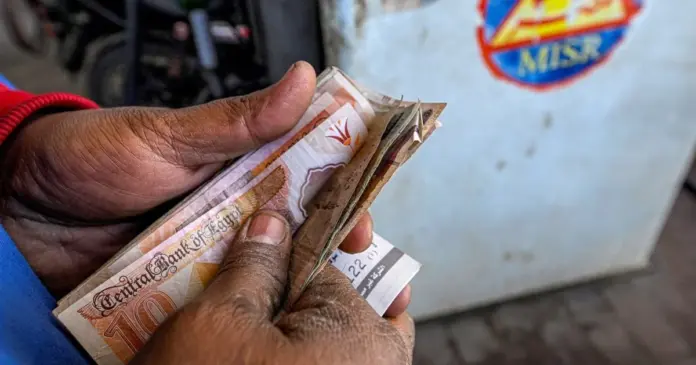
Sri Lanka, still recovering from its 2022 economic collapse, imports around 60 percent of its energy needs. The government has declared every Wednesday a public holiday and introduced a mandatory fuel pass system for vehicle owners as stockpiles are projected to run dry within weeks. In Egypt, authorities ordered malls, shops, and cafes to close by 9pm on weekdays and 10pm on weekends, and cut back on public lighting to reduce electricity demand. Egyptian officials announced price increases of between 15 and 22 percent for petrol, diesel, and cooking gas on March 10 — a politically fraught move in a country where fuel subsidies have long been a social contract between the state and its citizens.
The Centre for Global Development has identified Pakistan, Bangladesh, Sri Lanka, Jordan, Senegal, Egypt, Angola, Ethiopia, and Zambia as among the countries most exposed to the crisis. The list spans three continents and encompasses nations at varying stages of economic development, but all share a common vulnerability: limited capacity to absorb sustained energy price shocks without triggering broader social and fiscal instability.
Currency pressures are compounding the problem. Indonesia and the Philippines were already experiencing currency weakness to near record lows before the conflict began, meaning that dollar-denominated energy imports have become even more expensive in local currency terms. The dynamic risks creating a feedback loop in which weakening currencies drive higher import costs, which in turn accelerate inflation and further erode purchasing power.
S Akbar Zaidi, executive director of the Institute of Business Administration in Karachi, has pointed to the structural fragility that makes these economies so exposed. Meanwhile, Yeah Kim Leng, a professor of economics at the Jeffrey Cheah Institute on Southeast Asia at Sunway University in Kuala Lumpur, has highlighted the particular danger for Southeast Asian nations whose pre-existing currency vulnerabilities leave them with diminished capacity to manage the external shock.
With the US-Israeli war against Iran now approximately one month old and no clear timetable for its conclusion, the prospect of a prolonged Strait of Hormuz closure is forcing governments across the developing world to confront decisions that carry both economic and political consequences. Emergency conservation measures can slow the depletion of reserves, but they cannot substitute for the fuel itself. As stockpiles shrink, the margin for policy error narrows — and the human cost of miscalculation grows.