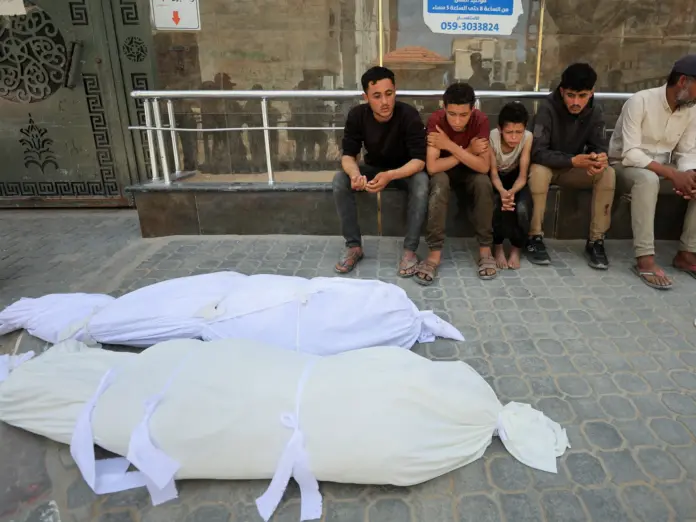
A drone strike, a water convoy ambush, and a child shot dead in the street — violence has continued to tear through Palestinian communities in Gaza and the West Bank, exposing the fragility of a ceasefire that Gaza’s Government Media Office says Israel has violated 2,400 times since the truce took effect in October.
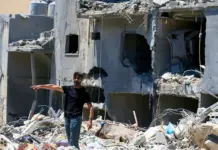
In northern Gaza, brothers Abdelmalek and Abdel Sattar al-Attar were killed Thursday when an Israeli drone struck Beit Lahiya — an area witnesses described as lying outside the zone under Israeli control under the terms of the ceasefire agreement. Hours later, a separate drone strike hit a water desalination facility in the Shujayea neighbourhood east of Gaza City, killing one Palestinian and wounding several others.
On Friday, two more brothers died on Mansoura Street in Shujayea. Mohammed and Eid Abu Warda were shot dead by Israeli forces while transporting water by vehicle. A third brother sustained moderate injuries in the same incident. The targeting of civilians engaged in basic survival tasks — securing water amid a prolonged blockade — drew immediate condemnation from Palestinian civil society groups.
Elsewhere, nine-year-old Saleh Badawi was shot and killed by Israeli forces in the Zeitoun neighbourhood east of Gaza City. In the south, Mohsen al-Dabbari, 38, was killed by Israeli fire near Khan Younis. Three additional Palestinians were wounded when Israeli forces opened fire toward homes and tents sheltering displaced families east of the Maghazi refugee camp.
The cumulative toll since the ceasefire began stands at at least 765 Palestinians killed, with at least 32 of those deaths recorded since the start of April alone. Israel’s war on Gaza, which began in October 2023, has now killed more than 72,340 people, according to the Gaza Ministry of Health. Among the recent victims was Al Jazeera journalist Mohammed Wishah, killed in a drone strike west of Gaza City on April 8.
The scale of harm inflicted on women and children has drawn particular alarm from international bodies. UN Women reported that an average of at least 47 women and girls were killed every day during the conflict, with more than 38,000 women and girls killed between October 2023 and December 2025. Sofia Calltorp, the organisation’s head of humanitarian action, noted that women and girls accounted for a proportion of deaths far exceeding that seen in previous Gaza conflicts — a finding she described as deeply troubling.
Violence has not been confined to Gaza. In the southern West Bank, Israeli settlers launched a predawn attack Friday on Palestinian homes in the Majd al-Ba’a area west of Yatta, south of Hebron. The assault, originating from the illegal settlement of Otniel, included the torching of two vehicles belonging to brothers Khaled and Yasser Abu Ali.
Simultaneously, Israeli military forces conducted sweeping arrest operations across the West Bank. Soldiers stormed ar-Ram, a town north of Jerusalem, breaking into homes and detaining Palestinians. In Nablus, troops ransacked houses and detained approximately a dozen people. Under Israeli military law, such raids require no search warrant.
The detention figures paint a stark picture of mass incarceration. According to Addameer, the Palestinian prisoner support and human rights association, 9,600 Palestinian political prisoners are currently held in Israeli prisons and detention centres. Among them are 342 children and 84 women. A total of 3,532 prisoners are held under administrative detention — a mechanism that allows indefinite imprisonment without charge or trial, based on undisclosed evidence, renewed in intervals of three to six months.
Critics of the ceasefire framework argue the violations catalogue — encompassing killings, arrests, blockades, and what Gaza’s Government Media Office characterises as deliberate starvation policies — renders the truce effectively meaningless on the ground. With international diplomatic efforts stalled and humanitarian conditions deteriorating, the gap between the ceasefire’s stated terms and the lived reality for Palestinians in both Gaza and the West Bank continues to widen.