Myanmar Rebel Explosion — An explosion at an explosives depot tore through a residential village in northeast Myanmar on Sunday, killing at least 46 people — including six children — and wounding more than 70 others in one of the deadliest such incidents in the conflict-ridden country in recent years.
The blast struck the village of Kaung Tat in Namkham Township, Shan State, at approximately 12:30pm local time (05:50 GMT). The area sits close to the border with China and is under the control of the Ta’ang National Liberation Army (TNLA), one of Myanmar’s most powerful ethnic armed groups. Some casualty estimates placed the death toll higher, with one rescue worker citing 55 fatalities, including 25 women and 30 men.
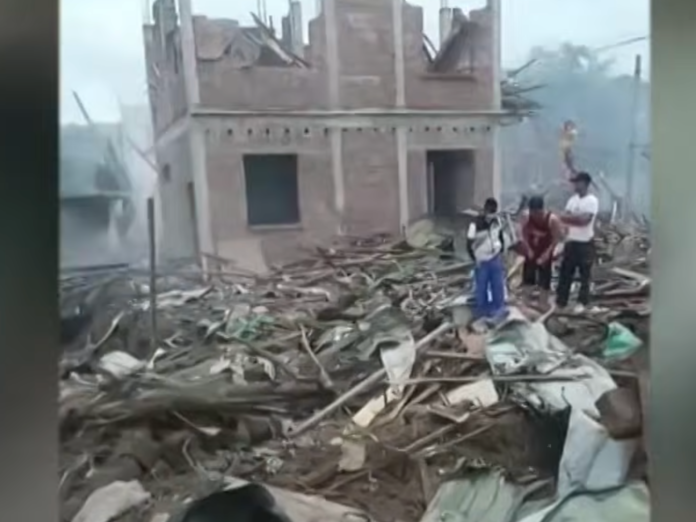
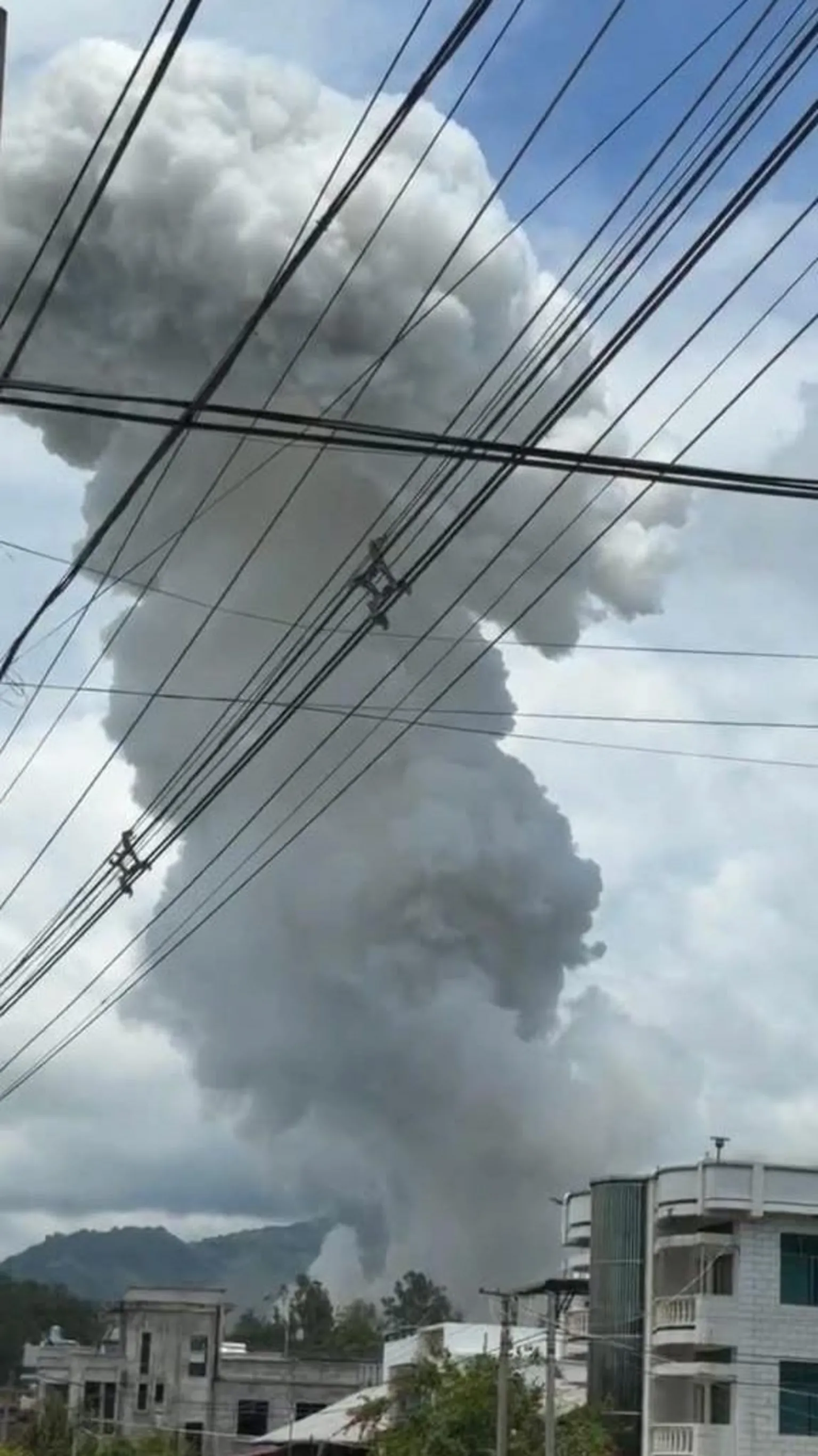
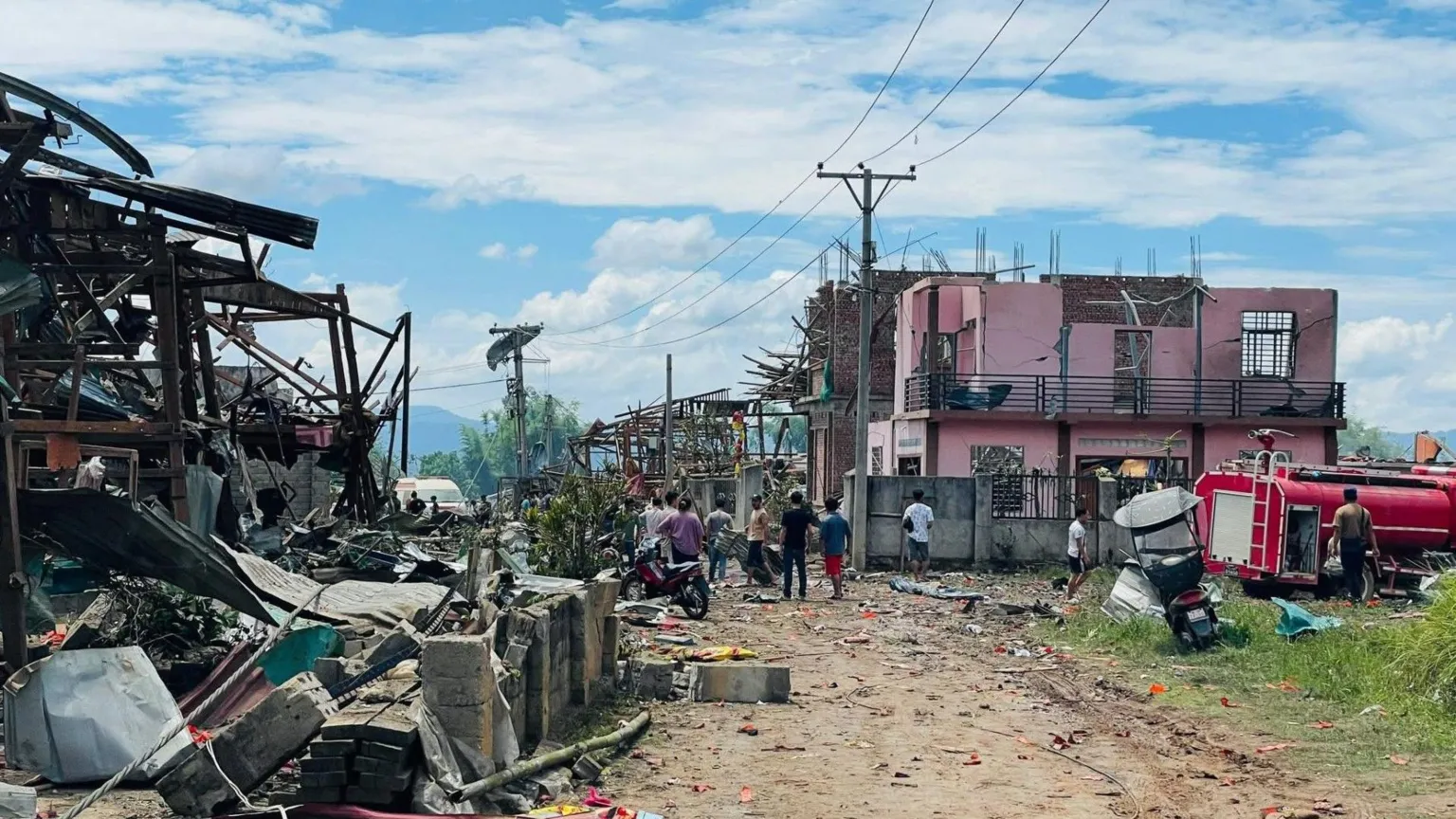
The force of the detonation was catastrophic. Video footage captured an enormous plume of smoke billowing above the village, followed by a series of secondary explosions. Several buildings were completely destroyed, hundreds of homes were damaged, and almost an entire neighbourhood was reduced to rubble. Rescue teams worked through the afternoon and into the evening, pulling survivors from beneath collapsed structures as operations remained ongoing.
Recommended Reading
The TNLA acknowledged the explosion in a statement posted to Facebook on Sunday, saying the stored materials were explosives used in local mining and quarrying operations. The region is well known for its ruby-rich mines, and the use of industrial explosives in extraction work is common in the area. The group said an investigation into the precise cause of the blast had been launched and pledged that those found responsible would be held accountable.
Scenes of devastation and confusion followed the explosion. At least one resident, who suffered a minor leg injury, described returning to find their home completely destroyed. The blast was so powerful that some residents initially believed the village had been struck by a military air strike — a fear that reflects the grim reality of life in a region that has seen sustained armed conflict. One survivor publicly questioned why a facility storing large quantities of explosives had been permitted to operate in such close proximity to residential homes.
The TNLA is the armed wing of the Palaung Self Liberation Front and one of three ethnic armed organisations that form the Three Brotherhood Alliance, a coalition that has been waging an armed rebellion against Myanmar’s military government. The junta seized power in a coup in February 2021, ousting the elected civilian government and triggering a nationwide resistance movement. The TNLA has fought for decades for greater autonomy for the Palaung people from central government authority, and the group now administers significant territory in Shan State.
The explosion adds a new dimension of tragedy to a region already scarred by years of conflict. While the blast appears to have been accidental rather than the result of combat, it underscores the dangers posed by the proliferation of military-grade and industrial explosives in areas where armed groups exercise administrative control with limited regulatory oversight.
Myanmar Rebel Explosion: The Conflict in Context
Myanmar, formerly known as Burma, has experienced near-continuous internal conflict since independence, but the 2021 coup dramatically escalated hostilities across the country. Shan State, which borders China, Thailand, and Laos, has long been one of the most contested regions, home to multiple ethnic armed organisations, a thriving illicit economy, and some of the world’s most valuable gemstone deposits.
The full death toll from Sunday’s explosion may rise further as rescue operations continue and the extent of the damage becomes clearer.