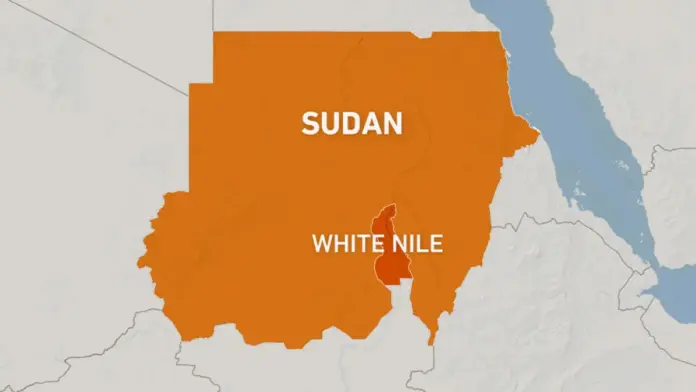
A drone strike on Al Jabalain Hospital in Sudan’s White Nile State killed ten people on Thursday, seven of them medical workers, as a children’s immunisation campaign was underway inside the facility. Two successive strikes struck the hospital’s operating theatre and maternity ward, reducing critical medical infrastructure to rubble and leaving communities in one of Sudan’s most vulnerable regions without essential care.
Médecins Sans Frontières (MSF) denounced the attack on Friday, confirming the death toll and noting that several of the slain medical staff had previously worked alongside the organisation. MSF head of emergencies for Sudan, Esperanza Santos, and the organisation attributed the assault to the Rapid Support Forces (RSF), the paramilitary group locked in a devastating civil war with the Sudanese army since April 2023.
The violence did not end at Al Jabalain. A separate strike on the same day targeted a medical supply depot in Rabak, the provincial capital of White Nile, compounding the destruction to the region’s already fragile health network. The Sudan Doctors Network characterised the hospital attack as a ‘deliberate assault on health facilities and unarmed civilians,’ warning that it further accelerates the collapse of the country’s deteriorating medical sector.
Sudan’s minister of culture, information, antiquities and tourism, Khalid Aleisir, condemned the strikes on Friday and called for the RSF to be formally designated a terrorist organisation, with its members prosecuted for war crimes. Aleisir also accused unnamed regional backers of supplying the RSF with military and logistical support, including advanced weaponry and unmanned aerial systems — the very technology used in Thursday’s assault.
The Al Jabalain attack is not an isolated incident. Emergency Lawyers, a Sudanese legal advocacy group, has documented a recurring pattern of drone strikes by warring parties since March, spanning South Kordofan, Blue Nile, and multiple Darfur provinces. The World Health Organization reported in March that more than 200 attacks have targeted healthcare facilities across Sudan since the war began — a figure that underscores the systematic nature of the violence against medical infrastructure.
Just last month, a strike on a hospital in Sudan’s western Darfur region killed 70 people, at least 13 of them children. That attack, like Thursday’s, drew international outrage but no meaningful accountability. The cumulative toll on Sudan’s health system has been catastrophic, with hospitals, clinics, and supply chains repeatedly struck in a conflict that has already displaced millions and triggered one of the world’s worst humanitarian crises.
The targeting of Al Jabalain Hospital during an active immunisation campaign for children amplifies the gravity of Thursday’s strike. Medical facilities are protected under international humanitarian law, and attacks on them — particularly when clearly marked and engaged in civilian health activities — constitute potential war crimes. The RSF has not publicly commented on the incident.
Sudan’s civil war, now entering its second year, has pitted the national army against the RSF in a conflict that has ravaged cities, displaced an estimated eight to nine million people, and left large swaths of the country without functioning governance or services. White Nile State, once considered relatively stable, has increasingly become a theatre of violence as the conflict spreads beyond its original epicentres in Khartoum and Darfur.
With medical staff now among the primary casualties of drone warfare, aid organisations warn that the destruction of healthcare capacity will outlast any eventual ceasefire, leaving generations of Sudanese without the infrastructure needed to recover from the war’s physical and psychological wounds.