BAMAKO, Mali — Explosions and sustained gunfire shook Mali’s capital and multiple cities across the country in the early hours of Saturday, April 25, 2026, as gunmen carried out what appeared to be a large-scale, coordinated assault targeting military installations and strategic positions simultaneously.
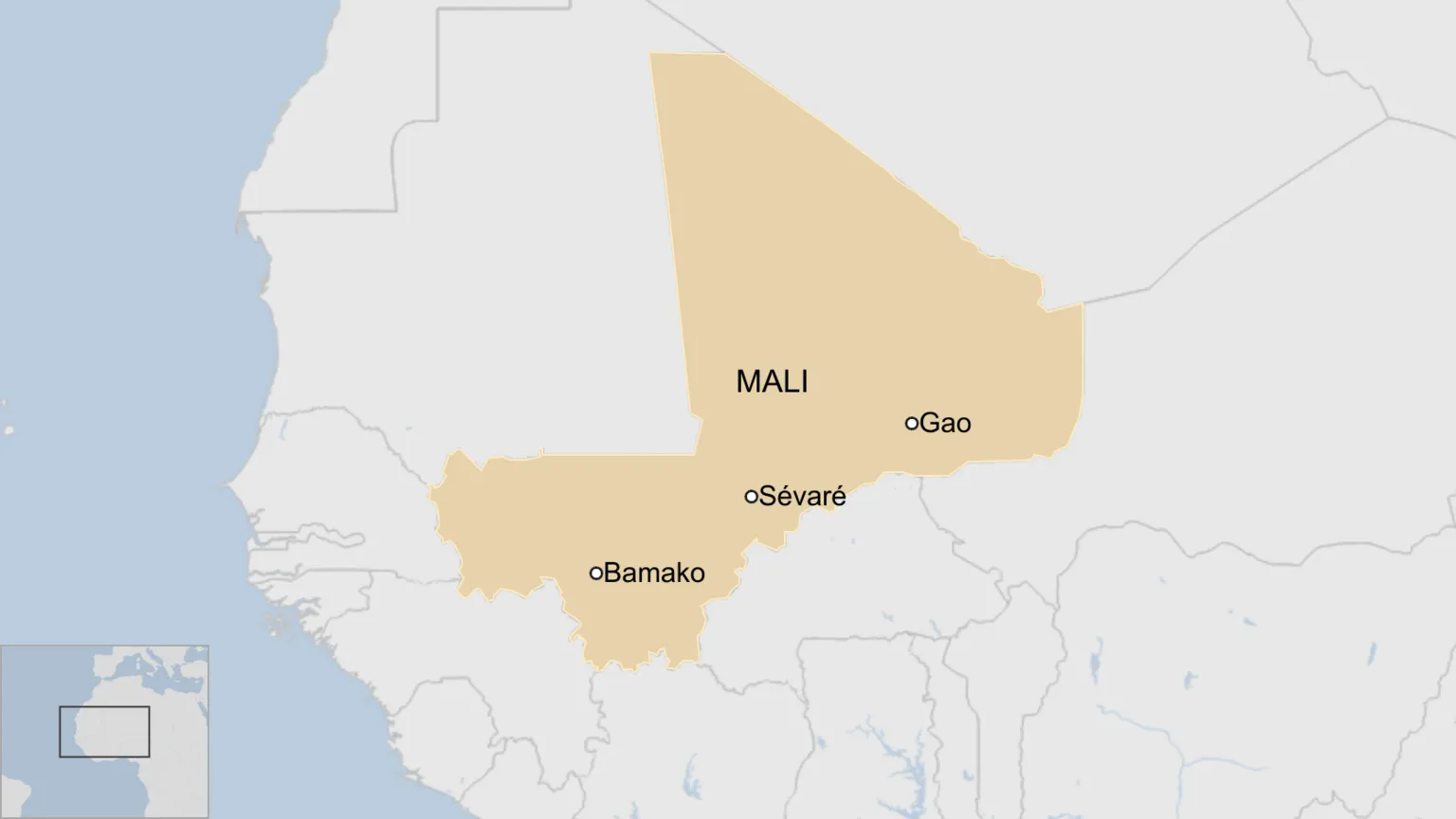
Two loud blasts and prolonged automatic rifle fire erupted shortly before 6:00 a.m. GMT near Kati, Mali’s main military base located on the outskirts of Bamako and the home of military ruler General Assimi Goita. Heavy weapons fire and gunfire were also reported near Modibo Keita International Airport, roughly 15 kilometres from the city centre, prompting the United States embassy to advise all American citizens to shelter in place and avoid travel to those areas.
Witnesses reported soldiers deploying to block roads throughout the capital, while a helicopter patrolled surrounding neighbourhoods. Gunfire was heard near a military camp close to the airport where Russian mercenary forces are stationed.
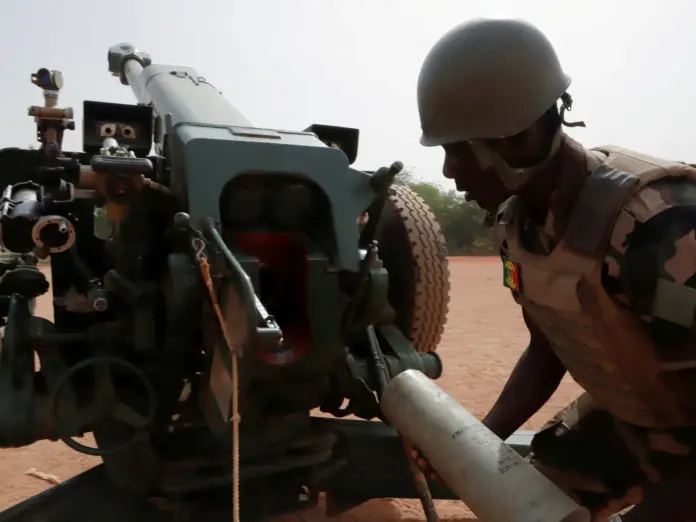
![A Malian soldier stands in position with his weapon during an attack on Mali's main military base Kati outside the capital Bamako, Mali, on April 25, 2026 [Stringer/Reuters]](https://world-tension.s3.us-east-2.amazonaws.com/articles/598/632ae69b8a37405f90cb0fdede73d619.webp)
The violence was not confined to Bamako. Near-simultaneous unrest erupted in the central town of Sevare and in the northern cities of Kidal and Gao, suggesting a level of operational coordination across vast distances. Mohamed Elmaouloud Ramadane, a spokesperson for the Azawad Liberation Front — a Tuareg-dominated rebel alliance — claimed on social media that its forces had seized multiple positions in Kidal and Gao, though those claims could not be independently verified.
The Malian army issued a statement confirming that unidentified armed terrorist groups had targeted certain locations and barracks in the capital and the interior early that morning. It said defence and security forces were actively engaged in repelling the attackers and called on the population to remain calm and vigilant.
The assault arrives at a moment of acute vulnerability for the Malian state. Jama’at Nusrat al-Islam wal-Muslimin, known as JNIM — the Sahel affiliate of al-Qaeda and the most active armed group in the region according to conflict monitor ACLED — has waged an intensifying campaign against the government since at least September 2025. JNIM fighters attacked fuel tanker convoys and sealed off major highways used to transport fuel from neighbouring Senegal and Ivory Coast, triggering a severe fuel crisis that peaked in October 2025. For weeks, most Bamako residents were unable to purchase fuel for cars or motorcycles. As recently as March 2026, diesel shortages persisted in the capital, with available supplies prioritised for the energy sector.
Mali has endured more than a decade of armed conflict involving West African affiliates of both al-Qaeda and ISIL (ISIS), as well as a long history of Tuareg-led rebellion in the country’s vast north. That instability provided the backdrop for two military coups — in August 2020 and May 2021 — that brought Goita to power. He first seized control during a wave of mass antigovernment protests before staging a second coup that removed the civilian president and installed himself as leader. In July of the previous year, military authorities formalised his grip on power by granting him a five-year presidential mandate renewable an unlimited number of times without an election. A pledge to return to civilian rule by March 2024 was never honoured.
Following the coups, Bamako severed ties with France and expelled French forces, subsequently expelling United Nations peacekeeping missions as well. The military government turned instead to Russia’s Wagner Group, which began supporting Malian forces against armed groups in 2021. Wagner has since been reorganised as the Africa Corps, now operating under direct control of the Russian Ministry of Defence. Russian mercenary personnel remain present at the military camp near Bamako’s airport.
Mali is one of three Sahel nations — alongside Burkina Faso and Niger — governed by military juntas backed by Russian mercenaries. The three countries formalised their alignment in 2023 by establishing the Alliance of Sahel States (AES) and created a joint military battalion intended to combat armed groups across the region. Despite those efforts, jihadist and rebel activity has continued to expand.
Mali’s considerable reserves of gold and other valuable minerals have long made it a prize contested by both state and non-state actors, adding an economic dimension to a conflict that shows no sign of abating. As of Saturday morning, fighting was still ongoing, the army said.