
A forensic investigation using mobile phone tracking data has placed Colombian mercenaries at the heart of the Rapid Support Forces’ brutal campaign in Sudan, including during the capture of el-Fasher — a city whose fall the International Criminal Court has assessed as involving war crimes and crimes against humanity.
The Conflict Insights Group (CIG), led by director Justin Lynch, tracked more than 50 mobile devices between January and April 2025, piecing together a trail that stretches from South America to the United Arab Emirates and deep into Sudan’s most devastated war zones. The findings present the most detailed evidence yet of foreign fighter involvement in a conflict that has killed tens of thousands and displaced millions.
The digital trail begins in Colombia. One tracked phone travelled from Colombia to Abu Dhabi’s Zayed International Airport before moving to a UAE military training facility in Ghayathi, in Abu Dhabi’s western region. Four devices configured to Spanish were identified at that facility. Two subsequently travelled to Sudan’s South Darfur state, with one arriving in Nyala — the de-facto capital of RSF-controlled territory.
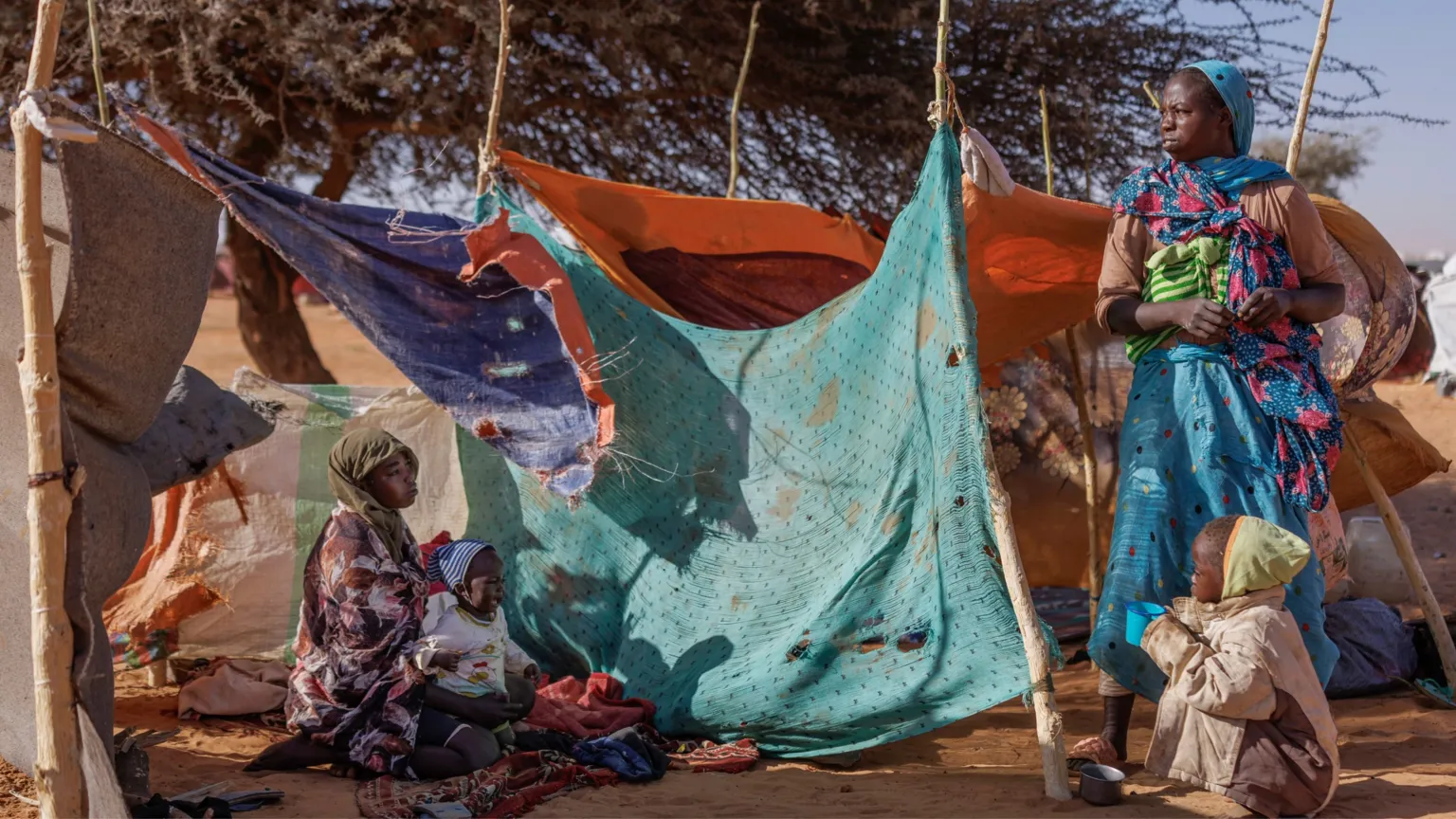
In Nyala, investigators identified more than 40 Spanish-language devices. Wi-fi networks bearing the names ‘ANTIAEREO’ and ‘AirDefense’ — Spanish and English military terminology for anti-aircraft operations — were detected in the city, suggesting an organised, operationally active foreign contingent embedded within RSF structures.
The most damning data point concerns el-Fasher itself. A tracked phone travelled from Colombia to Nyala and then onward to el-Fasher during October, precisely when the RSF completed its takeover of the city after an 18-month siege. A wi-fi network named ‘ATACADOR’ — Spanish for ‘attacker’ — was active in el-Fasher during the RSF’s seizure of the city. UN investigators have described the atrocities committed there as bearing the hallmarks of genocide.
The Colombian fighters operated under the banner of the Desert Wolves brigade, fulfilling roles as drone pilots, artillerymen and military instructors. The unit is led by retired Colombian army Colonel Alvaro Quijano, who is based in the UAE and has been sanctioned by both the United States and United Kingdom governments. The brigade was paid and employed by a UAE-based company with documented ties to senior Emirati government officials.
Wi-fi networks named ‘DRONES’ and ‘LOBOS DEL DISIERTO’ — a phonetic rendering of ‘Desert Wolves’ in Spanish — were connected to by mercenary devices, further anchoring the unit’s identity to the tracked phones. The number of Colombian fighters operating in Sudan is estimated in the low hundreds.
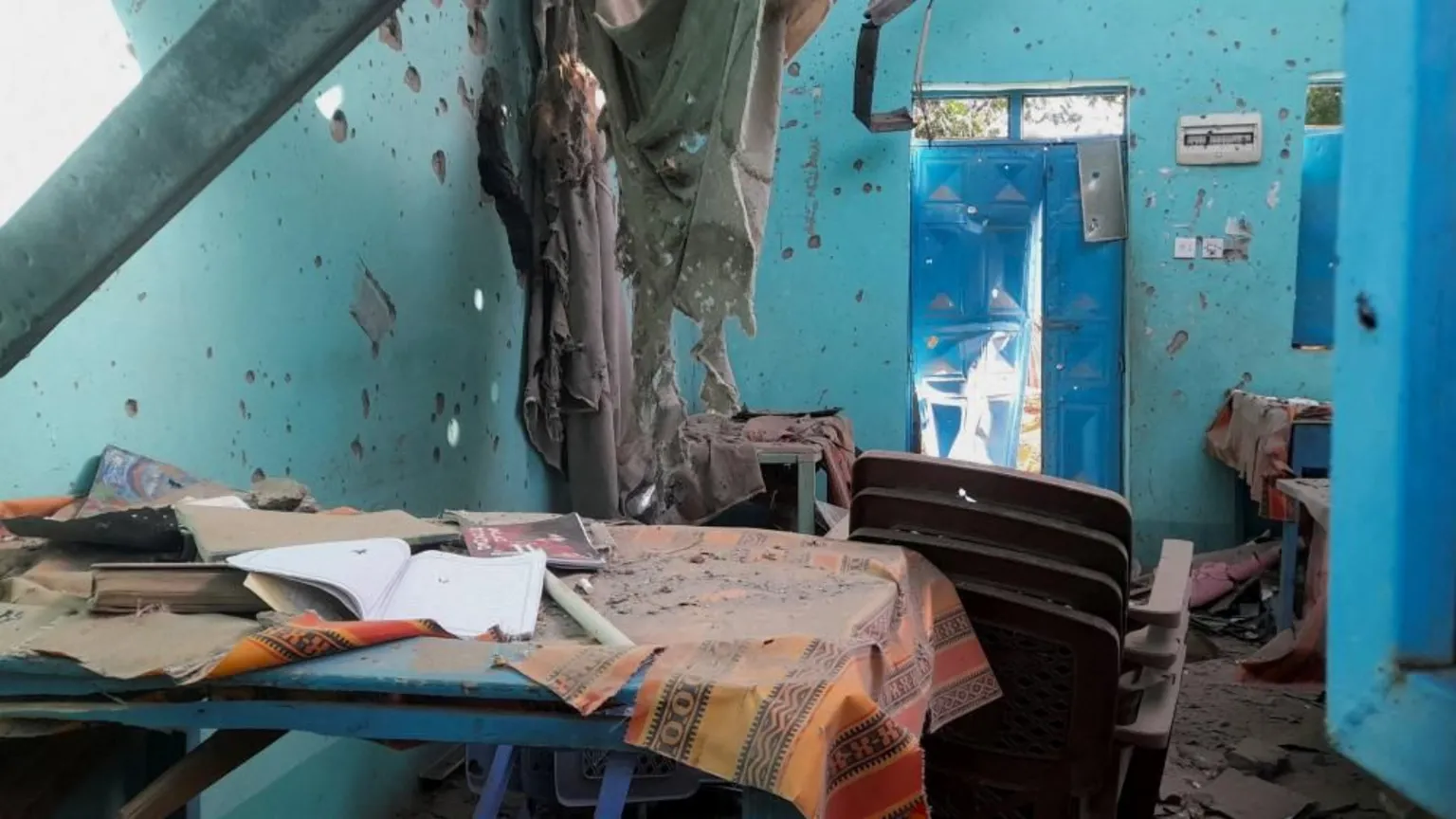
The CIG’s findings extend beyond Sudan’s borders. Spanish-language devices were also identified at a port in Somalia with known links to the UAE, and at a town in south-eastern Libya believed to serve as a logistical hub for weapons flowing to the RSF — suggesting a broader regional infrastructure supporting the paramilitary force.
The United Arab Emirates has consistently denied providing support to the RSF, which has been fighting Sudan’s regular army for three years. The CIG’s investigation directly challenges that position, tracing the mercenary network to a UAE military installation and a UAE-registered employer with government connections.
The US Treasury Department has separately stated that Colombian fighters supported the RSF’s capture of el-Fasher. Washington sanctioned Colombian nationals and associated companies for recruiting mercenaries to fight in Sudan in December, issuing a second round of sanctions the following week — an unusually rapid succession that signals the gravity with which the United States views the foreign fighter pipeline.
Colombian President Gustavo Petro has condemned the recruitment of his country’s nationals for the conflict in stark terms, calling the mercenaries ‘spectres of death’ and characterising their enlistment as a ‘form of human trafficking.’ His remarks reflect growing domestic pressure over the involvement of Colombian veterans — many of whom have combat experience from decades of internal conflict — in foreign wars.
The fall of el-Fasher marked a catastrophic milestone in a war that has produced one of the world’s worst humanitarian crises. The RSF’s 18-month siege of the city, the last major urban centre in Darfur outside its control, ended with mass civilian casualties. The ICC prosecutor’s assessment that the takeover involved crimes against humanity, combined with the UN’s genocide characterisation, places the conflict among the gravest situations currently before the international community.
The Desert Wolves investigation adds a new and troubling dimension: that the violence was not only sustained by Sudanese combatants, but enabled by a transnational mercenary network with roots in Latin America, logistics running through the Gulf, and operational reach across multiple African theatres.