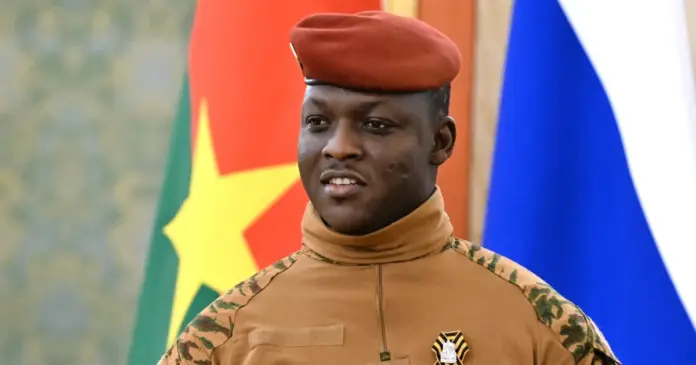
Ouagadougou — Burkina Faso’s military ruler Captain Ibrahim Traore has told his country to abandon democracy, calling it a form of ‘slavery’ that ‘kills,’ in remarks broadcast Thursday on state television that mark the most explicit rejection yet of civilian governance by one of Africa’s youngest and most authoritarian leaders.
Speaking on the state broadcaster Radiodiffusion Télévision du Burkina (RTB), the 37-year-old captain invoked the fate of Libya — where longtime autocrat Colonel Muammar Gaddafi, who had ruled for four decades while providing subsidised housing, free education and healthcare, was killed during a Western-backed rebellion — as a cautionary tale about outsiders imposing democratic systems. ‘Forget democracy,’ Traore said, framing the concept not as a political ideal but as an instrument of foreign domination.
The statement was not made in a vacuum. Over the past three years, Traore’s government has systematically dismantled every institutional mechanism through which democratic governance could be restored. Parliament was suspended immediately after he seized power in September 2022 — itself a second coup, toppling a junta that had overthrown elected President Roch Marc Kabore only eight months earlier. All political activity was frozen. Traore initially pledged elections by July 2024, but two months before that deadline, the junta announced it was extending his rule until 2029.
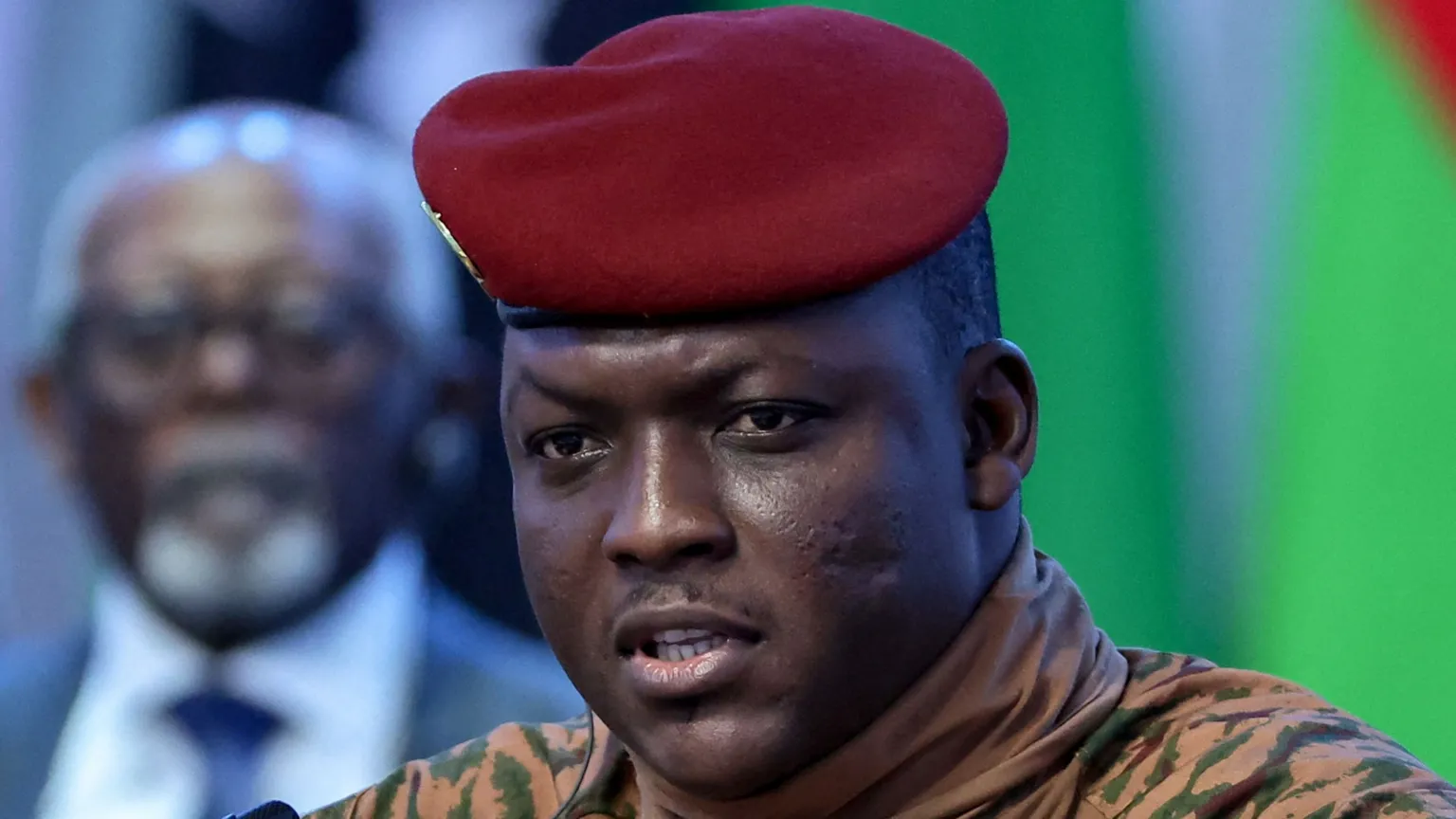
In January, authorities went further, banning all political parties outright and seizing their assets — eliminating more than 100 organisations in a single decree framed as part of a plan to ‘rebuild the state.’ Then, in July 2025, the government dissolved the Independent National Electoral Commission, citing cost concerns. With no parties, no parliament, no electoral body, and a ruler whose tenure now stretches nearly a decade into the future, the institutional architecture of democratic transition has been entirely removed.
The human cost of Traore’s rule has been severe. Recorded fatalities in Burkina Faso reached 17,775 by May — nearly three times the 6,630 deaths documented in the three years before he took power. The majority of those killed were civilians, with government forces and allied militias responsible for a significant share of the deaths. Human Rights Watch, in a report released Thursday, accused all parties to the conflict — including the junta, its allied militias, and the al-Qaeda-linked group Jama’at Nusrat al-Islam wa al-Muslimin (JNIM) — of committing war crimes and crimes against humanity. The organisation also alleged that the junta and its proxies carried out ethnic cleansing targeting Fulani civilians.
The government has consistently rejected such accusations. When Human Rights Watch previously alleged in April 2024 that the military had executed 223 civilians two months earlier, authorities denied the claims and responded by banning the organisation outright. Several international media outlets that reported the allegations were also prohibited from operating in the country.

A jihadist insurgency has ravaged Burkina Faso since 2014, claiming thousands of lives and displacing approximately 2.1 million people — roughly 9 percent of the population — according to official figures. Traore has used the security crisis to justify the suspension of democratic norms, arguing that elections cannot be held until all parts of the country are safe. Critics note that security has deteriorated sharply under his watch, not improved.
Traore’s government has also fundamentally reoriented the country’s foreign alliances. France, which had deployed 5,000 soldiers to assist Sahel nations against armed groups, was expelled. In its place, Burkina Faso has turned to Russian paramilitary fighters. Alongside Niger and Mali — both also under military rule — Burkina Faso withdrew from the Economic Community of West African States (ECOWAS) in January to form the Alliance of Sahel States (AES), a bloc that has positioned itself in explicit opposition to Western-aligned regional institutions.
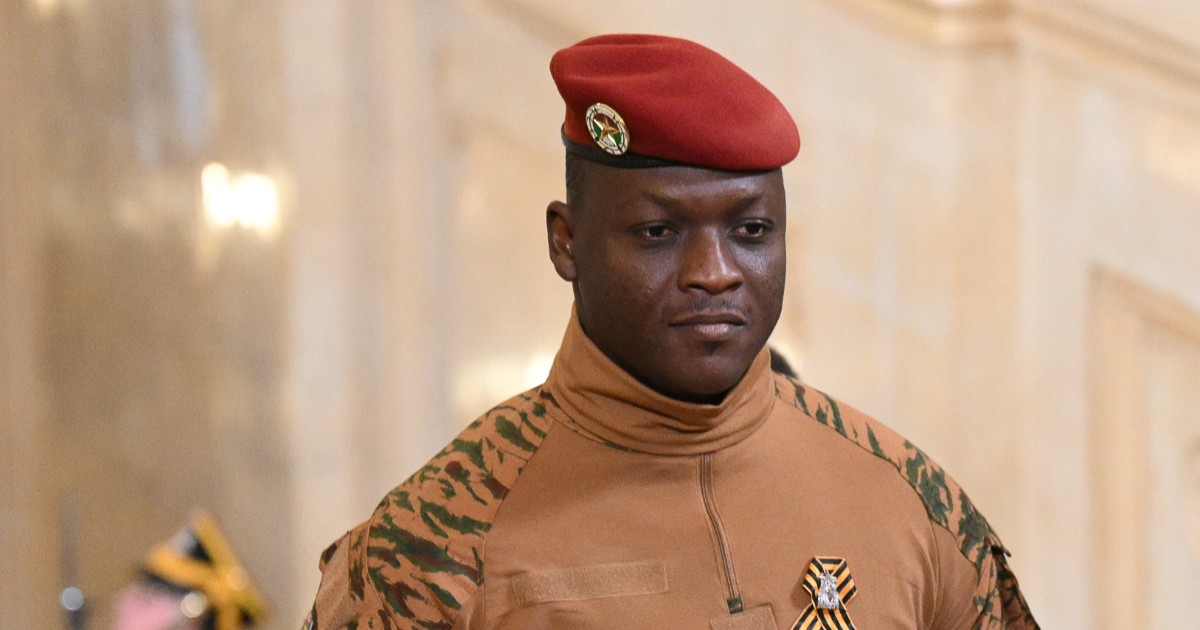
Traore has cultivated a revolutionary image modelled partly on Thomas Sankara, the Marxist leader who renamed the country from Upper Volta and governed from 1983 until his assassination in 1987. But where Sankara built institutions, Traore has dismantled them. Journalists, opposition politicians, and prosecutors who have criticised the military government have been forcibly conscripted and deployed to active front lines — a practice that has effectively silenced domestic dissent.
Thursday’s televised declaration strips away any remaining ambiguity about the trajectory of governance in Burkina Faso. For a population already enduring one of the world’s most acute humanitarian and security crises, the message from their ruler was unambiguous: democratic restoration is not a deferred promise. It has been abandoned as a goal entirely.