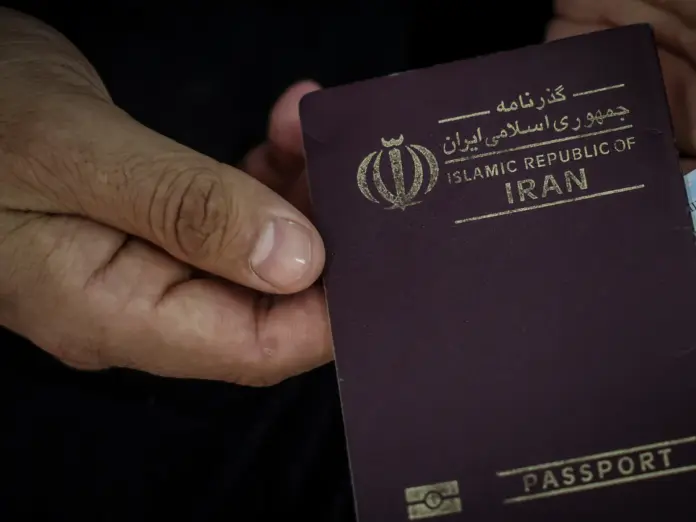
Australia moved swiftly to restrict entry for Iranian nationals on Wednesday, with the Department of Home Affairs announcing a six-month suspension of visitor and work visas for Iranian passport holders currently outside the country. The ban took effect on Thursday, March 26, 2026, and was framed as a measure to protect the integrity of Australia’s immigration system amid the widening conflict in the Middle East.
The trigger, according to the government, is the escalating US-Israeli military campaign against Iran, which began on February 28. Officials argued that the conflict has materially increased the likelihood that Iranian temporary visa holders may be unwilling or unable to return home once their visas expire. Home Affairs Minister Tony Burke stated that many of the visitor visas now in circulation were issued before the conflict began and would not have been approved under current conditions. He added that decisions about who can remain permanently in Australia must rest with the government, not be determined by circumstances beyond its control.
The ban is sweeping in scope but carries several defined exemptions. Iranian citizens already on Australian soil are unaffected, as are those mid-transit to Australia at the time the measure came into force. Spouses, de facto partners, and dependent children of Australian citizens are also excluded, along with holders of permanent visas. Parents of Australian citizens may apply for case-by-case consideration, though no automatic exemption applies to that group.
The policy arrives in the immediate aftermath of a politically charged episode that drew international attention. Earlier in March, the Iranian women’s football team travelled to Queensland to compete in the Women’s Asian Cup 2026. Several players and officials declined to sing the Iranian national anthem before a match, an act that triggered fierce backlash at home, with the athletes labelled as traitors by state-aligned voices in Iran. Five team members subsequently approached Australian authorities seeking assistance, and seven players and officials in total were ultimately granted asylum.
The situation took a further twist when five of those seven individuals reversed their decisions and returned to Iran, amid concerns that pressure had been placed on their families back home. US President Donald Trump had publicly called on Australian Prime Minister Anthony Albanese to offer the team asylum, a rare instance of direct American political intervention in Australian immigration affairs.
The ban has drawn sharp criticism from refugee advocacy groups. The Asylum Seekers Centre described the legislation as a shameful new law rushed through parliament, warning that it threatens Australia’s onshore protection programme for people fleeing persecution. The Asylum Seeker Resource Centre went further, calling the measure heartless and arguing it inflicts unnecessary trauma and harm on Iranians already living under the shadow of war. Politician David Shoebridge highlighted the practical consequences for Iranian nationals, noting that Iranians already have very limited pathways to obtain Australian visas.
The human dimension of the ban is considerable. Government figures from 2023 and 2024 indicate that between 85,000 and 90,000 Australian residents were born in Iran, with the largest concentrations in Sydney and Melbourne. Those communities now face an abrupt severance from family members who may have been planning visits or who hold valid visitor visas that have, as of Thursday, ceased to be operative.
The ban covers tourism and work visas tied to Iranian passports. Australian visitor visas already issued to Iranian nationals who are currently outside Australia were suspended from Thursday, meaning holders cannot board flights to Australia on the strength of those documents for the duration of the six-month period. The government has not indicated what criteria would trigger a review or early lifting of the restriction.
The measure reflects a broader pattern of Western governments recalibrating immigration and visa policies in response to the intensifying conflict involving Iran. For Australia, a country with a substantial and well-established Iranian diaspora, the decision carries both diplomatic and social weight, placing the government between its stated commitment to immigration integrity and the concerns of a significant and vocal community of residents with deep ties to a country now at war.