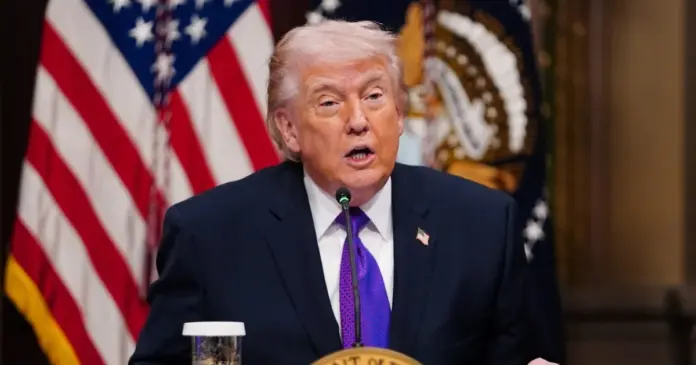
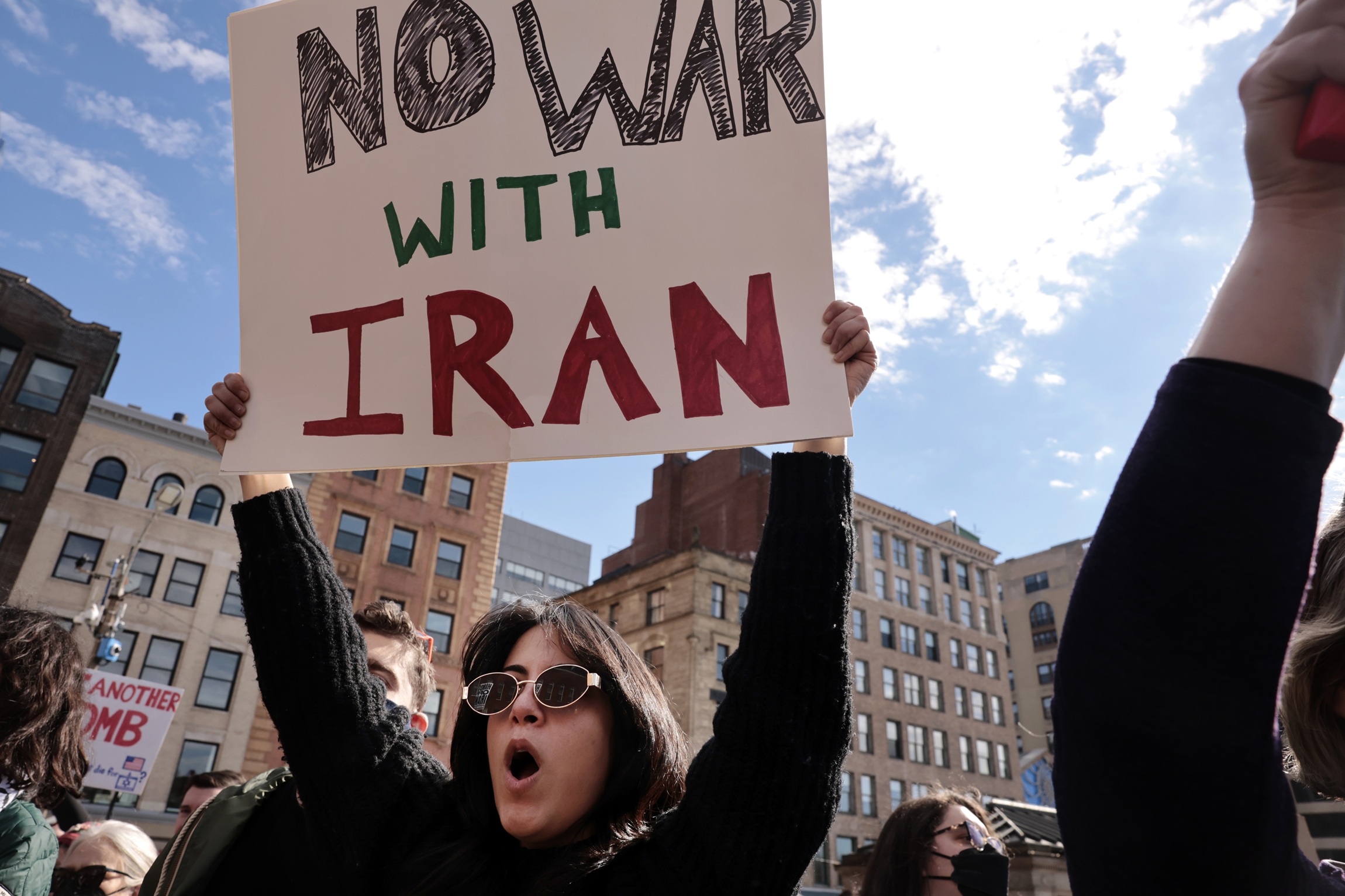
A clear majority of Americans oppose the United States’ ongoing military campaign against Iran, with fresh polling data revealing deep public unease over a war that has already claimed thousands of lives, wounded hundreds of servicemembers, and driven up fuel costs across the country.
An Economist/YouGov poll found that 56 percent of respondents disapprove of President Donald Trump‘s management of the conflict, while only 36 percent approve. Opposition to the war itself is similarly pronounced: 56 percent of Americans say they are against it, compared with just 33 percent who express support. Nearly half of all respondents — 48 percent — said the war was not justified, against 31 percent who said it was, with 21 percent unsure.
The partisan divide is stark. Republicans back the war at a rate of 73 percent, while 88 percent of Democrats are opposed. Independent voters lean heavily against the conflict, with 62 percent opposed and only 23 percent in favour. Even among voters who supported Trump in the 2024 presidential election, 21 percent said they oppose the war — a notable dissent within his own base.
Preliminary estimates paint a grim picture of the human toll. Approximately 1,444 people have been killed in Iran by US and Israeli strikes, with around 18,551 others injured. On the American side, at least 13 servicemembers have been killed and roughly 200 wounded. The figures underscore the scale of an engagement that has rapidly escalated since the bombing campaign began.
Trump has publicly stated his desire to end the conflict as quickly as possible, and his administration is deploying a dual-track strategy of incentives and coercion to achieve that goal. On one hand, Washington has dangled the prospect of sparing Iran’s electricity grid and energy infrastructure from further strikes. On the other, the administration has threatened intensified bombing and has not ruled out a ground invasion. The Strait of Hormuz — the critical waterway through which a significant share of global oil flows — looms over the standoff, with Iran retaining the capacity to disrupt or close it entirely, a move that would send energy prices surging further.
Global oil markets are already feeling the strain. Higher petrol prices have accompanied the conflict, adding economic anxiety to the political discontent. The Trump administration has simultaneously requested an additional $200 billion in Pentagon spending, and US Central Command has sought more intelligence officers at its Florida headquarters, signalling that military planners are preparing for a prolonged campaign even as the White House publicly seeks an exit.

Public expectations about the war’s duration are mixed. Nineteen percent of poll respondents believe it will be over within a month, while 49 percent expect it to last between one month and one year. A third — 33 percent — believe the conflict will extend beyond a year. When asked about objectives, 61 percent said they want the war ended as quickly as possible, even if that means falling short of stated goals, while 24 percent said it should continue until all objectives are met.
The conflict is generating pressures beyond the battlefield. Concerns have been raised about Iranian sleeper cells operating inside the United States, adding a domestic security dimension to the crisis. Political tensions have contributed to staffing shortages at the Transportation Security Administration, complicating the country’s aviation security posture. Meanwhile, rising utility costs — driven in part by the enormous water and electricity demands of data centres — are compounding the financial strain on ordinary Americans already contending with higher fuel prices.
Inside Iran, insurgent groups opposed to the Islamic republic remain active, a factor that both complicates the conflict and potentially shapes the strategic calculus of all parties involved. The Islamic republic itself has a history of confrontation with the West stretching back to the 1979 revolution, and the current war represents one of the most direct military confrontations between the two countries in decades.

Historical parallels are being drawn to the aftermath of the 1991 Gulf War, when President George H.W. Bush briefly enjoyed approval ratings of 91 percent following military success in Iraq, only to lose the presidency to Bill Clinton the following year as domestic concerns reasserted themselves. The lesson — that wartime popularity is fleeting and economic anxieties endure — appears relevant as Trump navigates a conflict that, for now, commands majority disapproval at home.
With Republicans controlling both chambers of Congress, Trump retains significant political latitude to prosecute the war. But the polling data suggests that public patience is limited, and the administration’s own stated preference for a swift conclusion reflects an awareness that the domestic political costs of a prolonged engagement could prove substantial.