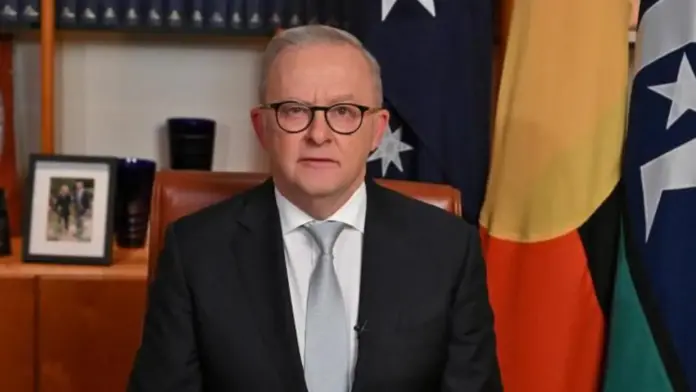
Australian Prime Minister Anthony Albanese delivered a rare national address on Wednesday evening, warning citizens that the economic fallout from the US-Israeli war on Iran will persist for months and has already produced the largest spike in petrol and diesel prices ever recorded. The address, broadcast simultaneously across major television and radio networks at 7 p.m. local time (0800 GMT) on April 1, 2026, placed the crisis alongside the COVID-19 pandemic and the 2008 global financial crisis as moments grave enough to demand direct prime ministerial communication with the nation.
“The months ahead may not be easy,” Albanese told viewers, acknowledging that no government could fully insulate its citizens from pressures of this magnitude. The month-long conflict in the Middle East has killed thousands and sent shockwaves through global energy markets, with its most consequential geographic flashpoint being the Strait of Hormuz — the narrow waterway through which approximately 20 percent of the world’s oil and natural gas ordinarily flows. That passage has been effectively closed since the conflict escalated, triggering a cascade of supply disruptions felt acutely in countries heavily dependent on imported fuel.
Australia sits squarely in that category. The country imports roughly 90 percent of its fuel, leaving it deeply exposed to any sustained interruption in global supply chains. Localised shortages have already emerged across the country, and scenes of panic-buying at petrol stations running dry have prompted the government to act. Albanese had previously sought to reassure motorists about availability, but Wednesday’s address signalled a shift toward more direct crisis management.
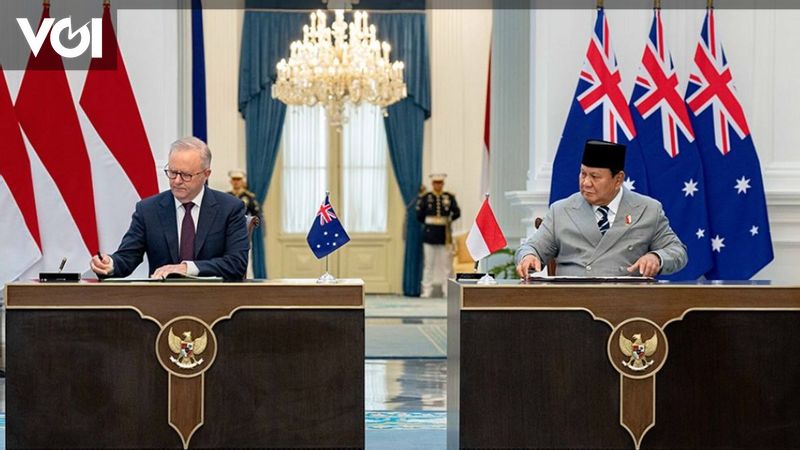
The government unveiled a package of relief measures costing approximately A$2.55 billion (US$1.75 billion). Chief among them is a temporary halving of the excise on petrol and diesel for three months, alongside the complete removal of road user charges for heavy vehicles over the same period. The measures are designed to cushion the blow for households and freight operators alike, though officials were careful not to suggest they would eliminate the pain entirely.
Treasurer Jim Chalmers separately announced that small businesses affected by the conflict would be given easier access to credit, recognising that elevated fuel costs are rippling through supply chains and squeezing margins across the economy.
Australia is also implementing a newly agreed National Fuel Security Plan, which focuses on shoring up domestic supply and expanding fuel imports through regional partners. Despite the effort, the country’s current fuel stocks — while at their highest level in 15 years — remain well below the International Energy Agency’s recommended 90-day reserve threshold, underlining the structural vulnerability the crisis has exposed.
Albanese used the address to make a direct appeal to the public, urging Australians to limit unnecessary fuel consumption in the weeks ahead. He recommended switching to trains, buses, or trams for work commutes and advised against filling tanks beyond normal levels. With the Easter holiday period beginning this week, he specifically cautioned against stockpiling fuel ahead of the long weekend — a practice that, if widespread, risks accelerating the very shortages it is meant to guard against.
“Australia is not an active participant in this war,” Albanese stated, drawing a clear line between the nation’s geopolitical position and the economic consequences it nonetheless faces. The remark reflected a broader tension confronting many non-belligerent nations: the conflict between the United States, Israel, and Iran is reshaping global energy flows regardless of any individual country’s involvement.
Governments across the world have begun implementing fuel conservation measures in response to the Hormuz blockade, and Australia’s response mirrors a pattern of emergency economic intervention seen in multiple capitals. The scale of the disruption — described by Albanese as historically unprecedented in terms of price impact — has left policymakers with few tools beyond demand management and supply diversification.
The prime minister’s decision to address the nation in this format carries its own symbolic weight. Such broadcasts have historically been reserved for moments of existential national concern, and Wednesday’s address places the energy crisis firmly in that register. Whether the government’s relief package proves sufficient to stabilise public confidence will depend largely on how quickly — or whether — the Strait of Hormuz reopens to commercial traffic.