Iran-Us Ceasefire Collapse — A ceasefire brokered on April 8 between Iran and the United States has effectively collapsed, with both sides trading accusations of violations as Iranian forces downed an American drone, a tanker suffered an explosion in the Gulf of Oman, and senior military commanders in Tehran signalled readiness to resume full-scale hostilities.
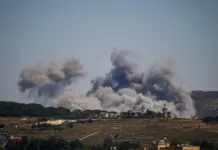
The Islamic Revolutionary Guard Corps announced that Iranian armed forces intercepted and destroyed a US-made RQ-4 surveillance drone using a domestically developed air defence system designated Arash-e Kamangir. The US military countered that its operations targeted Iranian missile launch sites and boats attempting to lay sea mines, characterising the strikes as defensive in nature. Iran’s Ministry of Foreign Affairs rejected that framing outright, accusing Washington of a ‘blatant violation’ of the ceasefire through its attack on Hormozgan province on Monday night.
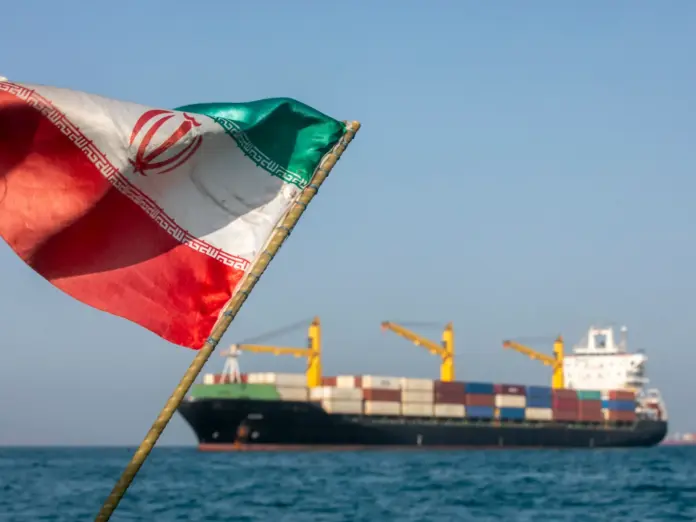
The confrontation at sea intensified on Tuesday afternoon when a tanker reported an external explosion and fuel leak approximately 60 nautical miles — roughly 111 kilometres — east of Muscat, Oman, raising immediate concerns about the security of one of the world’s most critical maritime chokepoints. The Strait of Hormuz has been largely frozen to normal transit since US and Israeli forces launched a wave of strikes against Iran on February 28, a conflict now entering its third month.
Recommended Reading
Against this volatile backdrop, an Iranian parliamentary delegation led by Parliament Speaker Mohammad Bagher Ghalibaf returned to Tehran from Qatar, where talks over a potential Memorandum of Understanding have been underway. The proposed framework would grant Iran access to frozen overseas assets currently blocked by US sanctions and establish a pathway toward a broader agreement on Tehran’s nuclear programme. President Masoud Pezeshkian sought to reassure international audiences, stating on state television that Iran is ‘not after nuclear weapons’ and ‘not after insecurity in the region.’
Yet the diplomatic track faces fierce internal opposition. IRGC aerospace commander Majid Mousavi declared on the social media platform X that ‘negotiating with the enemy is pure loss,’ a sentiment echoed by senior lawmaker Abbas Moghtadaei, who described the prevailing mood within Iran’s establishment as rooted in a ‘fundamental principle of distrust towards America.’ IRGC commander Ahmad Vahidi went further, expressing explicit readiness to resume military confrontations with the United States if circumstances required it.
The hardline posture extends to Iran’s new supreme leadership. Mojtaba Khamenei, who now holds the position of supreme leader, issued a message on Tuesday warning that ‘nations and territories of the region will no longer be the shield of American bases’ and predicting that Israel would cease to exist within 15 years. His predecessor and father has not appeared publicly since the war began, communicating only through written statements — a seclusion that US officials say has materially slowed the pace of negotiations by removing a central decision-maker from direct engagement.
Iranian state media has offered an explanation for that absence, claiming that senior Iranian figures would be vulnerable to assassination should military operations resume, and that the US would strike the supreme leader without hesitation if his location were exposed during agreement talks. IRGC-linked commentator Nima Akbarkhani made that assertion explicitly on state television on Tuesday.
Iran-Us Ceasefire Collapse: Regional Implications
Monday also brought the first public appearances of two significant military figures. Ali Abdollahi, commander of the Khatam al-Anbiya Central Headquarters, emerged publicly for the first time since the conflict began. Separately, Mohammad Bagher Zolghadr, newly appointed secretary of the Supreme National Security Council, released his inaugural public message, pledging that ‘there will be no retreat’ — a declaration that signals continuity of Iran’s strategic posture regardless of the diplomatic channel’s outcome.
The convergence of a downed drone, a stricken tanker, fractured ceasefire terms, and an internally divided Iranian leadership presents negotiators on both sides with an increasingly narrow window. The proposed memorandum, if concluded, would represent the most significant diplomatic engagement between Washington and Tehran in years. Whether the military incidents of the past 48 hours have permanently foreclosed that possibility — or merely complicated it — remains the defining question of a conflict that has already reshaped the security architecture of the Persian Gulf.