Us-Israel Military Escalation — A sweeping military escalation across the Middle East intensified on Tuesday, with Israeli ground forces advancing further into Lebanese territory, fresh strikes killing dozens across Lebanon and Gaza, and the United States conducting attacks on southern Iran — moves that drew sharp warnings from Tehran and raised fears of a broader regional conflagration.
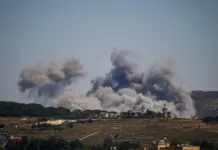
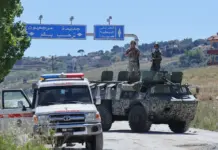
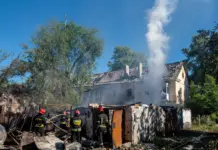
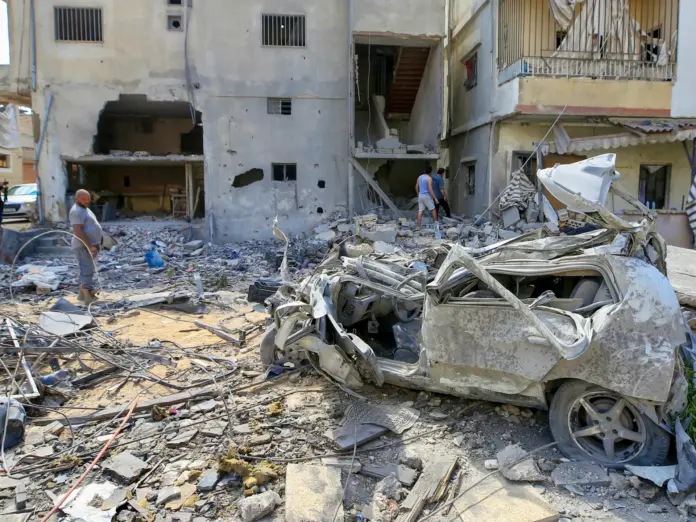
Lebanon’s Health Ministry placed the cumulative toll since March 2 at 3,213 killed and 9,737 injured. Tuesday alone added 31 dead and 40 wounded as Israeli strikes hit multiple locations, including the city of Nabatieh in the south and Mashghara in the Bekaa Valley. Israeli artillery also struck the Qaraoun Dam in eastern Lebanon, a significant piece of civilian infrastructure. Alongside the bombardments, Israel issued dozens of forced displacement orders targeting towns and villages across Lebanon’s south and east. Prime Minister Benjamin Netanyahu framed the orders as necessary to restore security to communities in northern Israel.
Hezbollah said it launched 32 separate attacks against Israeli forces operating in southern Lebanon, as air-raid sirens sounded across several areas in northern Israel throughout the day.
Recommended Reading
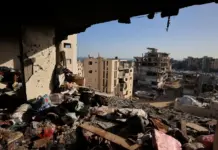
In Gaza, the violence was equally relentless. Israeli air strikes on the Remal neighbourhood west of Gaza City killed four people, according to al-Shifa Hospital. Artillery shelling struck Khan Younis, the Bureij refugee camp, and Jabalia. Separate Israeli attacks across the territory on Tuesday killed an additional 11 people, bringing the day’s Gaza death toll to at least 15.
The conflict’s geographic reach extended to Iran itself. The United States conducted strikes on southern Iran on Monday, prompting fierce condemnation from Iranian officials. A senior spokesman for Iran’s armed forces issued a stark warning, stating that any resumption of US-Israeli military action against Iran would trigger a response that is "much heavier and stronger." The warning underscored the degree to which the conflict has drawn in regional and global powers far beyond Lebanon’s borders.
Compounding the military picture, Israel’s Kan public broadcaster documented what it described as an "unprecedented" deployment of US fighter jets and refuelling aircraft at Israeli airports. Dozens of American military planes are now stationed at both Ben Gurion and Ramon airports, a visible signal of Washington’s deepening military commitment to Israel even as diplomatic channels remain open.
US Secretary of State Marco Rubio confirmed that negotiations over "specific language" for a deal to end the war were under way in Qatar. President Donald Trump was also set to convene an unscheduled cabinet session at the White House, suggesting the administration is managing multiple pressure points simultaneously.
Inside Iran, a separate dimension of the crisis was easing marginally. Vice President Mohammad Reza Aref confirmed that the country had taken the "first step" toward restoring full internet access following weeks of near-total blackout imposed during the conflict. The gradual restoration marks a cautious opening after one of the most prolonged digital shutdowns the country has experienced.
Us-Israel Military Escalation: Regional Implications
The war’s economic shockwaves continued to ripple outward. Bangladesh is in active talks with the International Monetary Fund over a new financial aid package, having sought approximately $2 billion in credit from global lenders in March to address energy vulnerabilities exacerbated by the conflict.
On the legal front in the United States, a federal appeals court granted a stay request blocking the deportation of Mahmoud Khalil, a Palestinian graduate of Columbia University. The Trump administration had targeted Khalil for removal following his role as a mediator during pro-Gaza encampment protests on campus in 2024. The court’s intervention temporarily halts what critics have characterised as politically motivated immigration enforcement against protest organisers.
The trajectory of the conflict remains deeply uncertain. With US military assets massed on Israeli soil, Iranian forces on alert, Hezbollah actively engaging Israeli troops in Lebanon, and Gaza under sustained bombardment, the conditions for further escalation are firmly in place. Diplomatic activity in Qatar offers a narrow window, but the gap between the parties’ stated positions and the violence on the ground remains vast.