Nigeria School Kidnappings — Armed gunmen have abducted 46 people — the vast majority of them children — in a coordinated assault on three schools in southwestern Nigeria, with one of the kidnapped teachers subsequently killed, deepening a crisis that has shaken one of the country’s historically more stable regions.
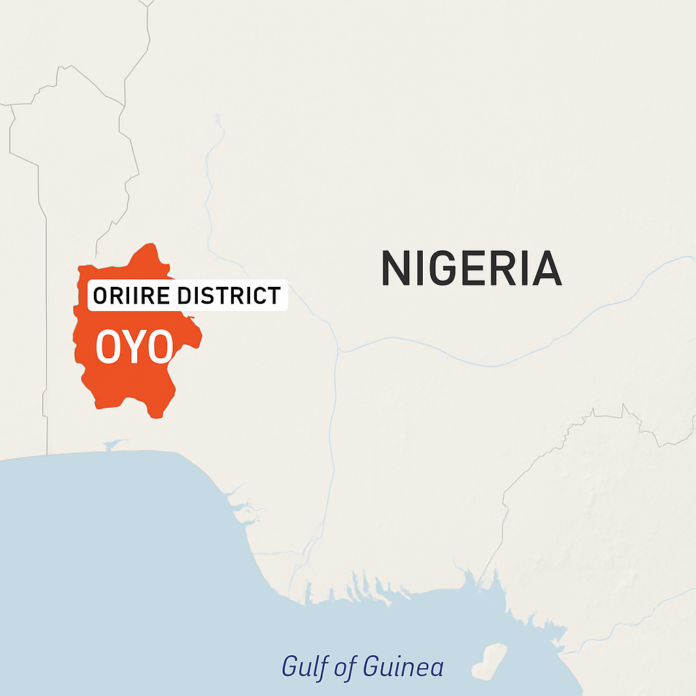
The attacks struck the Ahoro Esinele community in Oriire district, Oyo State, on Friday, targeting a secondary school and two primary schools simultaneously. Among those seized were 39 students and 7 teachers. The youngest victims were as young as two years old, with the oldest aged 16, according to Elisha Olukayode Ogundiya, chairman of the Christian Association of Nigeria in Oyo State, who confirmed the total of 46 abductees.
One of the targeted institutions was Baptist Nursery and Primary School in Yawota, with two additional schools in Esiele also raided in what police characterised as a "coordinated attack" — a designation that underscores the operational planning behind the assault.
Recommended Reading
The situation deteriorated further on Sunday when Governor Oluseyi Abiodun Makinde announced that one of the abducted teachers had been killed. The governor cited video evidence as confirmation of the death, marking a grim escalation in what had already been a traumatic ordeal for the affected families and community.
A joint rescue operation involving soldiers, police, and local vigilante groups was launched but suffered a significant setback when the teams encountered improvised explosive devices planted by the kidnappers. Several personnel were wounded in the disruption; all injured individuals are currently receiving medical treatment. The use of IEDs signals a level of tactical sophistication that complicates recovery efforts.
Six suspects have been arrested in connection with the abductions, including individuals alleged to have served as informants and logistics suppliers to the kidnapping group. Their detention may provide investigators with intelligence critical to locating the remaining victims.
President Bola Tinubu condemned the attacks in unequivocal terms, describing them as "barbaric" and pledging that the federal government was working in close coordination with Oyo State authorities to secure the safe return of all those taken. The president’s intervention reflects the national gravity of an incident that has drawn widespread outrage.
Nigeria School Kidnappings: The Broader African Context
While mass kidnappings have become an increasingly severe security challenge across Nigeria in recent years, such attacks have been comparatively rare in the country’s southwest. Criminal armed groups have long exploited weak security infrastructure across the country’s north and middle belt, targeting travellers, rural communities, and — with disturbing frequency — schools, primarily to extract cash ransoms. The extension of this pattern into Oyo State signals a potentially troubling geographic expansion of the threat.
Nigeria has grappled with high-profile school abductions since the Chibok kidnapping of 2014, when Boko Haram seized more than 270 schoolgirls, an event that galvanised international attention. In the years since, numerous mass abductions of students have occurred across the country’s northern states, carried out by a range of armed factions including jihadist groups and criminal gangs motivated purely by financial gain.
The Oyo State attacks represent a stark reminder that no region of Africa’s most populous nation is entirely insulated from the threat. With rescue operations ongoing and dozens of victims — many of them very young children — still unaccounted for, pressure is mounting on both state and federal authorities to deliver results before more lives are lost.