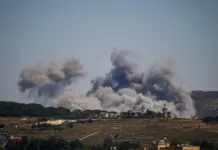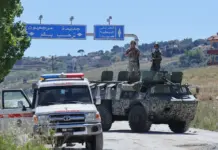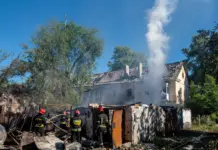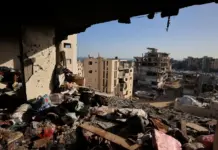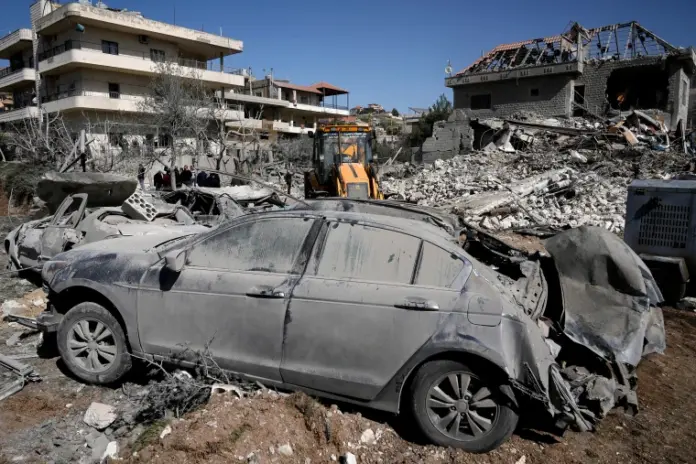
Israel Lebanon Ceasefire — Israeli air strikes tore through multiple villages in southern and eastern Lebanon on Sunday, killing at least eight people and injuring more than a dozen others, even as diplomats in Washington finalised a 45-day extension of a fragile ceasefire between Israel and Hezbollah.
Lebanon’s Health Ministry confirmed the casualties, reporting strikes on the municipalities of Tayr Felsay, Tayr Debba, Az-Zrariyah and Jebchit. A separate attack on the village of Jouaiya killed at least three people, the Lebanese National News Agency reported. The Israeli military simultaneously issued forced displacement orders to residents of five southern Lebanese villages — Sohmor, Roumine, al-Qusaibah, Kfar Hounah and Naqoura — signalling continued ground pressure even amid ceasefire negotiations.
Speaking at a cabinet meeting on Sunday, Israeli Prime Minister Benjamin Netanyahu defended the military campaign, saying Israel was holding and clearing territory while protecting its communities. The remarks came hours after Hezbollah said it had struck a military target in northern Israel on Saturday, a reminder that hostilities have not fully ceased despite the diplomatic track.
Recommended Reading
The ceasefire extension, agreed during a third round of US-facilitated talks in Washington, builds on an original accord that took effect on April 17. A security track between the two sides is scheduled to begin on May 29, with the next round of negotiations set for June 2 and 3, also in Washington. The talks are historically significant: Lebanon and Israel share no diplomatic relations, and last month’s meeting marked the first direct encounter between the two sides in decades.
Not everyone is optimistic about the process. Hezbollah legislator Hussein Hajj Hassan said on Sunday that direct negotiations had led Lebanese authorities down a dead-end path, reflecting deep scepticism within the movement about the diplomatic framework.
The human toll of the conflict since fighting resumed on March 2 is staggering. Lebanon’s Health Ministry places the death toll at 2,988, with at least 9,210 people injured. The Danish Refugee Council estimates that more than 1.2 million people were forced from their homes between March and April alone, creating one of the region’s most acute displacement crises.
The economic damage is equally severe. Bassem El-Bawab, head of the Lebanese Business Association, estimates that Lebanon has suffered more than $25 billion in direct and indirect losses since Israel’s war began in 2024. Reconstruction costs are projected at around $12 billion, while the country continues to bleed approximately $30 million every day in indirect economic damage — a haemorrhage that threatens to deepen an already catastrophic financial crisis in a country that was struggling long before the first shots were fired.
Israel Lebanon Ceasefire: Regional Implications
Sunday’s strikes illustrate the precarious nature of the ceasefire arrangement. Displacement orders issued alongside active air strikes suggest Israel is pursuing military objectives in parallel with diplomatic engagement, a dual-track approach that has drawn criticism from Lebanese officials and international observers. The pattern of violence in villages across the south raises questions about whether the 45-day extension will hold long enough to allow the security track to take shape.
For the hundreds of thousands of Lebanese civilians still displaced, the diplomatic calendar in Washington offers little immediate relief. With the next round of talks still weeks away and daily strikes continuing, the gap between negotiating rooms and ground realities in southern Lebanon remains wide.