Israel-Lebanon Ceasefire Talks — Israeli and Lebanese delegations convened in Washington on Thursday for a third round of US-brokered ceasefire negotiations, racing against the clock as a fragile truce teeters on the edge of collapse and Israeli airstrikes continue to pound southern Lebanon.
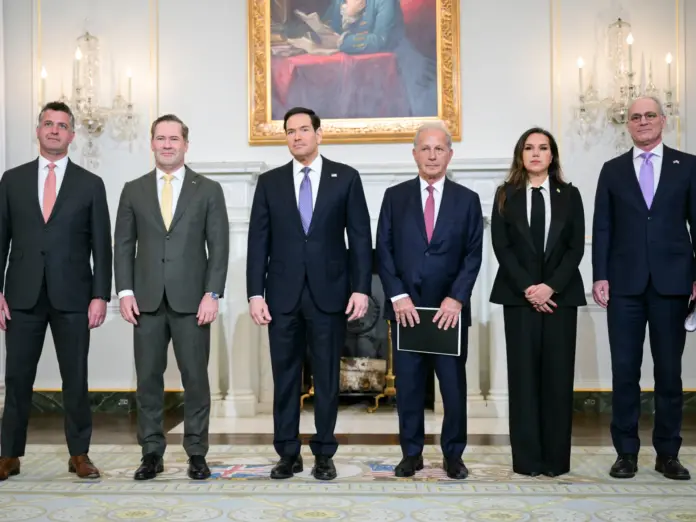
The talks, scheduled to continue through Friday, come as the ceasefire — already described as precarious — is set to expire on Sunday. The two sides previously met on April 14 and April 23, both times in Washington, with the earlier sessions attended by US Secretary of State Marco Rubio, who is currently in China. This round will be represented on the American side by Mike Huckabee, the US ambassador to Israel, alongside Michael Needham, Jay Mens, and Michel Issa. The United States has positioned itself as the sole mediator in the process, with France — which played a central role in managing the 2024 ceasefire mechanism — absent from the current framework.
Lebanon’s delegation will be led by diplomat Simon Karam, appointed by President Joseph Aoun, and will include the country’s ambassador to Washington, Nada Hamadeh Moawad, and General Oliver Hakme, Lebanon’s Military Attaché to Washington, who joins the team for the first time. Israel will be represented by its Washington ambassador Yechiel Leiter and Brigadier General Amichai Levin, head of the Israeli army’s Strategic Division.
Recommended Reading
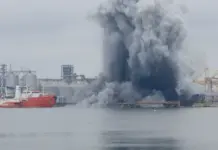
![Smoke rises from the site of an Israeli air strike that targeted the southern Lebanese village of Deir El Zahrani on May 13, 2026 [AFP]](https://world-tension.s3.us-east-2.amazonaws.com/articles/956/0e4cff2127f84e8bb81b87fc12e729d2.webp)
The diplomatic effort is shadowed by a surge in violence. On Wednesday alone, Israeli drone strikes on vehicles in southern Lebanon killed eight people, including two children. Nine additional people died in separate Israeli strikes elsewhere in the country. Lebanon’s Ministry of Public Health reported that at least 2,896 people have been killed in Israeli attacks since the conflict resumed in early March — a toll that includes an average of four children killed or injured every day since an ostensible truce was declared on April 16.
Thursday brought no respite. Israeli warplanes struck the Ezzedine residential project in Srifa, killing two people. The Israeli army announced it had begun targeting alleged Hezbollah infrastructure across multiple sites in southern Lebanon, and military spokesperson Avichay Adraee issued forced evacuation orders for eight towns and villages — including Libbaya, Sahmar, Taffahata, Kafr Malek, Yohmor, Ain Tineh, Houmin al-Fawqa, and Mazraat Sina — in the eastern Bekaa Valley and the south. A drone strike near a vocational school between the towns of Breqa and Zrarieh injured one person, and an airstrike was reported on Ain al-Tineh in the Western Bekaa. Israeli drones have also repeatedly targeted cars and motorbikes on the main coastal highway running south from Beirut in recent days.
Across the border, a Hezbollah-launched drone fell in Israeli territory near the shared frontier, injuring several people who were evacuated to hospital.
The negotiations are complicated by a fundamental rift within Lebanon itself. President Aoun and Prime Minister Nawaf Salam support direct talks with Israel, while Hezbollah — which is not participating in the Washington discussions — and Parliament Speaker Nabih Berri insist on indirect negotiations only. Hezbollah’s chief, Naim Qassem, delivered a statement on Tuesday rejecting any return to the pre-March 2 status quo, declaring the group will not accept conditions under which Israel strikes Lebanon without retaliation. The group’s stated demands include a full ceasefire, complete Israeli troop withdrawal, the return of Lebanese prisoners, the deployment of the Lebanese army to the south, and reconstruction of devastated communities — all of which it insists must be resolved before any talks proceed. Hezbollah has characterised Lebanon’s direct engagement with Israel as capitulation.
The Lebanese government, for its part, maintains that the issues Hezbollah raises can be addressed through the negotiating process itself. Lebanon has pointed to the 1949 armistice agreement as a potential framework for resolving the broader conflict, a significant gesture given that Lebanon does not formally recognise Israel.
Israel-Lebanon Ceasefire Talks: Regional Implications
Saudi Arabia has played an important behind-the-scenes role in the lead-up to the third round, attempting to mediate internal Lebanese disputes between the Aoun-Salam camp and Berri, and working to cool domestic opposition to the talks.
Israel’s objectives at the table centre on the disarmament of Hezbollah, though the positions of various Israeli officials diverge sharply on what a post-conflict south Lebanon should look like. Some have called for annexation of southern Lebanese territory, while others have advocated turning the region into an uninhabitable buffer zone — positions that have alarmed Lebanese officials and international observers alike.
With the ceasefire deadline approaching and the death toll rising, the Washington talks represent the most consequential diplomatic moment yet in an effort to prevent a full-scale resumption of war — one that both sides appear simultaneously to be negotiating and preparing for.