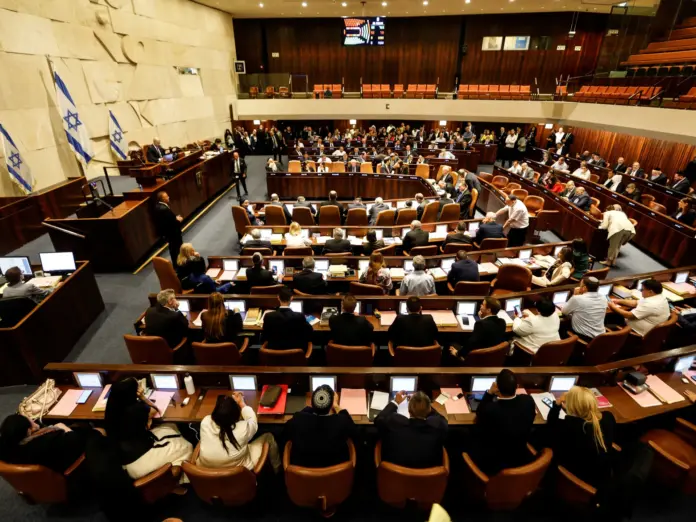
Israel Death Penalty Tribunal — The Israeli parliament has moved a landmark and deeply controversial bill through its final readings that would establish a dedicated military tribunal in Jerusalem to prosecute Palestinians accused of involvement in the October 7, 2023 Hamas attacks — and would empower judges to hand down the death penalty.
The legislation, co-sponsored by Simcha Rothman of the Religious Zionism Party and Yulia Malinovsky of Yisrael Beytenu, has received strong backing from Justice Minister Yariv Levin. It proposes a dedicated military headquarters and court in Jerusalem, with the minister of defence granted overarching authority over the law’s implementation, subject only to periodic written reports to a Knesset committee rather than any independent civilian or judicial oversight.
The October 7 attacks killed at least 1,139 people, the majority of them civilians, and resulted in approximately 240 people being seized as captives. Israel’s subsequent military campaign in Gaza has killed at least 72,500 Palestinians.
Recommended Reading
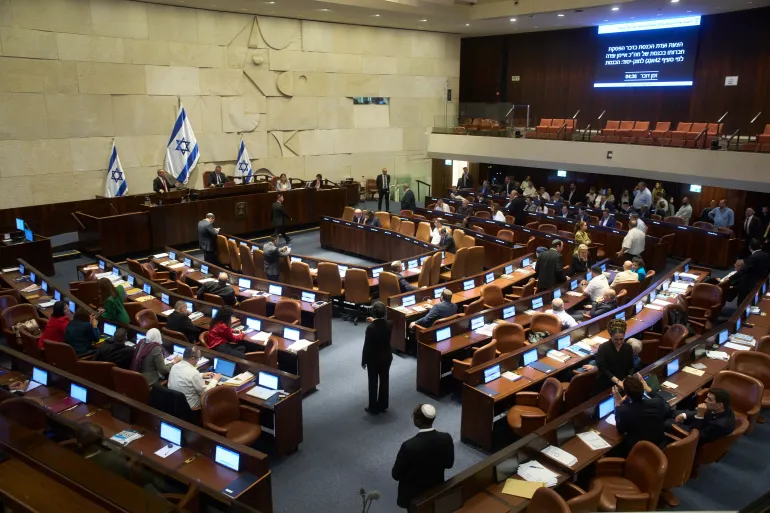
The bill departs sharply from standard Israeli judicial norms in several respects. It authorises the court to deviate from established rules governing evidence, legal procedures and detention. It also mandates the filming and public broadcasting of key trial moments — including opening hearings, verdicts and sentencing — on a dedicated website, a significant break from standard Israeli judicial practice, which typically prohibits cameras in courtrooms.
Most strikingly, the legislation grants judges full authority to impose the death penalty on Palestinians implicated in the attacks. Israel has carried out executions only twice in its entire history. A separate death penalty law was passed in March 2026. The Shin Bet, Israel’s internal security service, has publicly endorsed the potential use of capital punishment for October 7 perpetrators, framing it as a deterrent measure.
The bill has drawn immediate and pointed criticism for what opponents describe as its explicitly discriminatory character. The death penalty provisions apply solely to Palestinian defendants — the legislation does not impose equivalent penalties on Jewish Israelis convicted of killing Palestinians in acts of violence. Amnesty International and Human Rights Watch have both characterised Israel’s legislative manoeuvres around the death penalty for Palestinians as a discriminatory tool.
The disparity in legal treatment extends well beyond sentencing. Palestinians tried in Israeli military courts face a conviction rate of 99.74 percent, according to data cited by Israeli rights groups. By contrast, Israelis tried in civilian courts for crimes committed against Palestinians face a conviction rate of approximately three percent. The new tribunal’s sweeping exemptions from standard legal procedures are expected to further entrench that imbalance.
The legislation’s structure raises additional concerns about accountability. By concentrating implementation authority in the defence minister and limiting parliamentary oversight to periodic written reports, the bill insulates the tribunal from the kind of independent scrutiny that typically governs judicial proceedings in democratic systems.
Israel Death Penalty Tribunal: Regional Implications
Israel’s legal history offers a limited precedent for special tribunals of this nature. The 1961 trial of Adolf Eichmann — one of the two instances in which Israel has carried out an execution — was conducted under the Nazi and Nazi Collaborators (Punishment) Law, a bespoke legal instrument created for that specific case. The existing 1950 Law for Preventing and Punishing the Crime of Genocide remains part of Israeli criminal code but was not the basis for that prosecution.
The bill’s advancement through the Knesset comes as Israel continues its military operations in Gaza and as international pressure mounts over the conduct of both the war and the treatment of Palestinian detainees. Rights organisations argue that the combination of near-certain conviction rates in military courts, the removal of standard evidentiary protections and the introduction of capital punishment creates a legal framework that falls far short of internationally recognised fair trial standards.
Supporters of the legislation contend that the unprecedented scale and nature of the October 7 attacks justify an equally unprecedented judicial response, and that the deterrent effect of capital punishment is a legitimate security consideration. The Shin Bet’s public endorsement of that position has lent institutional weight to the government’s case.
Whether the tribunal, if enacted, would withstand legal challenges — domestically or before international bodies — remains an open question. What is clear is that its passage would mark a significant and contested shift in how Israel prosecutes those it holds responsible for one of the deadliest attacks in its history.