Chad Air Strikes Boko Haram — More than 40 Nigerian fishermen are feared dead after Chad’s military launched intensive air strikes targeting Boko Haram strongholds in the Lake Chad basin, in an operation that appears to have caught civilian workers in the crossfire of a rapidly escalating regional conflict.
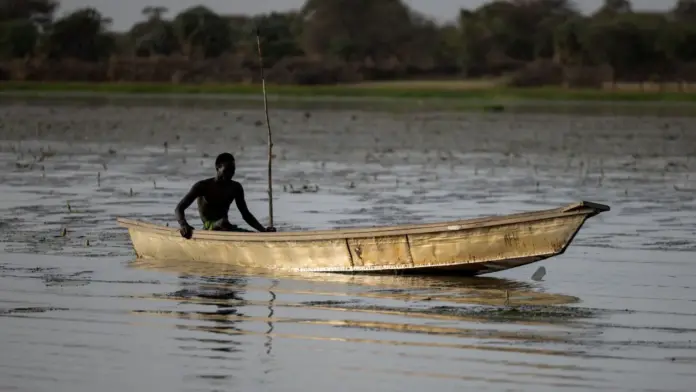
Abubakar Gamandi Usman, chairman of the Lake Chad Basin Fisheries Association of Nigeria, estimated the death toll at more than 40, though the figure remains unconfirmed. No bodies have been recovered from the water, with search efforts severely hampered by the depth of parts of the lake and a critical shortage of canoes — many of which are controlled by Boko Haram itself.
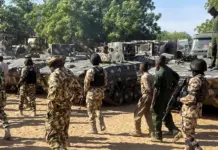
Chad’s presidency announced on Sunday that it had carried out retaliatory ‘intensive air strikes’ on Boko Haram strongholds following two devastating militant attacks on Chadian military bases near the lake the previous Monday and Wednesday. Those assaults killed at least 24 soldiers and two generals, prompting the swift and forceful military response.
Recommended Reading
After the attacks on Chadian forces, Boko Haram fighters retreated to the network of islands they use as operational bases within the lake. By Friday, Chad’s air force had begun circling overhead, triggering widespread panic among both militants and the fishermen who work the surrounding waters. Some fishermen drowned after attempting to flee in overloaded boats as the strikes commenced.
Neither Chad nor Nigeria has publicly commented on allegations that civilians were killed in the operation. The silence from both governments has drawn sharp criticism from fishing communities who say they are trapped between militant control and military firepower.
The situation on the lake reflects a grim reality for those who depend on it for their livelihoods. Boko Haram effectively governs access to the fishing grounds, transporting fishermen to and from markets and levying taxes on their catches. The militant group’s stranglehold on the local economy means that many fishermen have little choice but to operate in areas that are simultaneously insurgent territory and military targets.
The Lake Chad basin — a vast expanse of waterways and swampland shared by Nigeria, Chad, Niger and Cameroon — has long been one of West Africa’s most volatile regions. Both Boko Haram and its rival faction, Islamic State West Africa Province (Iswap), maintain active presences across the basin, and the region has seen a marked increase in attacks on security forces, kidnappings and raids on civilian communities in recent months.
Chad Air Strikes Boko Haram: What This Means for the Sahel
This is not the first time Chadian military operations in the area have resulted in civilian casualties. In October 2024, Chad’s air force was reported to have killed dozens of Nigerian fishermen during strikes targeting Boko Haram fighters on Tilma Island in Lake Chad — an incident that drew international concern but produced no formal accountability from either government.
The recurrence of such incidents underscores the profound difficulty of conducting precision military operations in a terrain defined by dense waterways, remote islands and a civilian population that lives in close proximity to militant activity. With Boko Haram controlling access to canoes, recovery teams face an almost impossible task in locating victims in waters that, in places, plunge to considerable depths.
For the fishing communities of Lake Chad, the latest strikes represent yet another layer of danger in an already precarious existence — caught between an insurgency that taxes and controls them and military operations that, however justified in their strategic intent, have repeatedly proven fatal to those simply trying to make a living on the water.