Iran Hormuz Blockade — US President Donald Trump launched and then abruptly suspended a sweeping military escort operation in the Strait of Hormuz within approximately 50 hours, citing diplomatic progress with Iran even as incidents involving merchant vessels continued to mount across the waterway.
Trump announced ‘Project Freedom’ at 20:35 GMT on Sunday via his Truth Social platform, declaring the operation would begin Monday morning Middle East time. US Central Command (Centcom) confirmed a start date of 4 May. The initiative was backed by formidable military assets — guided-missile destroyers, more than 100 land and sea-based aircraft, and approximately 15,000 service personnel — and was framed by Secretary of State Marco Rubio as a ‘favour to the world.’
The strategic stakes were considerable. Iran has effectively closed the Strait of Hormuz since the outbreak of hostilities with the United States and Israel, severing a chokepoint through which roughly 20 percent of the world’s oil and gas flows. The Baltic and International Maritime Council estimated that around 1,000 vessels carrying approximately 20,000 seafarers were stranded in the region, unable to transit safely.
Recommended Reading
On the operation’s first day, two US-flagged merchant vessels successfully passed through the strait — a modest but symbolically significant achievement. Trump claimed US forces struck seven Iranian fast boats during the transit. Iranian media flatly rejected that account, reporting instead that two small cargo vessels were hit, killing five civilians. The competing narratives underscored the opacity surrounding events in the waterway.
Monday’s violence extended beyond the disputed fast-boat incident. A tanker affiliated with Adnoc, the UAE’s state-owned oil company, was struck in the strait. South Korea reported an explosion aboard one of its ships anchored off the UAE coast. A fire also broke out at the oil port of Fujairah, which UAE authorities attributed to an Iranian attack. Iran denied any involvement in the Fujairah blaze.
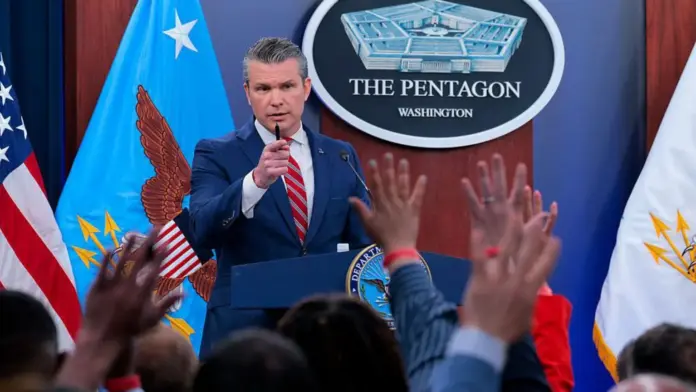
Despite the turbulence, US officials projected confidence. Defence Secretary Pete Hegseth said hundreds of ships from nations around the world were lining up to transit on Tuesday, describing the operation as ‘focused in scope and temporary in duration.’ Chairman of the Joint Chiefs General Dan Caine confirmed that merchant vessels had already transited and that more were anticipated in the coming days.
That optimism was tempered by the maritime industry’s own assessment. Ship owners and insurers told Lloyd’s List that Project Freedom had not provided them with ‘sufficient clarity or credible protection’ to justify resuming commercial transits — a blunt verdict on the operation’s practical impact for the thousands of seafarers still stranded in the region.
Iran Hormuz Blockade: Regional Implications
The operation’s end came swiftly. At 23:52 BST on Tuesday — roughly 50 hours after the initial announcement — Trump declared a pause, stating the decision had been reached by ‘mutual agreement’ owing to ‘great progress’ toward a deal with Iran. The timing was striking: a ship belonging to the French CMA CGM group had been struck in the strait approximately four hours earlier, injuring crew members and damaging the vessel.
The rapid arc of Project Freedom — from bold announcement to suspension in just over two days — reflects the volatile interplay between military posture and diplomatic manoeuvring that has defined Washington’s approach to the Iran crisis. Whether the pause translates into a durable agreement, or merely a temporary lull before further escalation, remains deeply uncertain.
The Strait of Hormuz has long been one of the world’s most strategically sensitive maritime corridors. Any prolonged closure carries cascading consequences for global energy markets, shipping insurance rates, and the supply chains of dozens of nations. With nearly 20,000 seafarers still stranded and no formal deal yet announced, the pressure on negotiators on both sides remains intense.