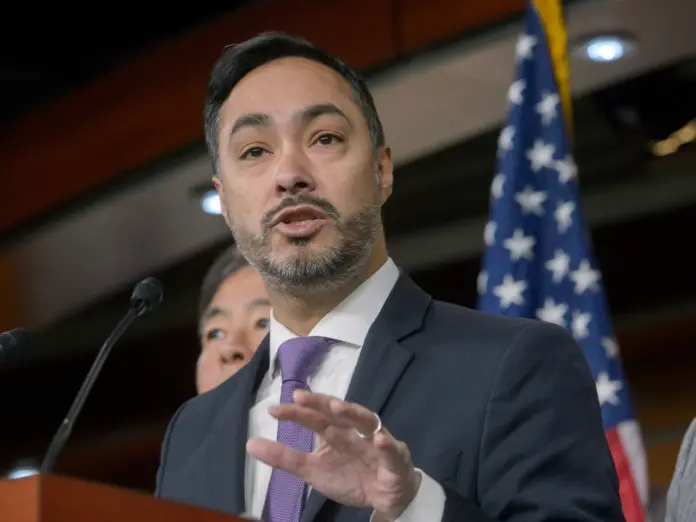
WASHINGTON, DC — Thirty Democratic members of Congress have formally demanded that the State Department abandon its longstanding silence on Israel’s nuclear weapons program, arguing that the escalating US-Israel military campaign against Iran makes transparency on the issue an urgent national security imperative.
Israel Nuclear Arsenal — The letter, addressed to Secretary of State Marco Rubio and dated May 4, asks the administration to provide specific information on Israel’s nuclear warhead stockpiles, delivery systems, and the operations of the Negev Nuclear Research Center in Dimona — widely regarded as the heart of Israel’s clandestine nuclear program. The lawmakers framed their request around the Trump administration’s stated objective of preventing Iran from acquiring a nuclear weapon, arguing that American credibility on nuclear non-proliferation demands a clearer accounting of its closest regional ally’s own capabilities.
Israel has maintained a policy of deliberate nuclear ambiguity for more than six decades, neither confirming nor denying the existence of a weapons program. It is not a signatory to the Treaty on the Non-Proliferation of Nuclear Weapons, placing it outside the international inspection regime that governs most other nuclear-capable states. Tehran, for its part, has consistently denied pursuing nuclear weapons.
Recommended Reading
The historical record, however, tells a more definitive story. As early as 1968, the CIA informed President Lyndon B. Johnson that Israel had developed or was on the verge of developing a nuclear weapon. A 1974 US Special National Intelligence Estimate reinforced those conclusions. That same year, Israeli nuclear technician Mordechai Vanunu leaked photographic evidence of the Negev facility to a British newspaper, providing the public its first detailed glimpse inside Dimona’s operations.
The architecture of American complicity in Israel’s opacity was reportedly formalised under President Richard Nixon, who reached an informal understanding with Israeli Prime Minister Golda Meir: Israel would refrain from publicly acknowledging or testing its arsenal, and Washington would ease its oversight pressures. That arrangement has shaped US policy ever since, surviving administrations of both parties.
The scale of Israel’s presumed arsenal is substantial. The Nuclear Threat Initiative estimates Israel possesses approximately 90 nuclear warheads, supported by a plutonium stockpile ranging between 750 and 1,110 kilograms. Its delivery infrastructure is assessed to include six submarines capable of launching nuclear weapons and intermediate-range ballistic missiles with a reach of 4,800 to 6,500 kilometres — placing much of the Middle East and beyond within range.
Senior American officials have periodically acknowledged what official policy refuses to state. During Senate Armed Services Committee testimony in 2006, then-defence secretary nominee Robert Gates listed Israel among the world’s nuclear powers. Representative James McGovern similarly referenced Israel as a nuclear-armed nation in a 2019 congressional resolution.
Israel Nuclear Arsenal: The Nuclear Dimension
The letter arrives at a moment of intensifying congressional scrutiny of Washington’s relationship with Israel. Lawmakers from both parties have grown increasingly vocal in questioning the depth of American support for Israeli military operations, particularly in the context of the ongoing conflict in Gaza. In April, 40 Democratic senators backed legislation to block the sale of military bulldozers to Israel — a sign of mounting institutional friction over the alliance’s terms.
The Trump administration has made halting Iran’s nuclear ambitions a centrepiece of its regional strategy, framing the US-Israel military campaign against Tehran in those terms. The Democratic signatories argue that this posture is fundamentally undermined by Washington’s refusal to apply consistent standards to its own allies. If nuclear transparency is the benchmark for acceptable behaviour in the Middle East, they contend, that standard cannot exempt Israel.
The State Department has not publicly responded to the letter. Whether Secretary Rubio will engage with the lawmakers’ specific questions — on warhead counts, launcher capabilities, and the Dimona facility — or deflect behind the traditional veil of strategic ambiguity remains to be seen. What is clear is that after more than half a century, the political cost of that silence is beginning to rise.