Hormuz Crisis — The United States has launched a military operation to escort stranded commercial vessels through the Strait of Hormuz, as Washington publicly accused China of sustaining Iran’s war economy and called on Beijing to use its diplomatic leverage to end a blockade that has paralysed one of the world’s most critical energy corridors.
President Donald Trump announced the campaign — dubbed Project Freedom — on Sunday via Truth Social, stating that the US military would begin guiding ships out of the strait starting Monday. Trump simultaneously warned Tehran against any interference with the operation, while the White House posted an image on X of the president holding Uno playing cards alongside the caption that Trump holds ‘all the cards.’
Iran’s Consulate General in Hyderabad, India, responded in kind on the same platform, posting an image displaying four Uno cards to Trump’s five — a pointed signal that Tehran does not consider itself outmatched.
Recommended Reading
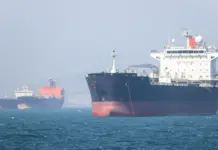
![Tankers anchored in the Strait of Hormuz off the coast of Qeshm Island, Iran [Asghar Besharati/AP Photo]](https://world-tension.s3.us-east-2.amazonaws.com/articles/756/a508b391bdb7403eaf1ba6cb9a83c8b9.webp)
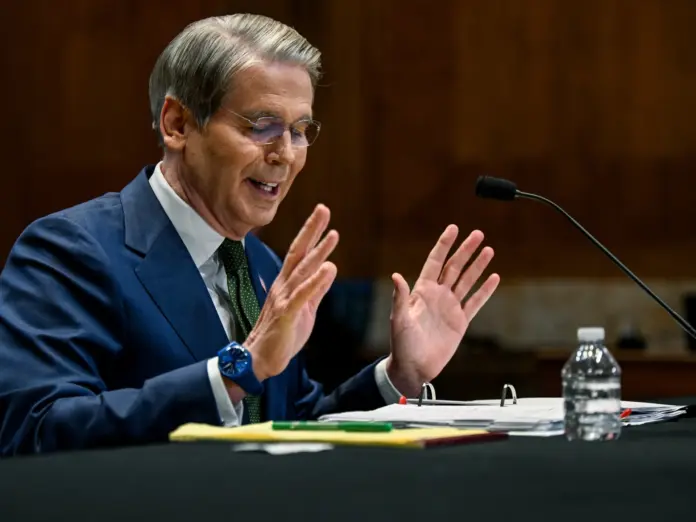
Treasury Secretary Scott Bessent sharpened Washington’s rhetoric on Monday, accusing China of ‘funding the largest state sponsor of terrorism’ by purchasing 90 percent of Iran’s energy output. Bessent called on Beijing to ‘step up’ diplomatically and pressure Tehran to reopen the waterway, through which one-fifth of the world’s oil and liquefied natural gas supplies flowed in peacetime. He also confirmed that the US has ‘absolute control’ of the strait, a claim Iran’s Islamic Revolutionary Guard Corps swiftly contested.
The IRGC issued a new map on Monday extending its claimed boundaries in the Strait of Hormuz further east than any previous demarcation. IRGC spokesperson Sardar Mohebbi insisted there had been no change in the management process of the strait, even as the corps warned that vessels breaching its rules would be ‘stopped by force.’ Iran’s Fars news agency reported that a US warship had been struck by two Iranian drones on Monday; US Central Command flatly denied the claim.
The crisis has been building for months. The war between the United States, Israel, and Iran began on February 28, and American and Israeli forces have since killed more than 3,000 people and struck thousands of sites across Iran. Tehran has effectively blocked nearly all shipping from the Gulf for more than two months in response. Since mid-April, after talks between Washington and Tehran collapsed, the US has enforced a naval blockade of Iranian ports and ships, intercepting or turning back dozens of vessels and seizing a container ship called the Touska. The Touska’s crew was repatriated to Iran from Pakistan on Monday after being captured in the Gulf of Oman last month.
The economic toll is mounting. The average price of a gallon of gasoline in the United States climbed to $4.30 last week, according to the American Automobile Association — up from less than $3 per gallon before the war began. Roughly 4.2 billion barrels of crude oil and refined petroleum liquids passed through the Strait of Hormuz in 2014 alone, representing approximately five percent of global supply.
China’s role has become a central flashpoint. Beijing continued importing Iranian oil even after the collapse of the Joint Comprehensive Plan of Action in 2018, when Trump withdrew from the nuclear agreement during his first term. The JCPOA had required Iran to drastically curtail its nuclear programme under international supervision in exchange for sanctions relief. Washington imposed new sanctions last week on Chinese entities linked to the Iranian oil trade. Chinese Foreign Ministry spokesperson Lin Jian rejected the measures, stating that China does not recognise Washington’s claimed jurisdiction over financial transactions it is not party to.
Hormuz Crisis: Regional Implications
At the United Nations Security Council, China and Russia vetoed a draft resolution earlier this month that would have condemned Iran’s blockade. Chinese Ambassador Fu Cong argued the text ‘failed to capture the root causes and the full picture of the conflict in a comprehensive and balanced manner.’
Against this backdrop, Trump is expected to travel to Beijing next week to meet Chinese President Xi Jinping. Bessent said the summit would allow the two leaders to exchange views directly, a meeting that carries enormous weight given that the US and China reached a preliminary trade deal late last year while simultaneously remaining locked in strategic competition. Trump’s administration has also signalled a broader pivot of foreign policy resources toward the Western Hemisphere rather than the Asia-Pacific since returning to the White House in January 2025.
Military analysts caution that the situation carries significant risks. The US maintains at least three Carrier Strike Groups, two Marine Expeditionary Units, hundreds of combat aircraft, and thousands of troops in the region, according to Michael Clarke, a visiting professor at the Department of War Studies at King’s College London. Clarke noted, however, that Iranian forces have consistently disrupted US expectations through asymmetric tactics — a dynamic underscored by the cost disparity between Iran’s Shahed drones, which can be mass-produced for between $20,000 and $50,000 each, and the US interceptors used to destroy them, which cost approximately $4 million apiece. Iran’s ballistic missiles have also breached Israel’s Iron Dome defence system on several occasions during the conflict.
Trump stated that US negotiators remain engaged in ‘very positive discussions’ with Tehran, leaving open the possibility of a diplomatic resolution even as both sides escalate their postures in and around the world’s most consequential maritime chokepoint.