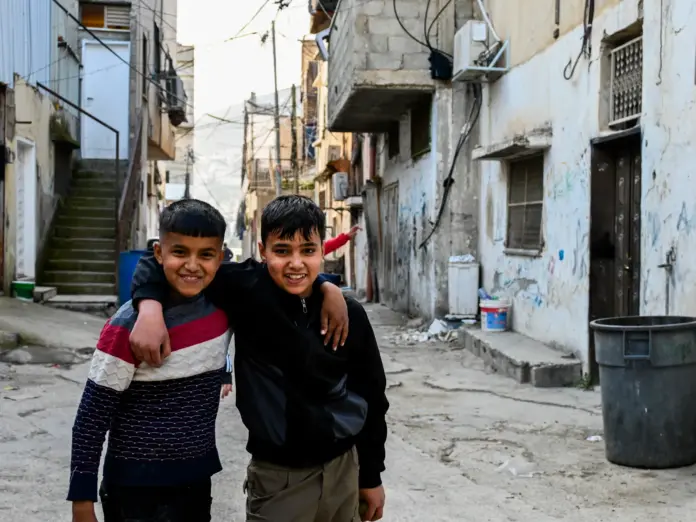
West Bank Camp Violence — On the morning of January 9, 2024, Islam Madani was hurrying to his factory job when a sniper’s bullet tore through the back of his knee and out the front. It was 7:30 am. The 32-year-old father of two from Askar refugee camp near Nablus had not reached work. He has not returned since.
Madani’s wounding is one of dozens of violent incidents that have reshaped daily life in Askar since the Hamas-led attack on Israel on October 7, 2023, which triggered sweeping Israeli military operations across Gaza and an intensification of activity in the occupied West Bank. At least 13 Palestinians have been killed in Askar alone in the period since, according to Palestinian monitoring groups.
The camp is home to 24,000 people compressed into an area roughly equivalent to 17 football fields — one of 19 refugee camps scattered across the occupied West Bank. To its east, the illegal Israeli settlement of Elon Moreh overlooks the city of Nablus. On the slopes of Tel Askar, where families and young people once gathered beneath olive trees, Israeli soldiers have killed three teenagers since October 2023.
Recommended Reading
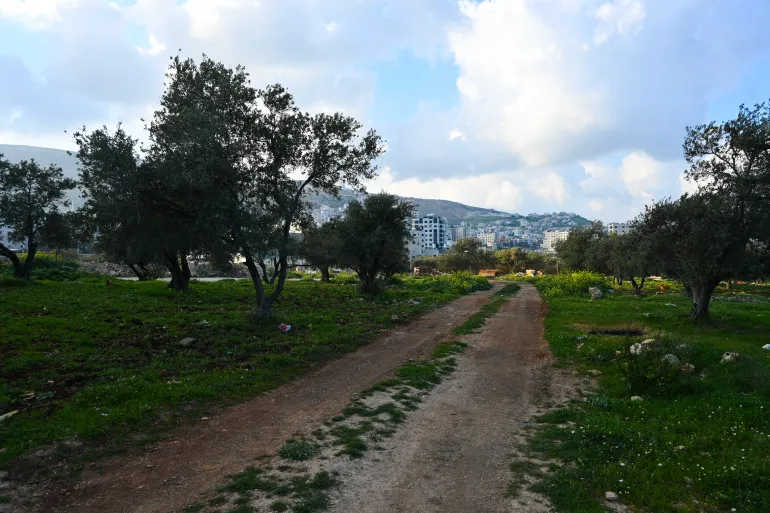
The most recent was Iyad Shalakhti, 14 years old, shot dead by soldiers on July 9, 2025. Before him, Mohammed Abu Haneen was killed at 18. The pattern of lethal force directed at young people has drawn alarm from human rights monitors. Defense for Children International – Palestine documents at least 157 children killed by Israeli soldiers or settlers across the West Bank and occupied East Jerusalem since the start of 2024.
Amjad Refaee, director of the Askar Social Development Centre, has watched the transformation of a community that once used Tel Askar as a gathering place into one defined by fear and loss.
Among those who survived are young men carrying permanent physical damage. Amir Othman was 18 when soldiers shot him in January 2024, shattering his kneecap and thighbone. A footballer and practitioner of Dabke — the traditional Palestinian line dance — Othman underwent four operations and spent four months confined to bed. As he lay bleeding, soldiers blocked ambulances from reaching him. He is now 19, with a leg that will never fully recover.
Yamen Habron, now 17, was shot twice in the side by Israeli soldiers within the past three years. Doctors spent two days extracting bullet shrapnel from his body. He spent 14 days in intensive care. One bullet remains lodged in his hip.
West Bank Camp Violence: Regional Implications
The violence has stripped the camp’s youngest residents of futures they had barely begun to imagine. Amir’s identity was bound to movement — dance, sport, the physical expression of culture. That identity has been fractured. Islam Madani, once a factory worker supporting a young family, is now unemployed, his mobility compromised by a wound that entered from behind as he walked toward an ordinary workday.
The broader context is one of sustained pressure on Palestinian communities throughout the West Bank. Since October 7, 2023, Israeli military operations have expanded significantly beyond Gaza, with raids, arrests, and lethal engagements becoming more frequent across the territory. Askar, dense and hemmed in, has absorbed a disproportionate share of that violence relative to its size.
For residents, the olive-tree slopes of Tel Askar — once a place of community and rest — have become a site of mourning. Three families have buried teenagers there in under two years. Dozens more are living with injuries that will define the rest of their lives. And in a camp where space is already scarce, the psychological weight of that accumulation presses on every remaining household.