Ukraine Reclaims Territory — Ukraine’s military momentum has accelerated sharply through the first half of 2026, with Commander-in-Chief Oleksandr Syrskii confirming that Ukrainian forces reclaimed roughly 600 square kilometres of occupied territory between January and the end of May — a cumulative gain that reflects both battlefield advances and a sustained campaign to strangle Russian supply lines deep behind the front.
May alone proved a watershed. Syrskii reported that Ukraine recovered approximately 100 square kilometres more than it lost during the month. The Institute for the Study of War offered a sharper assessment, calculating that Russian forces seized or infiltrated just 40 square kilometres in May while losing control of roughly 280 — a net Ukrainian gain of 240 square kilometres. Ukrainian defence outlet Militarnyi placed the net figure at 120 square kilometres, estimating Russia captured 130 square kilometres but surrendered 250. The figures diverge in scale but align in direction: the battlefield is tilting.
The contrast with April is stark. That month, the ISW assessed Russia had gained 28 square kilometres while losing 116 — a far narrower Ukrainian advantage. The acceleration in May coincided with a dramatic intensification of long-range strike operations. Defence Minister Mykhailo Fedorov stated that hits on enemy targets more than 50 kilometres from the front line doubled between April and May. Syrskii reported nearly 2,000 strikes on Russian logistics targets in May alone, while Ukrainian short- and medium-range drones struck 180,000 targets during the month — a 12.7 percent increase from April.
Recommended Reading
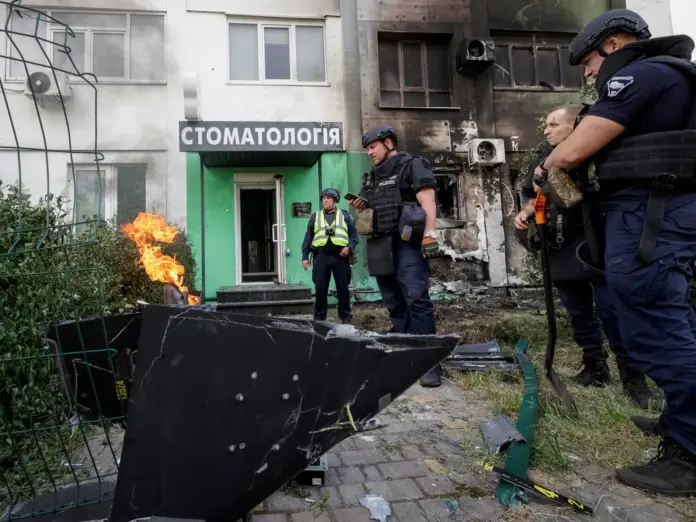
The consequences for Russian rear-area operations have been severe. Ukrainian strikes across the southern Kherson and Zaporizhia regions reduced Russian military traffic along the M-14 motorway by more than 70 percent. On June 7, regional authorities banned all traffic on the route entirely. The following day, Ukrainian forces struck a bridge on the E105 highway over the Chonhar Strait, a critical artery linking the Russian mainland to occupied Crimea. On June 9, Ukrainian forces ambushed and destroyed Russian fuel and ammunition trucks near Armyansk, tightening the noose further.
The effects are rippling into Crimea itself. Sevastopol occupation governor Mikhail Razvozhaev on June 7 imposed fuel rationing, initially capping civilian purchases at 20 litres per car per day before tightening the limit to 20 litres per week. Ukrainian underground network Atesh reported that Russian units were abandoning positions on the Kinburn Spit due to acute food and fuel shortages — a sign that logistical pressure is translating directly into territorial concessions.
In eastern Donetsk, Russian forces hold approximately 13 percent of Konstiantynivka as of early June, having first infiltrated parts of the city in October 2025. The urban foothold represents one of Moscow’s few tangible recent advances, though it remains contested and exposed to the same supply disruptions afflicting Russian positions across the south.
Russia’s drone campaign has also intensified. Moscow launched 25 percent more Shahed drones in May compared to April, but Ukrainian air defences destroyed approximately 4,000 of them — a 50 percent increase in intercepts from the previous month. The exchange rate underscores a growing asymmetry: Russia is spending more to achieve less.
Ukraine Reclaims Territory: The Wider European Impact
Manpower pressures compound the operational strain. Ukraine estimated 31,500 Russian casualties in May 2026 and stated it had killed or wounded 12,500 more Russian troops than Russia managed to recruit throughout 2026. Russian opposition outlet Vazhnye Istorii reported that enlistment bonuses were paid to 71,200 people in the first quarter of 2026, down sharply from nearly 90,000 in the same period of 2025 — itself a year when recruitment ran roughly 10 percent below 2024 levels. Since January, just 14,500 people have signed contracts to serve in Russian unmanned systems units, representing about 21 percent of the annual target.
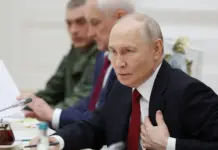
Against this backdrop, diplomacy has stalled. On June 5, Vladimir Putin rejected a direct-talks request from Ukrainian President Volodymyr Zelenskyy. Zelenskyy disclosed he had met with Russian oligarch Roman Abramovich, who was acting as Putin’s intermediary — a channel that has so far yielded no breakthrough. With Russian logistics fracturing, battlefield losses mounting, and recruitment declining, the pressure on Moscow to engage meaningfully is growing, even as the Kremlin maintains its public posture of intransigence.