Ukrainian Drones Strike Crimea — A massive Ukrainian drone offensive has struck targets across occupied Crimea and deep into Russian territory, damaging a celebrated 19th-century museum, crippling rail operations, and forcing authorities to suspend civilian fuel sales across the peninsula.
The Panorama ‘Defense of Sevastopol 1854-1855’ museum — a landmark building commemorating Russia’s struggle against an Ottoman-led coalition during the Crimean War — sustained a roof fire after Ukrainian drones struck the site. Mikhail Razvozhayev, Sevastopol’s Russian-installed governor, announced the damage on Telegram early Wednesday. Emergency responders from Russia’s Emergency Ministry and the Sevastopol Rescue Service extinguished the blaze.
The cultural strike compounded an already severe disruption to Crimea’s transport network. On Monday, a drone hit the locomotive of passenger train number 68 on the Moscow-Simferopol route, killing the driver’s assistant and wounding the driver. Crimea governor Sergei Aksyonov confirmed the locomotive was the direct target. Eight passenger trains were halted in the aftermath, with all passengers evacuated by bus to Simferopol and Sevastopol. Russian authorities subsequently slashed nighttime train schedules across the peninsula in response to the escalating threat.
Recommended Reading
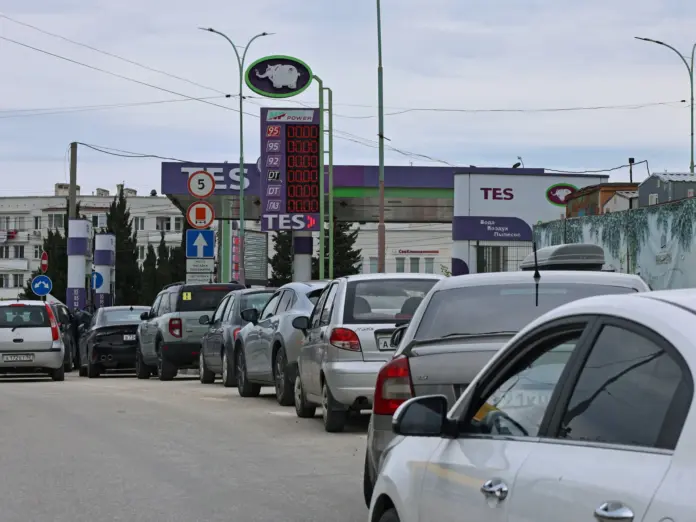
The pressure on Crimea’s civilian infrastructure has reached a critical threshold. Unrestricted commercial sale of gasoline has been completely suspended across the peninsula, with fuel now strictly rationed and reserved for emergency services or distributed through state-issued vouchers. The shortages follow a sustained campaign of Ukrainian drone strikes targeting the territory, which Russia annexed from Ukraine in 2014.
The Kremlin, responding to the train attack, accused Ukraine of undermining efforts toward a peaceful resolution — a pointed statement given that Ukrainian President Volodymyr Zelenskyy proposed direct face-to-face talks with Vladimir Putin last week, an overture Putin rejected.
Beyond Crimea, the overnight drone campaign struck targets hundreds of kilometres inside Russian territory. The Russian Defence Ministry reported that air defence systems destroyed 326 Ukrainian drones over Russia — a figure that underscores the scale of the assault even as significant damage was recorded at multiple sites.
In Novokuibyshevsk, located in Russia’s Samara oil hub region, at least 29 drones attacked the area, and the Kuibyshevsk oil refinery — a Rosneft facility — was confirmed burning by the Russian open-source intelligence channel Astra. In the Rostov region bordering Ukraine, debris from an intercepted drone triggered a fire at a fuel tank on a civilian site. Two industrial facilities were reported ablaze in the central Vladimir region.
The geographic reach of the strikes was striking. Rare air raid alerts were issued in the oil-producing regions of Khanty-Mansiysk, Perm, and Tyumen — areas far removed from the front lines — as well as in the industrial Ural mountain regions of Chelyabinsk and Sverdlovsk. More than a dozen drones were reported heading toward Moscow during the overnight assault.
Ukrainian Drones Strike Crimea: The Wider European Impact
The coordinated strikes represent one of the most geographically expansive Ukrainian drone campaigns of the war, simultaneously targeting occupied Ukrainian territory, border regions, and Russia’s industrial and energy heartland. The attacks on refinery infrastructure carry particular strategic weight, as disrupting fuel production and supply chains directly affects both military logistics and civilian stability inside Russia.
The destruction of the Sevastopol panorama museum carries symbolic resonance beyond its military significance. The building houses a monumental circular painting depicting the 1854-1855 siege of Sevastopol and has long served as a centerpiece of Russian historical identity in Crimea. Its damage is likely to intensify domestic political pressure on the Kremlin even as the broader military campaign grinds on.
With civilian fuel rationed, rail schedules curtailed, and a culturally significant landmark damaged, the cumulative impact on life in Russian-controlled Crimea is deepening — and the peninsula’s vulnerabilities to sustained aerial pressure are becoming increasingly difficult to conceal.