Israel Strikes Southern Lebanon — Israeli military forces struck multiple locations across southern Lebanon on Friday, injuring at least one person and raising fresh doubts about the durability of a ceasefire agreement reached earlier this month following US-led talks in Washington.
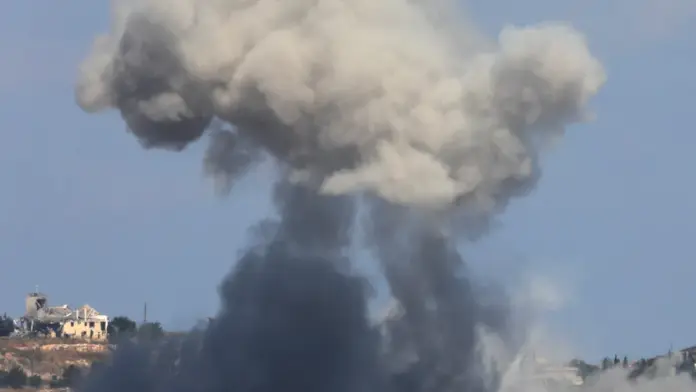
An Israeli air raid hit the village of al-Bayyad in the Tyre district, striking the main street near the Ali Kamal Suleiman Volunteer Centre, a facility affiliated with the al-Risala Health Ambulance Association. One person was wounded in that strike. Separately, a drone hit the town of Jebchit in the Nabatieh district, while Israeli warplanes struck the Arid Dbeibin area in the Marjayoun district. An Israeli army explosion also hit the plain of Khiam, also in Marjayoun.
Artillery shelling struck the outskirts of Buyout al-Sayyad in the Tyre district, and warplanes launched attacks on the town of Qalaouiyah. Further north, drones flew at low altitude over the town of Baysariyeh in the Sidon district, heightening alarm among residents in an area not typically at the centre of hostilities.
Recommended Reading
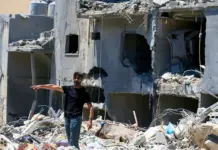
The strikes underscore the precarious nature of the ceasefire, which was contingent on a complete cessation of fire by Hezbollah. Since the conflict escalated on March 2, Israeli attacks have killed at least 3,711 people in Lebanon and wounded 11,483 others. Among the dead are at least 247 children and 132 health workers — a toll that has drawn sharp international condemnation.
The military activity unfolded against a backdrop of intensifying diplomatic manoeuvring. Hezbollah lawmaker Hassan Fadlallah addressed a commemorative ceremony for the group’s fallen fighters in Beirut’s al-Janah neighbourhood on Friday, commenting on the prospect of a US-Iran peace agreement. His remarks followed reporting by Iran’s Mehr news agency that a 14-point draft deal between Tehran and Washington — circulated by several Iranian media outlets — would include provisions to end the war in Lebanon.
Lebanese President Joseph Aoun pushed back firmly against any suggestion that Iran holds a negotiating mandate on Lebanon’s behalf. "Iran does not speak for Lebanon," Aoun stated, a position echoed by the Lebanese government, which insists it is not party to the US-Iran talks and will pursue its own diplomatic track.
That track includes scheduled political and security discussions between Lebanon and Israel set for June 22 in Washington. Beirut is demanding a full withdrawal of Israeli troops from the south of the country — a position that puts it on a collision course with Israel, whose government has signalled it will require Lebanon to take concrete action against Hezbollah outside any designated security zone before any troop withdrawal is considered.
Israel Strikes Southern Lebanon: Regional Implications
The competing demands reflect the broader impasse that has defined the post-ceasefire period. While the agreement halted the most intense phase of fighting, Israeli strikes have continued, and the political conditions for a lasting settlement remain deeply contested. Lebanon’s insistence on sovereignty over its southern territory clashes directly with Israel’s security calculus, which frames Hezbollah’s continued presence as an existential threat.
The humanitarian consequences of the conflict continue to mount. The targeting of health infrastructure — with 132 medical workers killed since March — has drawn particular concern from international observers, who warn that the erosion of Lebanon’s already strained health system will have consequences far beyond the immediate conflict zone.
With the June 22 Washington talks approaching and the Iran-US diplomatic channel adding a further layer of complexity, the coming weeks are likely to test whether the ceasefire framework can hold — or whether the pattern of strikes and counter-pressures will push the situation toward renewed escalation.