Pretoria Peace Deal — A peace agreement that silenced one of Africa’s bloodiest conflicts is being deliberately dismantled by hardline factions backed by Eritrea, threatening to plunge Ethiopia’s Tigray region back into war less than two years after a historic ceasefire was signed.
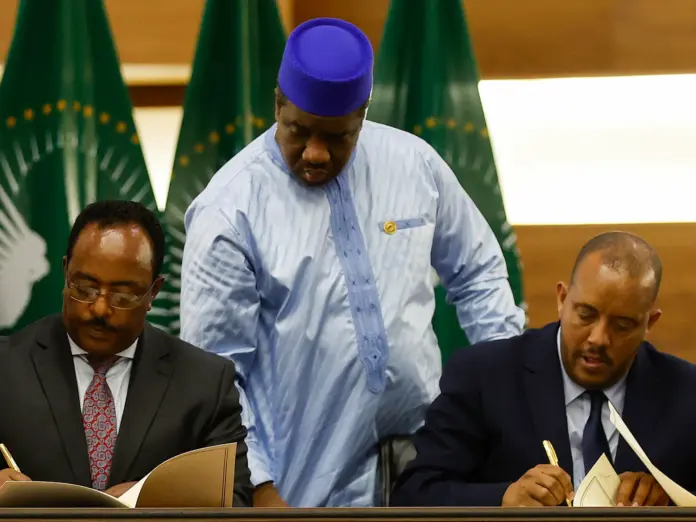
The Agreement for Lasting Peace Through a Permanent Cessation of Hostilities, concluded on November 3, 2022, in Pretoria, South Africa, represented the culmination of gruelling negotiations between the Ethiopian federal government and the Tigray People’s Liberation Front (TPLF). Mediators and negotiating teams worked through sessions that stretched past midnight over several days, forging a deal that brought an immediate halt to fighting and allowed a semblance of normalcy to return to a region devastated by years of brutal conflict.
The agreement’s fragility, however, was apparent from the outset. A hardline rump faction within the TPLF rejected the deal, as did the Amhara Fano militia. Most consequentially, Eritrean President Isaias Afwerki publicly denounced the accord as a CIA ploy, signalling Asmara’s intent to actively undermine it.
Recommended Reading
Eritrea moved swiftly from rhetoric to action. Operatives working on behalf of the Eritrean government brokered a covert coalition of groups united in their opposition to the Pretoria Agreement. The alliance, dubbed ‘Tsimdo’, was assembled through a series of meetings — some covert, some open — held across Asmara, Mekelle, and Sudan. Eritrea simultaneously extended support to various rebel and militant groups operating against the Ethiopian state, deepening its role as a regional spoiler.
Within Tigray itself, the rump TPLF moved aggressively to consolidate control and prepare for renewed hostilities. The faction dismantled the regional interim administration that had been established under the terms of the Pretoria Agreement, replacing it with an illegal parallel administration. Members who advocated for peace or compliance with the ceasefire terms were purged from the organisation’s ranks.
The military build-up has been systematic. With direct support from the Eritrean government, the rump TPLF has continued recruiting, training, and arming fighters. Forced conscription has been employed to swell its ranks. The faction has now openly abrogated the Pretoria Agreement and is reported to be planning an offensive against federal government forces — a development that would mark a catastrophic return to full-scale war.
The trajectory stands in stark contrast to the aspirations that drove the Pretoria negotiations. South Africa’s mediation brought the two warring parties to the table while fighting was still actively under way, a testament to the diplomatic effort invested in reaching a settlement. The agreement that emerged succeeded in stopping the immediate bloodshed and gave the war-ravaged Tigray region its first sustained period of relative calm in years.
Pretoria Peace Deal: The Broader African Context
Critically, the population of the Tigray regional state has broadly rejected the rump TPLF’s war agenda, underscoring that the hardline faction’s push for renewed conflict does not reflect the will of the people it claims to represent. The civilian population, which bore the catastrophic human cost of the original conflict, has little appetite for a return to hostilities.
The situation presents a severe test for the Pretoria framework and for regional stability more broadly. Eritrea’s active sponsorship of anti-peace forces introduces a cross-border dimension that complicates any Ethiopian federal response. The Tsimdo alliance, drawing together disparate armed factions under Eritrean patronage, represents a coordinated effort to ensure the agreement fails rather than a spontaneous rejection of its terms.
The Ethiopian federal government now faces the challenge of preserving a peace architecture that its principal adversary signed but whose hardline remnants — emboldened by a neighbouring state — are working methodically to destroy. Whether the diplomatic gains of November 2022 can survive this sustained assault remains deeply uncertain.