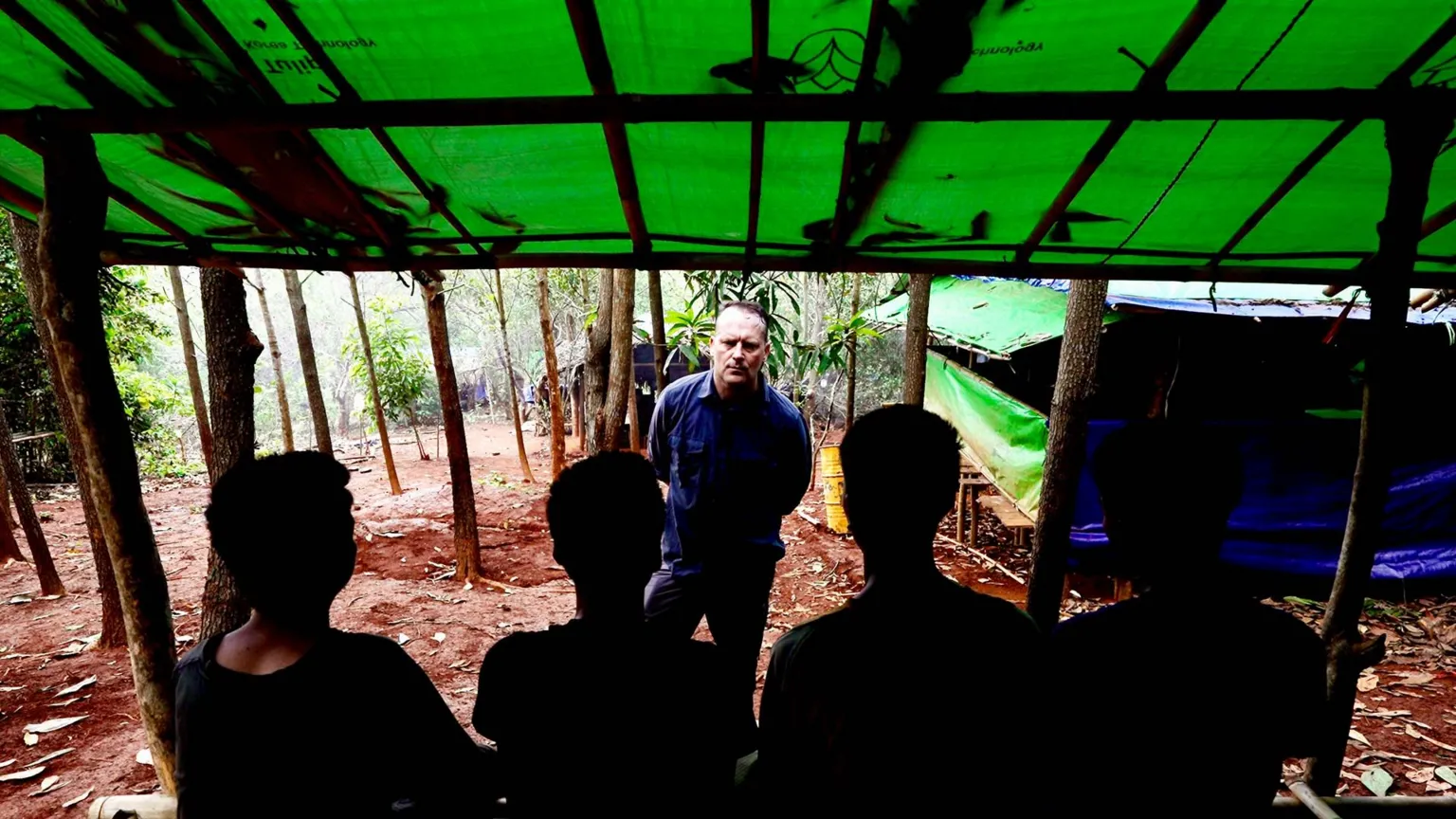
Myanmar Junta Conscripts — In the jungle-covered mountains of Myanmar’s Karen state, four young men sit in a rebel camp, their military uniforms exchanged for the uncertain status of detainees held by the People’s Defence Force. Aged between 19 and 25, they arrived at the front not by choice but by force — each with a different story of how the junta’s conscription machine swallowed them whole.
One was grabbed off the street for lacking an identification card. Another was seized mid-song at a late-night karaoke session. A third was arrested at his forestry department post. The fourth says soldiers planted drugs in his shoe to manufacture a pretext for his enlistment. All four spent four months in basic training before being dispatched to the front lines in Karen state, where they eventually escaped and were detained by People’s Defence Force (PDF) fighters.
Their accounts illuminate the desperate measures taken by Myanmar’s military junta since it began enforcing a mandatory conscription law in 2024, requiring a minimum two years of service. The law came as the military, which seized power from the democratically elected government of Aung San Suu Kyi in 2021, found itself stretched across a country it no longer fully controls. Suu Kyi remains imprisoned, a symbol of the democratic order the coup dismantled.
Recommended Reading
The junta currently holds firm control over less than half of Myanmar’s territory. An alliance of ethnic armed organisations and resistance groups made sweeping territorial gains more than two years ago, capturing towns, bases, and critical supply routes. But the momentum has shifted. The military has retaken a vital road connecting Mandalay to Myitkyina in the north, and thousands of soldiers are now pushing to reassert control over Kachin, Chin, and Karen states.
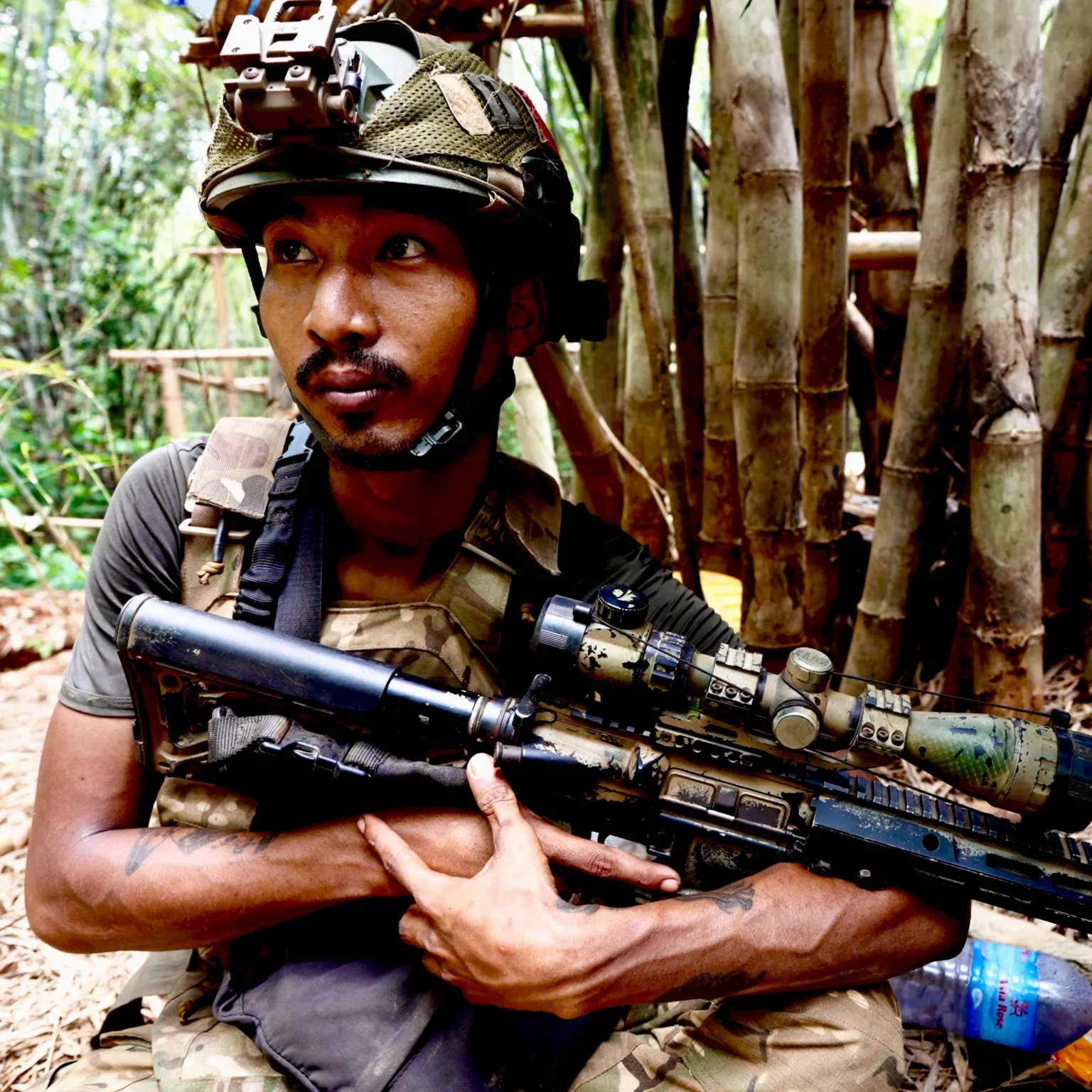
In Hpapun, the administrative heart of Karen state, PDF battalion commander Ko Kaung is watching the horizon. Two years ago, he and his fighters seized the town and overran a sprawling military base. Now, as many as 2,000 junta soldiers are reported to be advancing in his direction. ‘We are preparing,’ he said, offering little elaboration.
Further along the front, PDF commander Da Wa — a former political activist who spent four and a half years in government prison before taking up arms — faces a column of approximately 400 advancing soldiers. In April, his forces captured a military base but held it for only a matter of days before artillery barrages and airstrikes forced a withdrawal. The pattern is becoming familiar: resistance fighters gain ground, then lose it to the junta’s overwhelming firepower.
The human cost accumulates quietly in places like the field hospital run by Dr Saung, a former military academy physician who served the junta for 19 years before defecting to the resistance. His facility — bamboo and wood huts with an operating theatre powered by solar panels and a backup generator — treats the wounded from both sides of the conflict. Among his recent patients was platoon commander Kyar Soe, injured in battle after stepping on a landmine. Myanmar ranks among the most heavily mined countries on earth; last year alone, 745 people were killed or injured by landmines, a quarter of them children.
Myanmar Junta Conscripts: The Conflict in Context
Not all stories from the hospital are of loss. May Kyut Mon, 29, recently gave birth to a baby girl there, naming her Sue Paye — ‘fulfilled wish’ in Burmese. Her husband, Yine Chit, 24, a resistance fighter, was present for the birth. His own family remains in junta-controlled territory, unreachable to him.
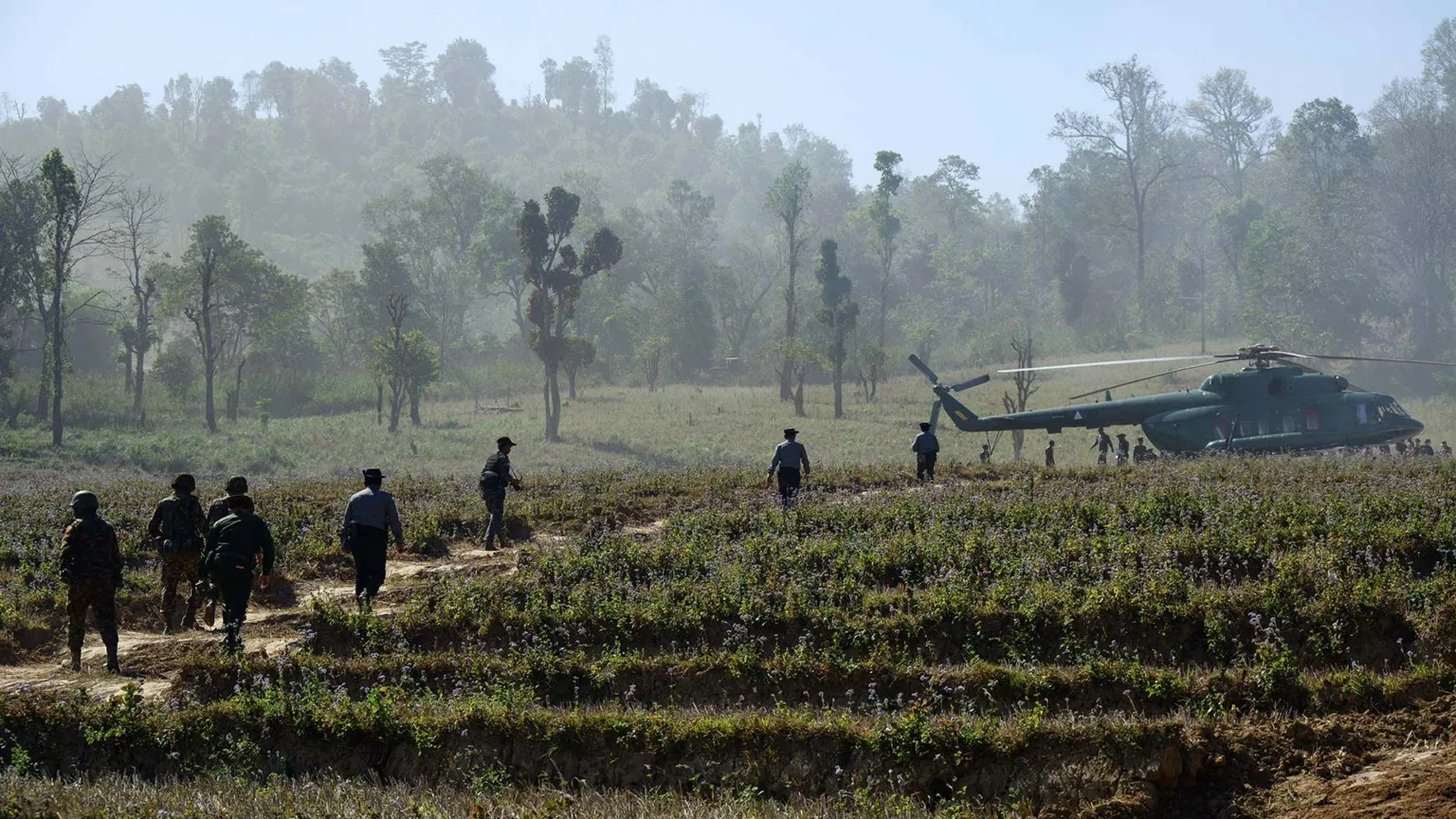
The civil war, now entering its fifth year, has killed thousands and displaced millions. The conflict has drawn in external powers with competing interests. The junta has formalised its relationship with Russia through a security pact, securing a partner willing to supply arms and diplomatic cover. China, which has invested billions in Myanmar and is actively mining rare earth minerals in Karen and Kachin states, has played a more ambiguous role — brokering ceasefires with select rebel groups while simultaneously throttling the flow of weapons and ammunition to resistance forces, a strategy that has blunted the opposition’s earlier momentum.
The scale of the crisis — a military that cannot pacify its own country, a resistance that cannot deliver a decisive blow, and a civilian population ground between them — defines a conflict with no clear end in sight. For the four young conscripts now sitting in a PDF camp, the immediate question is simpler and more personal: what happens next, in a war that claimed them before they ever chose a side.