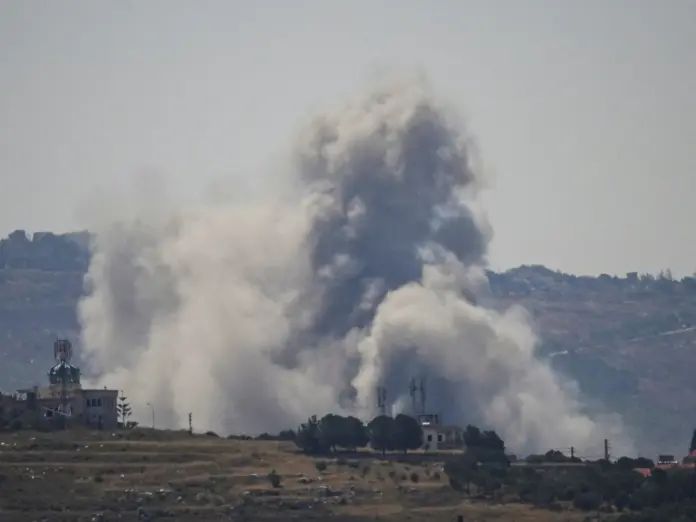
Lebanon War Ceasefire — Israel’s second major military campaign against Lebanon in two years has reached the 100-day mark, a grim milestone defined by mass civilian casualties, the destruction of dozens of southern villages, and the repeated collapse of diplomatic efforts to end the fighting.
The Lebanese Ministry of Public Health reports that Israeli attacks have killed more than 3,600 people since the intensification began on March 2, including at least 245 children. A further 11,000 people have been wounded, among them more than 900 minors. The toll on emergency responders has been severe: at least 131 paramedics have been killed, while 17 hospitals have been damaged and three forced to close entirely.
The campaign’s 100th day was marked by fresh violence. An Israeli air raid on a residential area in the southern coastal city of Tyre killed at least eight people, hours after Israel issued a forced displacement order for the city — a warning that has become a recurring feature of the conflict. Israel currently occupies approximately 2,000 square kilometres of Lebanese territory, and Defence Minister Israel Katz has stated that Israeli troops intend to hold positions up to the Litani River. Finance Minister Bezalel Smotrich has gone further, publicly calling for the annexation of southern Lebanon and the formal declaration of the Litani as Israel’s new northern border.
Recommended Reading
The war’s most devastating single episode came on April 8, when Israel launched an operation it called ‘Eternal Darkness’, conducting more than 100 strikes in under ten minutes and killing more than 350 people. The day was immediately designated Black Wednesday in Lebanon and drew widespread international condemnation.
Diplomatic efforts have so far failed to translate into lasting calm. Donald Trump declared a ceasefire between the two sides on April 16, but the fighting continued. A second agreement, reached through direct Lebanon-Israel negotiations on June 3 — the first such direct talks between the two countries in decades — was swiftly rejected by Hezbollah. The group’s secretary-general, Naim Qassem, dismissed the deal as ‘shameless’, arguing that any agreement reached while Israeli forces remain on Lebanese soil lacks legitimacy.
The roots of the current escalation trace to early March. On March 2, Hezbollah fired six rockets into Israel, triggering what Israeli officials described as a necessary intensification of operations. That same day, the Lebanese government took the extraordinary step of declaring Hezbollah’s military activities illegal — a significant political shift in a country where the group has long operated as a state within a state. Two days earlier, Ayatollah Ali Khamenei, Iran’s Supreme Leader, had been killed, a development that reshaped the regional calculus surrounding the conflict.
Since March 2, at least 1.2 million people have been forcibly displaced from their homes across Lebanon, with southern communities bearing the heaviest burden. Dozens of villages in the south have been destroyed, and Israel’s continued occupation of Lebanese territory has complicated any framework for a sustainable ceasefire.
Lebanon War Ceasefire: Regional Implications
On the battlefield, Hezbollah has adapted its tactics, deploying fibre-optic drones against Israeli forces — a development that military analysts say reflects the group’s efforts to counter Israeli electronic warfare capabilities that can jam conventional drone communications.
The conflict’s regional dimensions have grown increasingly complex. Iran launched a retaliatory strike against Israel on Sunday in response to an earlier Israeli attack on Beirut’s southern suburbs. Tehran has also signalled that any ceasefire agreement it reaches with the United States and Israel will be explicitly linked to the situation in Lebanon, effectively internationalising the conflict and raising the stakes for any broader diplomatic settlement.
Israel last invaded Lebanon in October 2024, withdrawing following a ceasefire in November of that year — though it retained control of five border positions. The current campaign, which began in earnest in March, has proven far more destructive and has drawn Lebanon deeper into a regional confrontation that shows little sign of resolution. With Hezbollah refusing to accept the terms on the table and Iran tying the Lebanon file to its own negotiations with Washington, the path to a durable ceasefire remains deeply uncertain.