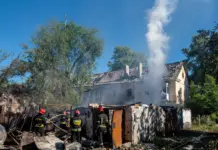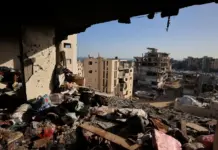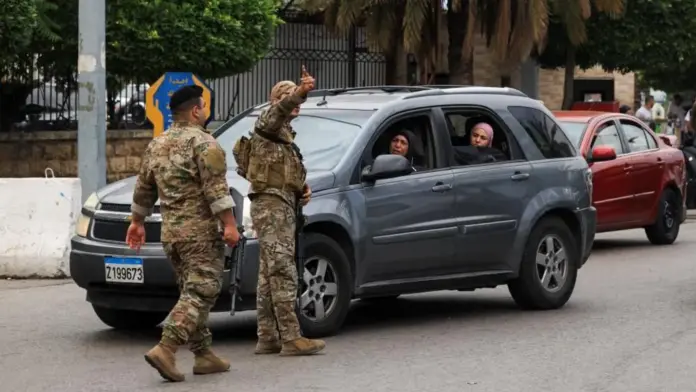
Israel-Lebanon Ceasefire — A cascade of military strikes, diplomatic warnings and surging oil prices has brought the Middle East to one of its most precarious moments in months, as Israeli bombardment of Beirut’s southern suburbs threatens to unravel a web of interconnected ceasefires brokered by Washington.
Israeli Prime Minister Benjamin Netanyahu ordered strikes on the Dahieh district — Hezbollah’s stronghold in southern Beirut — following rocket and drone attacks by the Iran-backed militant group. The Israeli military has now struck Beirut twice since a ceasefire between Israel and Lebanon came into force on 16 April, with the most recent strike occurring on Thursday.
The escalation drew an immediate response from Tehran. Iranian state television declared the probability of the US-Iran ceasefire collapsing was high if Israel did not end its offensive in Lebanon. That agreement, which came into force on 8 April, has already been strained by a weekend exchange of direct strikes between Washington and Tehran — the US hitting Iranian military sites near the Strait of Hormuz, and Iran retaliating by targeting a US base in Kuwait.
Recommended Reading
Iran’s Foreign Minister Abbas Araghchi made clear that Tehran views the two ceasefires as inseparable. Any agreement with the United States, he stated, must encompass all fronts — including Lebanon. Iran has long provided Hezbollah with ideological, military and financial support, and insists the group’s fate cannot be negotiated separately from broader regional arrangements.
The warning carried an explicit economic threat. The Tasnim news agency, which is affiliated with Iran’s Islamic Revolutionary Guard Corps, reported that Tehran and its allies could activate additional fronts, including the Bab al-Mandab Strait at the entrance to the Red Sea. The three-month-long conflict has already effectively closed the Strait of Hormuz — a chokepoint through which roughly a fifth of the world’s oil and liquefied natural gas supplies normally flow. Brent crude oil jumped almost $5 per barrel to $97.44 on Monday, extending a period of intense price volatility that began when Israel and the United States launched strikes against Iran on 28 February.
President Donald Trump sought to project confidence, describing a productive call with Netanyahu and asserting that Hezbollah and Israel had agreed to stop all shooting. Trump also claimed to have spoken directly with highly placed representatives of Hezbollah — an unusual disclosure — and said no American troops would be deployed to Beirut. The White House has simultaneously been pressing Netanyahu to curtail military operations in the Lebanese capital, wary that continued strikes could torpedo the broader diplomatic architecture Washington has spent months constructing.
Secretary of State Marco Rubio travelled to the region on Sunday, presenting a plan for gradual de-escalation to both Netanyahu and Lebanese President Joseph Aoun. The proposal reflects Washington’s persistent effort to decouple events in Lebanon from its nuclear and security negotiations with Iran — a separation Tehran has consistently refused to accept.
Israel-Lebanon Ceasefire: Regional Implications
The diplomatic tightrope is growing increasingly difficult to walk. Tasnim also reported that Iran could suspend indirect negotiations with the United States entirely, a move that would effectively collapse the diplomatic track that has kept the conflict from spiralling into a broader regional war. The agency’s IRGC affiliation gives the warning added weight as a signal of hardline military thinking within the Iranian establishment.
The crisis has exposed the fragility of a ceasefire architecture built on competing and often contradictory interests. Israel insists on its right to respond to Hezbollah provocations regardless of broader diplomatic timelines. Iran demands that any durable peace must guarantee Hezbollah’s security. And the United States, caught between its commitment to Israeli security and its desire for a negotiated settlement with Tehran, is struggling to hold both positions simultaneously.
With the Strait of Hormuz effectively closed to normal traffic and the threat of a second maritime chokepoint at Bab al-Mandab now looming, the economic stakes of a further breakdown are severe. Energy markets, already rattled by months of conflict, are pricing in the possibility that the region’s most critical waterways could remain disrupted well into the coming months — a prospect with consequences extending far beyond the immediate battlefield.