Every morning, 14-year-old Qasim leaves his family’s home in Sanaa not with a schoolbag, but with an empty sack. He spends his days combing the streets of the Yemeni capital for discarded plastic bottles, hauling them to recycling points where a full sack earns him up to 1,500 Yemeni riyals — roughly three US dollars. His 12-year-old brother, Asem, works alongside him.
Qasim dropped out of government school in 2024 after completing fourth grade. Asem followed in 2025. Neither boy expects to return. Their father, Abdu, 48, has worked as a daily wage labourer in Sanaa since the war began in 2014 and has not left the city since. The family of six depends on whatever income its members can piece together each day.
"I want to learn a trade — painting, carpentry, welding," Qasim has said, his ambitions shaped entirely by economic necessity rather than academic aspiration. For millions of Yemeni children, the classroom has become a luxury the country can no longer afford to offer.
UNICEF estimates that 3.2 million school-aged children in Yemen are currently out of school. A further 1.5 million displaced children are considered at risk of permanent dropout — a cohort that, if lost entirely to the education system, would represent a generational wound with consequences stretching decades beyond any eventual peace settlement.
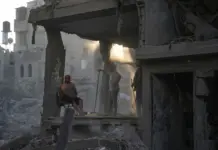
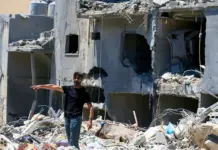
The scale of physical destruction compounds the crisis. Save the Children documents more than 2,400 schools across Yemen that are destroyed, partially damaged, or repurposed for non-educational use. In Houthi-controlled northern Yemen, public servants and teachers have gone unpaid for years. Even in government-held territories, teacher salaries arrive irregularly if at all. Fatima Saleh, a schoolteacher in Sanaa, is among the educators continuing to work under conditions of profound financial precarity.
The economic backdrop is catastrophic. Waed Badhib, Yemen’s Minister of Planning and International Cooperation, has stated that the war has inflicted losses exceeding $250 billion on the national economy. The country’s unemployment rate has climbed to 35 percent — a figure that helps explain why families like Qasim’s have little choice but to pull children from school and send them to work.
Yemen has been locked in conflict for more than a decade, pitting Iran-backed Houthi forces against a Saudi-backed government. A ceasefire brokered in April 2022 largely halted active fighting along front lines, offering a fragile pause in hostilities. Yet the structural damage to Yemen’s institutions — its schools, its civil service, its economy — has continued to deepen. International aid organisations, which once helped fill critical gaps, have significantly scaled back their activities in the country.
Mahmoud al-Bukari, an academic and deputy head of the social affairs labour office in Taiz, and Afrah al-Humaiqani, a sociology professor based in Aden, are among researchers tracking the social consequences of prolonged educational exclusion. Mohammed Abdu al-Samei, a journalist and researcher focused on social issues, has also documented the widening gap between Yemen’s children and any realistic path back to formal education.
The pattern playing out in Qasim’s family is replicated across the country. Child labour, once a marginal phenomenon, has become a survival strategy for households stripped of adult income by death, displacement, or unemployment. Boys collect bottles, carry loads, or apprentice in workshops. Girls face additional risks, including early marriage, as families seek to reduce the number of dependants they must feed.
What makes Yemen’s educational crisis particularly acute is its self-reinforcing nature. Teachers who are not paid stop teaching. Schools that are damaged are not repaired. Children who leave school at ten or twelve rarely return. The longer the crisis persists, the harder any recovery becomes — and the more certain it is that an entire generation will enter adulthood without the skills or credentials needed to rebuild a functioning state.
For Qasim, the calculus is already settled. Three dollars a day, earned bottle by bottle through Sanaa’s streets, is the present reality. A trade — something tangible, learnable without a classroom — is the most he allows himself to hope for. The future his country might have offered him has, for now, been deferred indefinitely.