Us-Iran Clashes — Military confrontations between the United States and Iran escalated sharply on Friday, with American forces shooting down four Iranian drones and striking coastal radar installations on Iranian soil, as the broader regional conflict claimed more civilian lives across Lebanon and the occupied West Bank.
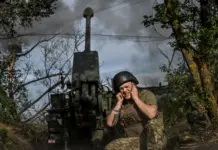
CENTCOM confirmed that US forces destroyed Iranian coastal surveillance radar sites on Qeshm Island and at Goruk on Iran’s southern coast, marking a significant escalation in direct strikes on Iranian territory. The operations came as the Strait of Hormuz remained the focal point of military exchanges between the two powers, more than three months after the conflict began on February 28.
Iran’s navy claimed its forces fired warning shots at US personnel in the Gulf of Oman on Friday — an assertion CENTCOM flatly denied. The competing accounts underscore the volatile and contested nature of the ongoing confrontation, which continues despite a ceasefire nominally in place between Washington and Tehran. Skirmishes have persisted throughout the ceasefire period, with neither side showing signs of standing down.
Recommended Reading
President Donald Trump signalled no urgency in resolving the standoff, telling reporters he is in no hurry to finalise any deal with Iran. In a striking historical comparison, Trump noted that while Iran has endured the conflict for over three months, the Vietnam War stretched across nearly 19 years — framing the current campaign as one of strategic patience.
The regional tremors from the US-Iran confrontation extended into the Gulf, where Kuwait activated air defences to intercept incoming missile and drone attacks, and Bahrain’s Ministry of Interior sounded alarm sirens, urging citizens and residents to seek immediate shelter. The simultaneous alerts in two Gulf states pointed to a rapidly broadening theatre of conflict.
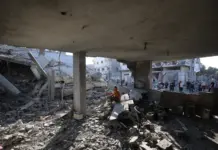
In Lebanon, Israeli military operations showed no sign of abating. Five people were killed in strikes on Zebdin in the south, including a paramedic. Israeli forces also ordered the forced displacement of residents from at least nine towns and villages in southern Lebanon, and the army reported intercepting a hostile aircraft over the south, with two aircraft targeting an area where Israeli troops were stationed — though no casualties were reported in that incident. Strikes continued around Beaufort Castle, despite a separate ceasefire announcement covering Lebanon.
Lebanon’s Health Ministry reported that the cumulative death toll from Israeli attacks since March 2 has reached 3,558 people, with a further 10,870 injured. The United Nations estimates that 1.4 million people inside Lebanon are now in need of humanitarian assistance — a figure that reflects the scale of displacement and infrastructure destruction wrought by months of sustained bombardment.
Lebanese President Joseph Aoun levelled a pointed accusation at Tehran, charging that Iran has been using Lebanon as a bargaining chip in its negotiations with the United States — a statement that laid bare the frustration of Beirut’s leadership as its territory bears the consequences of a conflict driven by external powers.
Us-Iran Clashes: Regional Implications
In the occupied West Bank, Israeli forces shot and killed a seven-month-old Palestinian infant, with the child’s parents wounded in the same incident. The killing drew immediate international condemnation and added to mounting pressure on Israel over its conduct across multiple fronts.
On the diplomatic track, Hamas officials arrived in Cairo on Friday for talks aimed at finalising implementation of the first phase of the US-brokered ceasefire agreement in Gaza. The negotiations represent one of the few active diplomatic channels still functioning amid the broader regional conflagration.
In a symbolic act of political defiance far from the conflict zone, Slovenia’s President Natasa Pirc Musar raised the Palestinian flag outside the Presidential palace for one week, directly responding to Prime Minister Janez Jansa, who had removed the flag from the main government building in Ljubljana within hours of taking office. The gesture highlighted the deepening divisions within European governments over the Israeli-Palestinian conflict and the broader Middle East crisis.
With Gulf states on high alert, Iranian and American forces trading strikes and denials, Lebanese civilians bearing a catastrophic humanitarian burden, and diplomatic efforts struggling to gain traction, the region faces its most volatile moment in years — and no clear path toward de-escalation.