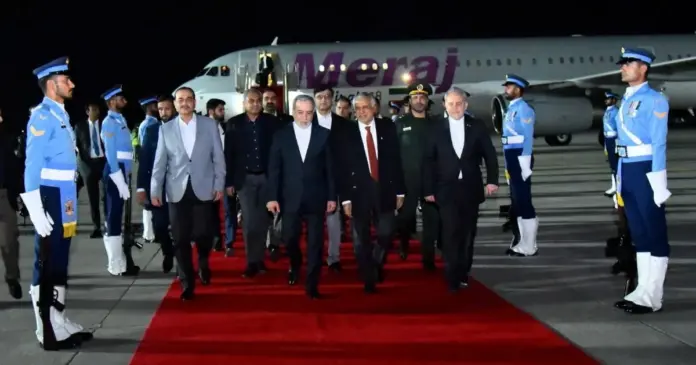
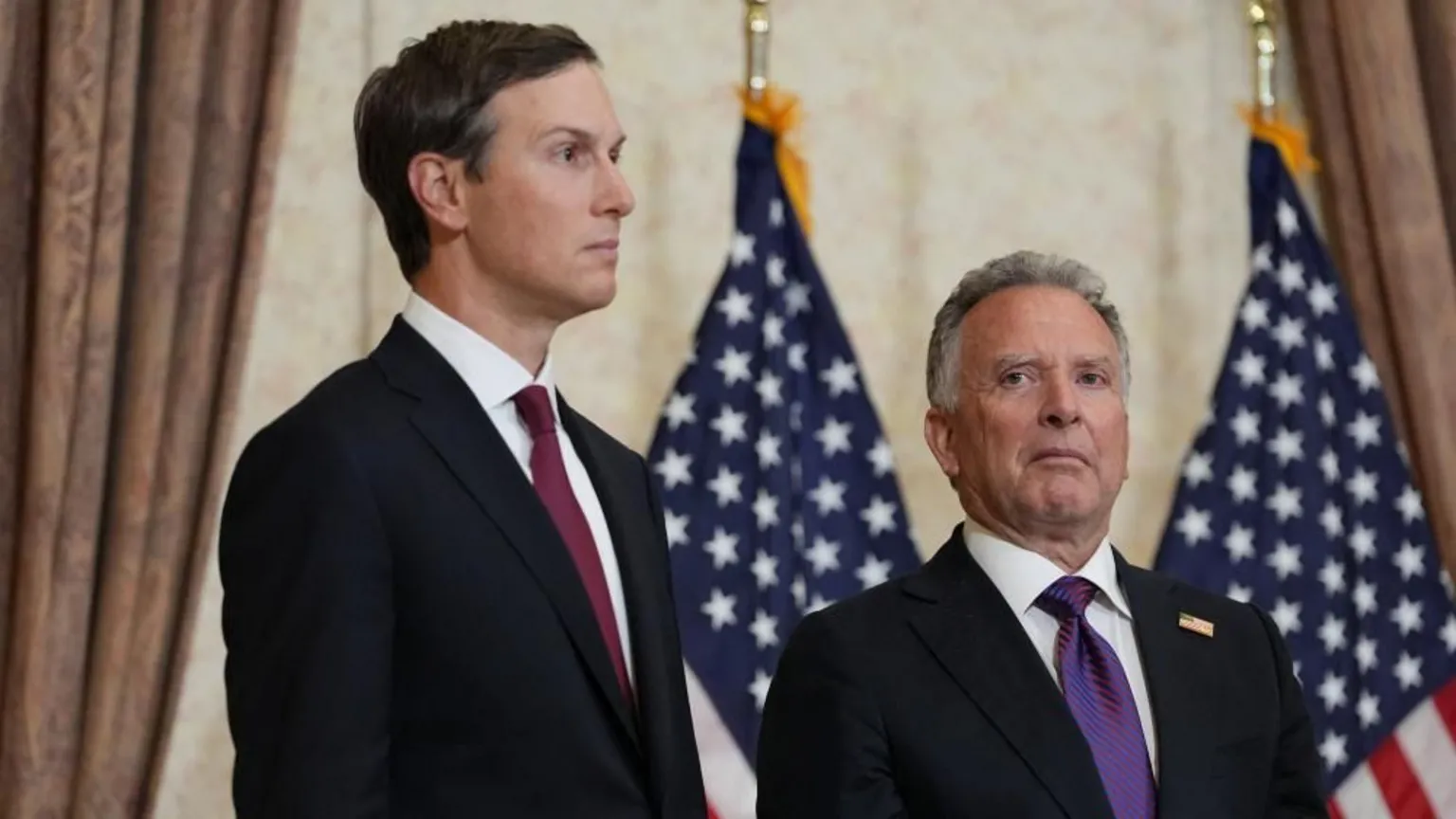
Senior White House envoys Steve Witkoff and Jared Kushner flew to Islamabad on Saturday morning as the United States and Iran edged toward indirect negotiations brokered by Pakistan, on day 57 of a conflict that has reshaped energy markets and rattled the broader Middle East.
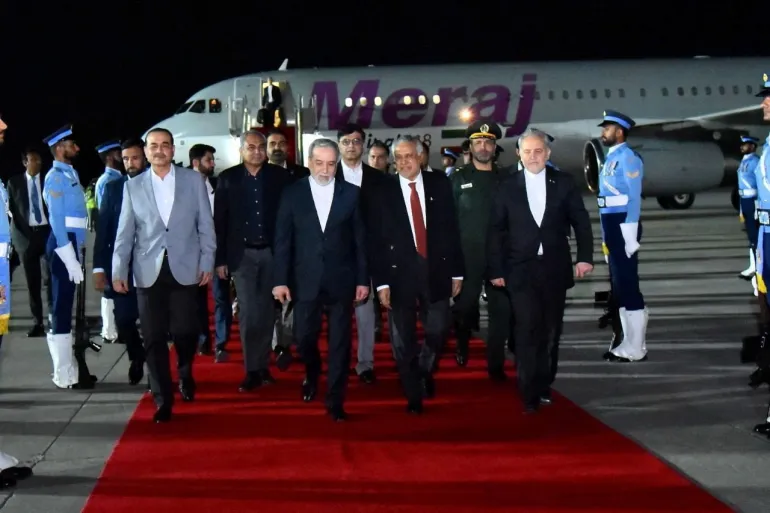
Iranian Foreign Minister Abbas Araghchi arrived in the Pakistani capital alongside his ministry’s spokesman, Esmail Baqaei, though Tehran was careful to frame the encounter on its own terms. Iran’s foreign ministry stated no direct meeting with American officials was planned, saying instead that its positions would be conveyed to Pakistani intermediaries. The Iranian embassy in Islamabad described Araghchi’s visit as an opportunity to review bilateral matters and discuss regional developments.
Washington struck a more optimistic tone. White House press secretary Karoline Leavitt said the Iranians want to talk and that progress had been observed from Tehran’s side over the preceding days. President Trump, she added, is always willing to give diplomacy a chance. Vice-President JD Vance, who led the first round of US-Iran talks earlier in the month, remained on standby to travel to Islamabad should the discussions prove sufficiently productive.
The diplomatic overture came with considerable economic pressure attached. Treasury Secretary Scott Bessent announced the freezing of $344 million in cryptocurrency assets linked to Iran, describing the move as part of a broader campaign to cut off Tehran’s financial lifelines. Washington simultaneously imposed sanctions on a major China-based refinery and approximately 40 shipping firms and tankers accused of transporting Iranian oil in violation of existing restrictions. Bessent made clear that no waivers for Iranian oil shipments would be extended, calling any such extension "completely out of the question." He also confirmed Washington would not renew waivers for Russian oil shipments in transit.
Defence Secretary Pete Hegseth framed the diplomatic window in stark terms, saying Iran had a genuine opportunity to strike a deal — but only if it abandoned its pursuit of nuclear weapons in meaningful and verifiable ways. The US and Israel launched military operations against Iran on 28 February, after which Tehran restricted shipping through the Strait of Hormuz, triggering an international energy crisis. The US has maintained a continuing blockade of the strait.
European Council President Antonio Costa added his voice to calls for the waterway’s reopening, insisting the Strait of Hormuz must resume normal operations without restrictions and without tolling. The International Energy Agency warned that the liquefied natural gas market would remain tight through 2026 and 2027. Brent crude futures closed above $105 a barrel, while West Texas Intermediate dropped 1.5 percent to $94.40. Despite the energy turbulence, the S&P 500 rose 0.8 percent to an all-time high.
Iran’s parliamentary speaker, Mohammad Bagher Ghalibaf, struck a harder line on Wednesday, warning that reopening the Strait of Hormuz was not possible and accusing the US and Israel of blatant ceasefire violations. Iranian President Masoud Pezeshkian offered a more nuanced position, saying Tehran remained open to negotiations while identifying the blockade, ongoing threats, and breach of commitments as the principal obstacles to genuine dialogue. Trump announced an indefinite extension to the ceasefire with Iran, which had been due to expire on Wednesday.
The military dimension of the crisis showed no sign of easing. The US military currently has three aircraft carriers positioned in the Middle East — the largest such deployment since the 2003 invasion of Iraq. In Lebanon, Israeli Prime Minister Benjamin Netanyahu accused Hezbollah of attempting to sabotage a peace agreement, as Israeli forces killed six Hezbollah fighters in a southern Lebanese town following an exchange of fire. Hezbollah used a missile to shoot down an Israeli drone during the same engagement. Trump announced a three-week extension to the Israel-Lebanon truce on Thursday, even as both sides traded accusations of ceasefire violations.
In Gaza, at least 12 Palestinians — including six police officers — were killed, according to medics and officials.
Regional instability spread further when two drones launched from Iraq struck northern Kuwaiti border posts, causing structural damage but no casualties. Kuwaiti authorities confirmed the incident, and Iraq’s Interior Minister Abdul Amir al-Shammari announced an immediate investigation. The attack underscored the risk of the conflict metastasising beyond its current boundaries, even as diplomats in Islamabad worked to find a path toward de-escalation.