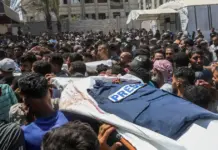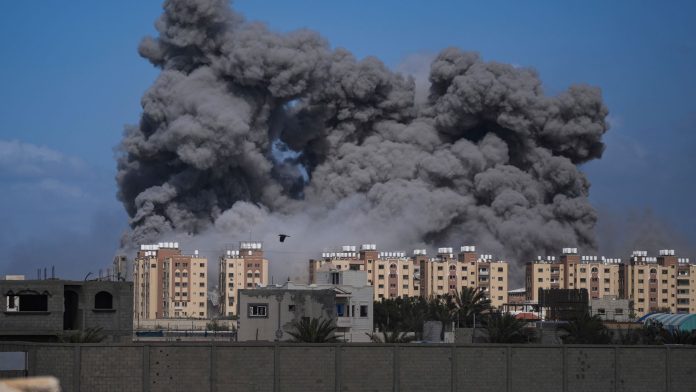
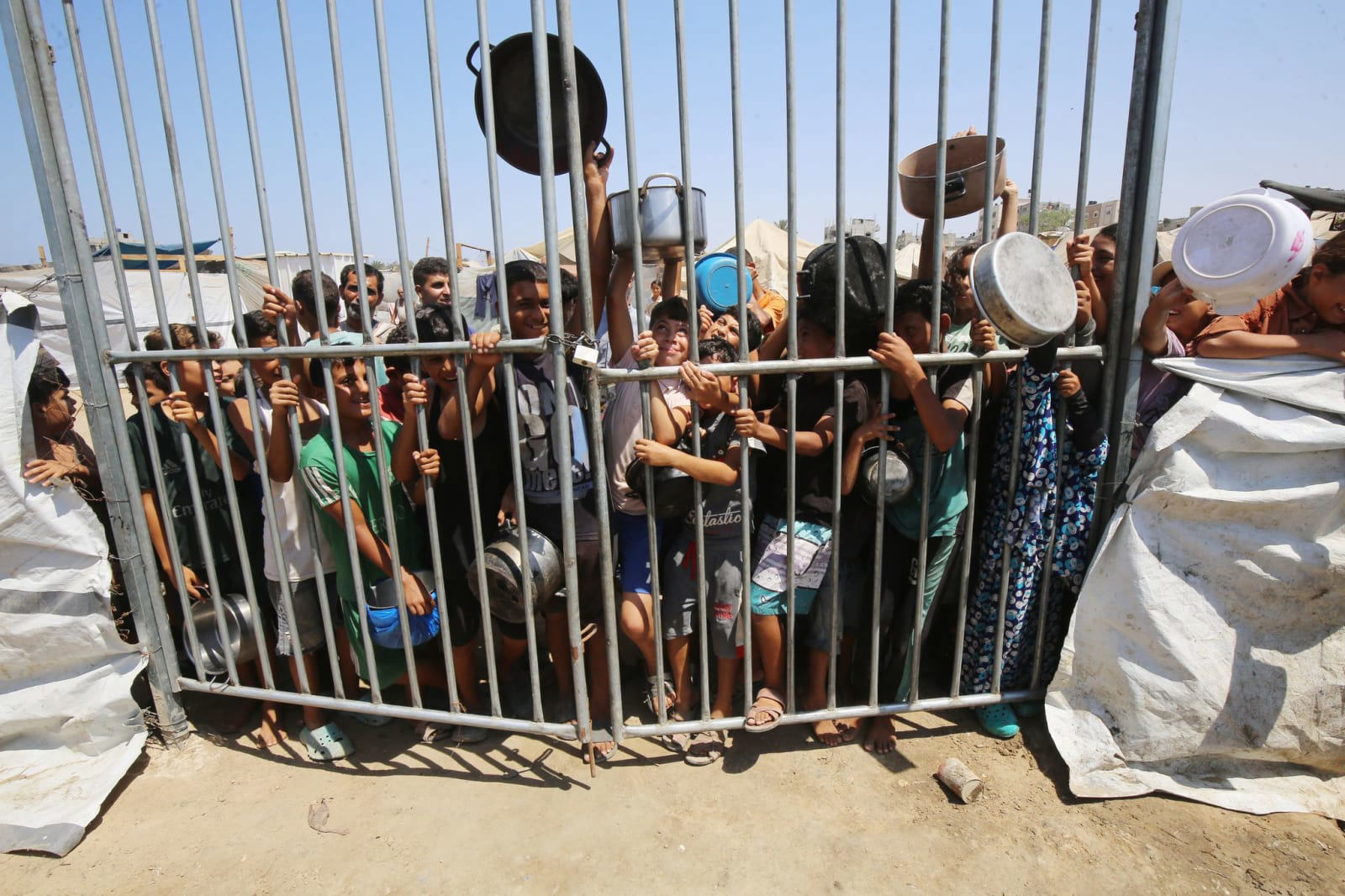
GENEVA: Over the last six weeks, the United Nations’ human rights office documented at least 798 fatalities near aid stations in Gaza. These locations are managed by the Gaza Humanitarian Foundation (GHF), which is supported by the US and Israel, as well as near convoys coordinated by other aid organizations. The GHF employs private US security and logistics firms to deliver supplies to Gaza, bypassing the UN’s aid distribution system, which Israel accuses of being exploited by Hamas militants—a claim denied by Hamas. Following numerous deaths among Palestinians attempting to access aid hubs situated in areas under Israeli military activity, the UN criticized this aid model, labeling it “inherently unsafe” and a breach of humanitarian neutrality.
UN rights office spokesperson Ravina Shamdasani, in a routine press conference in Geneva, stated, “From May 27 to July 7, we noted 798 deaths, including 615 near GHF sites, and 183 likely along aid convoy routes.” The GHF, operational in providing food parcels since May after Israel relaxed an 11-week aid blockade, contested the UN’s data, calling it “false and misleading,” and denied any fatal incidents at its sites, attributing violence to UN convoys instead. The OHCHR bases its casualty reports on various sources including local hospitals, graveyards, families, Palestinian health officials, non-governmental organizations, and field partners. Most injuries reported near distribution hubs were gunshot wounds. Shamdasani voiced the UN’s concern over potential war crimes at aid distribution sites and emphasized the grave risk to civilians queuing for essentials like food.
Israel maintains that its military presence near aid sites is necessary to prevent aid from reaching militants amid an ongoing war following a Hamas-led incursion on October 7, 2023. GHF reports distributing over 70 million meals over five weeks and claims that aid from other organizations was largely confiscated by Hamas or local gangs. The UN Office for the Coordination of Humanitarian Affairs (OCHA) has recorded aid theft instances, while the UN World Food Programme noted that most food aid trucks in Gaza were intercepted by deprived local communities. Gaza endures a severe scarcity of food and basic supplies, as the Israeli military campaign continues to devastate the area, displacing the majority of its 2.3 million residents.
KUALA LUMPUR: The European Union is considering measures to pressure Israel to ease the humanitarian plight in Gaza, according to the EU’s top diplomat, as member states evaluate possible actions against Israel for suspected human rights transgressions. Presenting ten political action options, the EU’s diplomatic arm has explored means such as suspending the EU-Israel Association Agreement and halting various technical projects in response to human rights breach indicators. EU foreign policy head Kaja Kallas acknowledged the intent is not punitive but to ameliorate the dire humanitarian conditions in Gaza amid hostilities lasting nearly 21 months. EU countries express concerns over civilian casualties and the barriers to humanitarian assistance.

Kallas stated that Israel consented to augment humanitarian access, raising the number of aid vehicles and opening more routes to distribution centers. In parallel negotiations with the US, aimed at sidestepping proposed tariffs by then-President Donald Trump, were ongoing, with the EU seeking to avert a trade conflict. Trump threatened tariff notifications that week, impacting discussions with the EU on a potential trade agreement. BEIRUT: Lebanon’s President Joseph Aoun clarified on Friday that Lebanon has no plans for establishing formal diplomatic relations with Israel, though he expressed a desire for peaceful interactions.
This statement followed Israeli Minister Gideon Saar’s interest in normalization efforts. Aoun differentiated peace, the absence of active conflict, from normalization, which isn’t part of Lebanon’s current foreign policy framework. Since 1948, Lebanon and Syria have technically been at war with Israel. Aoun insisted on Israel’s withdrawal from contested border areas to permit Lebanese forces to fully deploy as mandated in a November ceasefire.
Hezbollah, required to reposition south, remains the only non-state group armed post the Lebanese civil war. The U.S. has urged Lebanon to disarm Hezbollah for national stability purposes, but Lebanon prioritized maintaining state control over military assets while not intending to use force for disarmament. SULAYMANIYAH, Iraq: PKK insurgents commenced the surrender of arms in a ceremonial cave event in northern Iraq—a gesture marking a pivotal step towards ending the protracted conflict with Turkey, ongoing since 1984. Under high security, the PKK, following leader Abdullah Ocalan’s call, decided to dismantle and disarm, potentially signaling the conclusion of a violent campaign that has inflicted extensive human and economic losses in Turkey and beyond.
Approximately 40 militants began the disarmament process. Future handover timelines remain unspecified. PKK bases in northern Iraq have been subject to routine Turkish military actions. Turkish officials joined the proceedings anticipating further steps toward lasting peace and integration of Kurdish demands within Turkey.
GAZA CITY: Gaza’s civil defense reported that Israeli strikes resulted in at least six fatalities in Gaza’s north, predominantly in a school temporarily serving as a shelter. Five fatalities occurred at the Halima Al-Saadia School in Jabalia Al-Nazla. Separate attacks in Gaza City caused additional casualties. In central Gaza, the Al-Awda Hospital in Nuseirat treated individuals injured by Israeli forces near aid distribution points.
Israel’s intensified military operations continue as the prolonged conflict progresses. Due to restricted access and communication limitations, independent verification of these accounts remains challenging. An anonymous source described persistent military activity, tank movements, and widespread devastation, complicating civilian safety and access to resources. SARAJEVO: UN investigator Francesca Albanese condemned the US for sanctioning her over her criticisms of Israel’s actions during the Gaza conflict, while resolutely maintaining her stance.

Albanese condemned these actions as attempts to intimidate those advocating for Palestinians, portraying it as an indicator of the moral culpability of powerful actors. The sanctions followed the US’s efforts to remove her from her UN role, which investigates human rights violations in Palestinian areas. Both the US and Israel dispute Albanese’s genocide claims against Israel. The sanctions, announced during Israeli Prime Minister Benjamin Netanyahu’s visit to the US, were perceived as silencing dissent against Israeli policies amid ongoing conflict.
Albanese, amidst attending a Srebrenica commemoration, asserts Palestinian self-determination remains integral to broader human rights discussions and remains defiant against intimidation efforts. The UN’s imposition of sanctions on personnel underscores significant international tensions amidst geopolitical disputes.