Ukrainian drones struck Ust-Luga port on the Baltic Sea overnight for the fifth time in ten days, intensifying a sustained campaign against one of Russia’s most strategically vital energy export hubs and pushing global oil prices sharply higher.
Leningrad region Governor Alexander Drozdenko announced the overnight attack via Telegram, confirming that three people — including two children — sustained minor injuries in the village of Molodtsovo, located east of St. Petersburg. Several residential buildings in the Kirovsky District were also damaged. Russian air defences intercepted 38 drones over the Leningrad region before dawn.
The attacks on Ust-Luga have followed a relentless tempo since late March. The port was struck on March 22, 25, 27, 29, and again on March 31. The March 25 strike alone damaged three oil tankers, five fuel storage tanks, and three berths. Operations at the facility were halted last Wednesday after drones destroyed a railway unloading rack used to transfer petroleum products — a blow that underscored the vulnerability of the complex’s internal logistics chain.
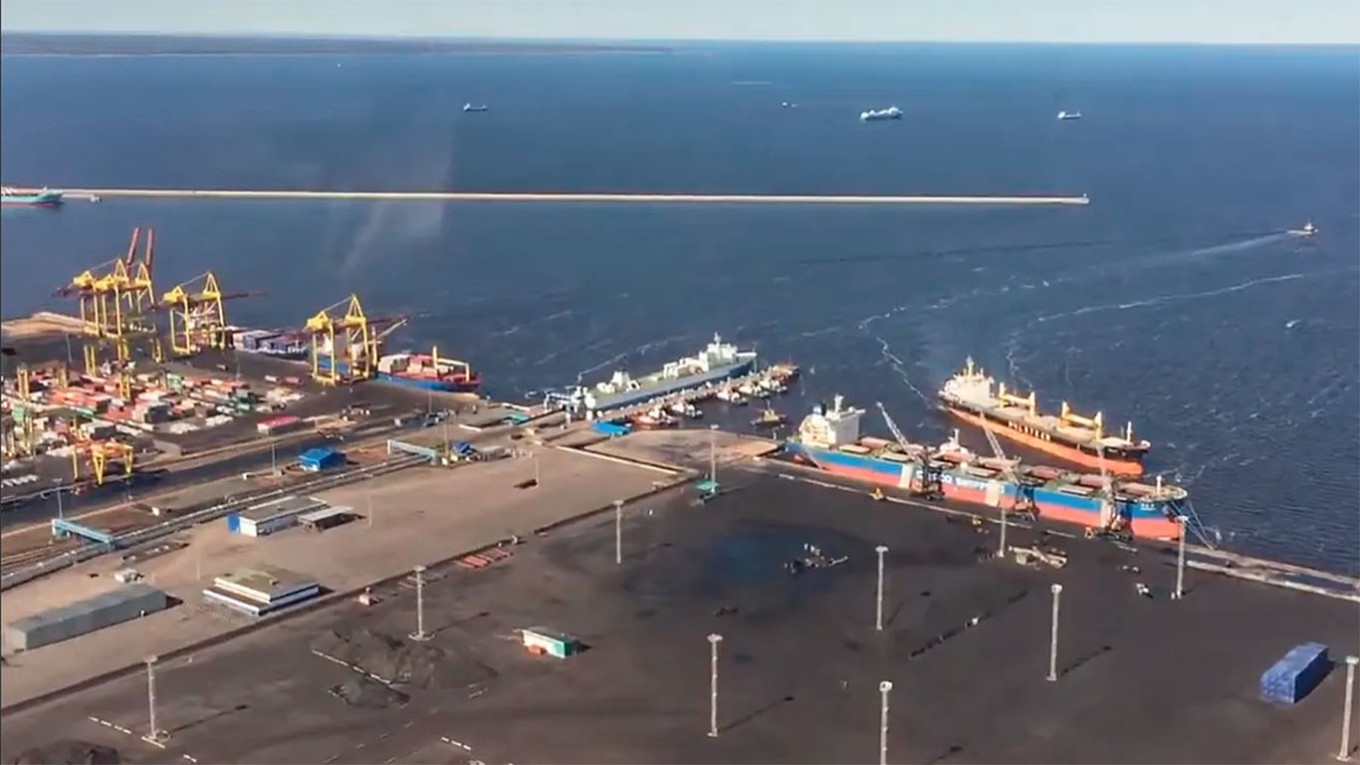
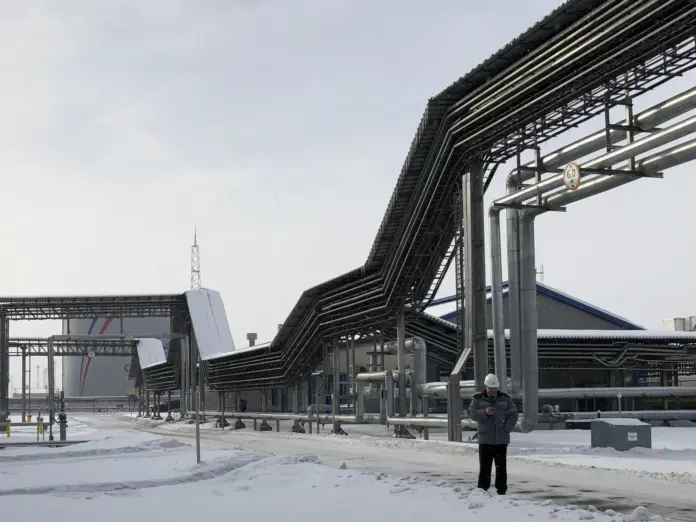
Situated on the southeastern shore of the Gulf of Finland, Ust-Luga is far more than a single terminal. The sprawling complex handles crude oil, oil products, coal, grains, and fertilizers, exporting approximately 700,000 barrels of crude oil per day and shipping 32.9 million metric tonnes of oil products last year alone. Together with the nearby port of Primorsk, which has also been struck multiple times in recent weeks, it forms the backbone of Russia’s northwestern energy export corridor.
The cumulative effect of Ukraine’s drone campaign against Russian energy infrastructure has been severe. Combined with a disputed strike on a major pipeline and the seizure of tankers, the attacks have halted an estimated 40 percent of Russia’s oil export capacity. Global markets have responded sharply: Brent crude, the international benchmark, topped $116 a barrel, reflecting deepening concern over supply disruptions.
Ukraine launched its heaviest drone offensive of the more than four-year war against the Baltic ports overnight, with Russia’s Ministry of Defence reporting that its forces shot down 267 of 289 drones launched across the country. The scale of the assault signals a deliberate strategic shift toward degrading Russia’s energy revenue, which funds its military operations.
President Volodymyr Zelensky acknowledged on Monday that unnamed partners had sent him signals urging Ukraine to restrain its attacks on Russian energy infrastructure. He said Ukraine was prepared to support a mutual ceasefire on oil and gas facilities — but only if Russia agreed to halt its own strikes on Ukrainian energy sites, a condition Moscow has shown no sign of accepting.
Foreign Minister Andrii Sybiha used the moment to press Ukraine’s allies to maintain their focus on the war, warning against distraction as the conflict with Iran continues to draw international attention elsewhere. Peace negotiations, which had been tentatively explored, remain suspended in part due to the widening regional impact of the Middle East war.
The diplomatic dimension of the conflict was also prominent on Tuesday, as EU foreign policy chief Kaja Kallas and several EU foreign ministers arrived in Kyiv. The visit coincided with the fourth anniversary of the Bucha massacre, in which Ukrainian officials and rights organisations say Russian troops killed more than 400 civilians. The United Nations has verified 15,364 civilian deaths since Russia’s full-scale invasion began.
The EU visit came amid fresh tensions over European support for Ukraine. Hungarian Prime Minister Viktor Orbán has blocked a 90-billion-euro EU loan to Kyiv, tying his opposition to a dispute over Russian oil transit through Ukraine’s Druzhba pipeline. Hungary is also obstructing progress on Ukraine’s EU accession talks, complicating the bloc’s long-term commitment to Kyiv.
On the battlefield, Russia’s Ministry of Defence claimed its forces seized the village of Mala Korchakivka in Ukraine’s northern Sumy region, a reminder that ground fighting continues even as the energy infrastructure war escalates in the northwest.
Meanwhile, The Moscow Times was designated an ‘undesirable’ organisation by Russia’s Prosecutor General’s Office — an escalation from its earlier ‘foreign agent’ label — in what observers view as part of a broader Kremlin effort to suppress independent coverage of the war’s mounting costs at home.