US President Donald Trump has threatened to seize Kharg Island, Iran’s most strategically vital oil export terminal, by deploying ground troops in what would represent a dramatic and potentially catastrophic escalation of the ongoing conflict in the Persian Gulf. The threat, delivered publicly by Trump, follows US strikes in mid-March 2026 that he claimed ‘obliterated’ 90 military targets on the island while deliberately sparing its oil infrastructure.
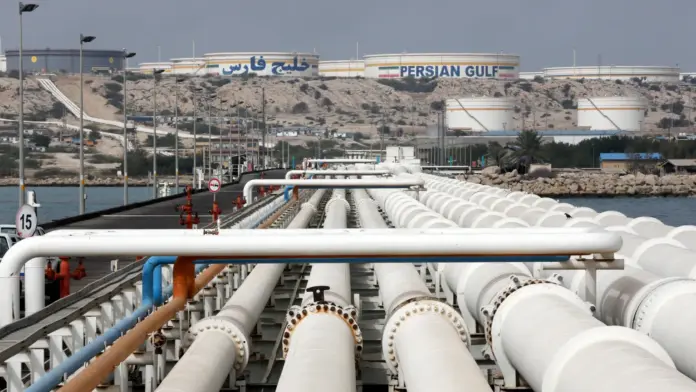
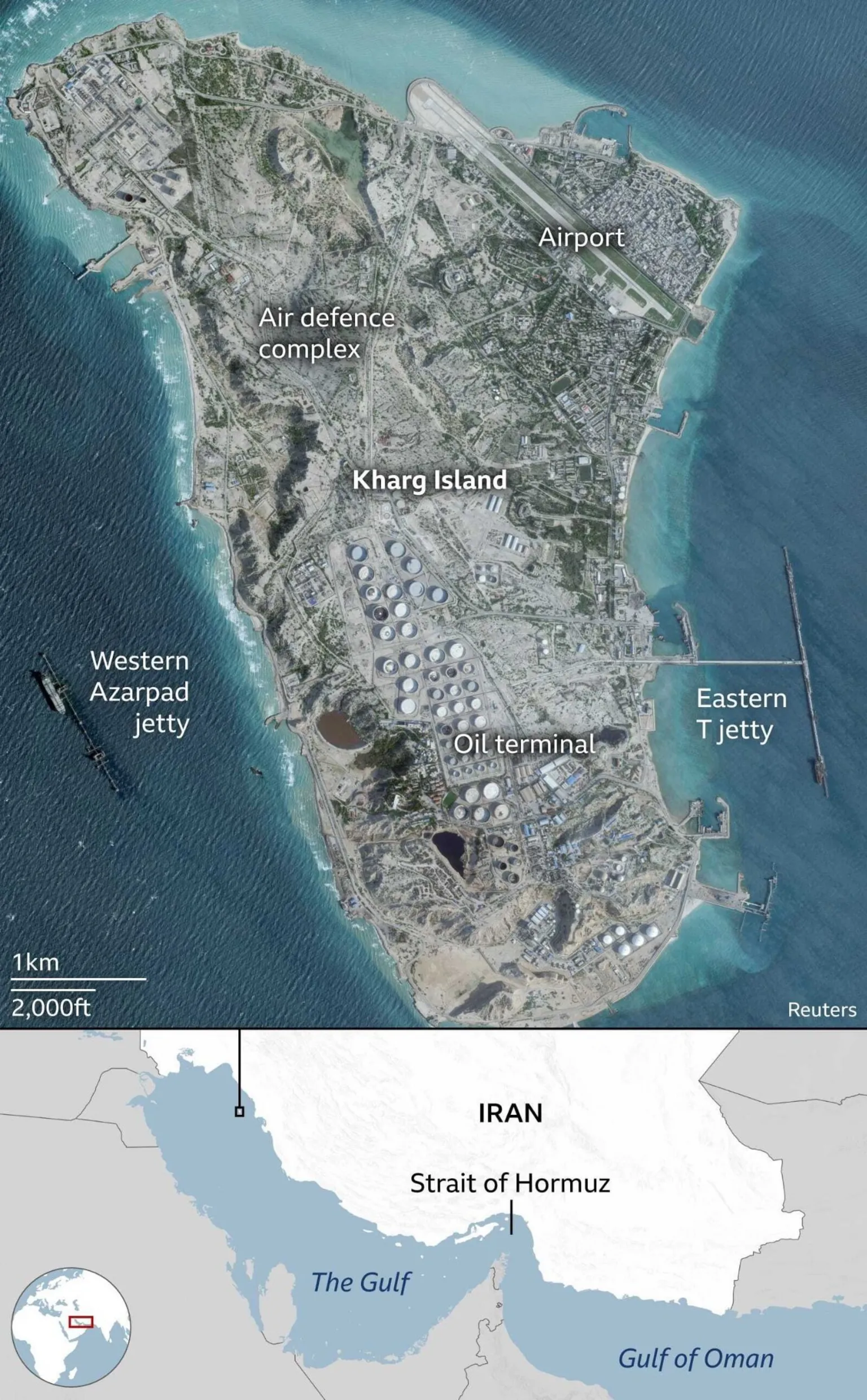
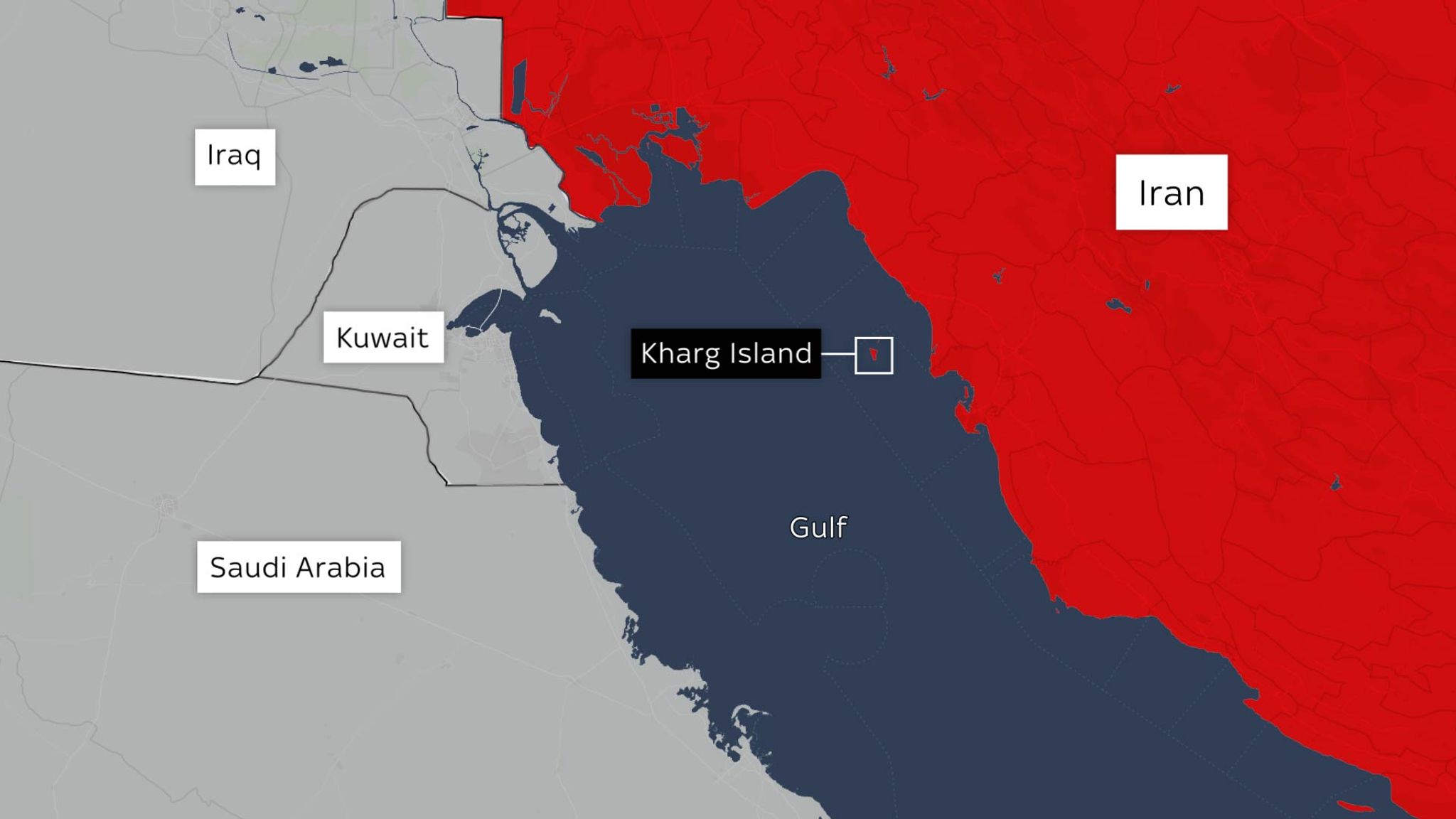
Kharg Island sits roughly 16 miles off Iran’s coast and approximately 300 miles north of the Strait of Hormuz, the narrow chokepoint through which 20% of the world’s oil supply flows. Despite measuring just 20 square kilometres — about twice the size of London’s Heathrow Airport — the island punches far above its weight in global energy terms. Its 55 crude oil storage tanks hold more than 34 million barrels, and the terminal has the capacity to load around seven million barrels per day. Before the current conflict erupted, Kharg handled roughly 1.7 million barrels of Iranian crude exports daily, the vast majority destined for China, which relies on Iranian oil for 11.6% of its seaborne imports.
The island’s economic importance to Tehran cannot be overstated. Petras Katinas of the Royal United Services Institute describes Kharg as critical to funding Iran’s government and military. In the week before the war began, the terminal shipped a record 3.79 million barrels per day. Since US-Israeli strikes commenced on 28 February, exports have continued at a reduced rate of between 1.1 and 1.5 million barrels per day, with approximately 13.7 million barrels shipped in total. As of early March, the island held around 18 million barrels of crude in storage.
The financial consequences of the conflict are already reverberating through global energy markets. A barrel of Brent crude reached $115.54 on 30 March 2026, close to a four-year high and representing a near-60% increase since before the war began.
Iran’s response to the seizure threat has been unambiguous. Mohammad Bagher Ghalibaf, speaker of Iran’s parliament, warned that Iranian forces would ‘rain down fire’ on any invading US troops. Tehran has reportedly reinforced Kharg’s defences with surface-to-air missile batteries, and the island’s proximity to the Iranian mainland — less than 20 miles — places it well within range of rockets, artillery, and drone strikes. Any occupation force would face sustained fire from the coast, a vulnerability underscored by the fate of Snake Island in the Black Sea, where Russian forces seized the strategic outpost early in their 2022 invasion of Ukraine only to be driven off by relentless Ukrainian harassment fire from the mainland.
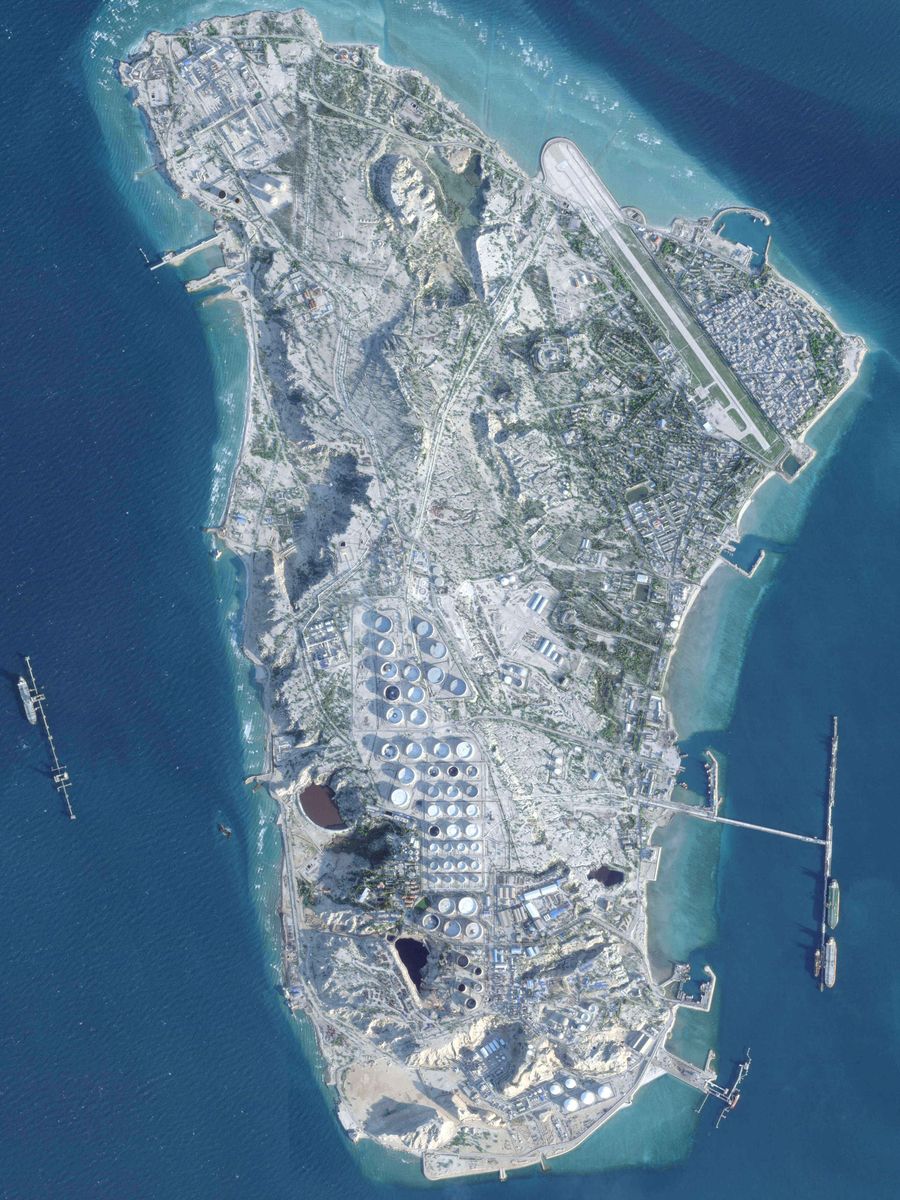
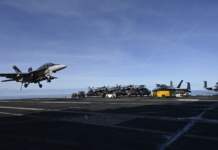
A US assault on Kharg would likely involve the nearly 5,000 US Marines currently deployed in the region, supported by approximately 2,000 paratroopers from the 82nd Airborne Division. Marines would deploy from ships equipped with Osprey tilt-rotor aircraft and Landing Craft Air Cushioned vessels. The island’s small size — just five miles long — would concentrate any fighting into a compact and heavily contested space.
Kharg is not the only strategically sensitive island in the Gulf drawing attention. Larak Island, positioned just offshore from the key port of Bandar Abbas at the mouth of the Strait of Hormuz, has become a source of tension after Iran began forcing tanker vessels to pay $2 million to transit nearby waters. Qeshm Island, the largest in the Gulf and 75 times the size of Kharg, is suspected of housing underground missile and drone facilities. Meanwhile, Abu Musa, Greater Tunbs, and Lesser Tunbs — islands with disputed ownership between Iran and the UAE but currently under Iranian control — add further complexity to the regional picture.
Historical precedent offers a sobering lens through which to assess any potential Kharg operation. During the Iran-Iraq War in the 1980s, Saddam Hussein’s air force bombed the island repeatedly, destroying storage tanks and conducting numerous raids. Yet even under sustained assault, Kharg continued exporting more than 1.5 million barrels per day — a testament to its resilience, but also a warning about the limits of military pressure on hardened energy infrastructure.
Trump, speaking on Monday, indicated the US is engaged in ‘serious discussions’ with Iran that could ‘end our military operations,’ suggesting diplomatic channels remain open even as the threat of ground invasion looms. The dual-track approach — military pressure alongside negotiation — reflects the high-stakes gamble at the heart of Washington’s strategy. Seizing Kharg would cut off a primary revenue stream for Tehran, but holding it against a determined Iranian counteroffensive, with the mainland just miles away, would test the limits of US military reach in one of the world’s most volatile waterways.