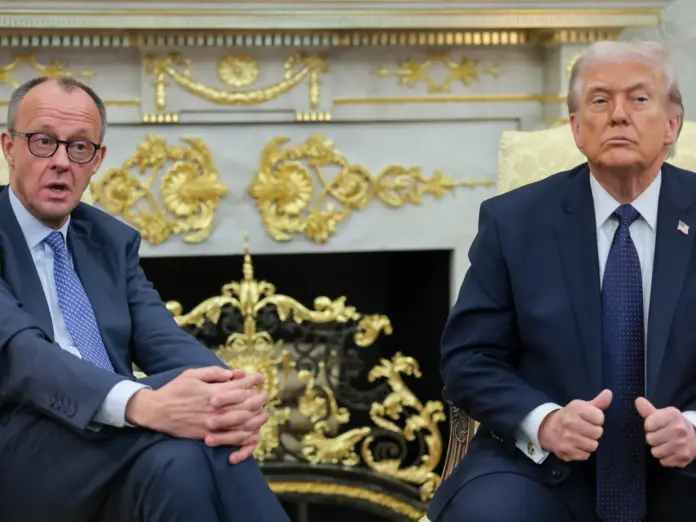
President Donald Trump launched a sharp public rebuke of German Chancellor Friedrich Merz on Tuesday, declaring via social media that Merz ‘doesn’t know what he’s talking about’ after the German leader condemned the ongoing US-Israeli military campaign against Iran as ‘ill-considered.’ The exchange has laid bare widening fractures between Washington and its European partners over a conflict that is reshaping global energy markets and straining an already tested transatlantic relationship.
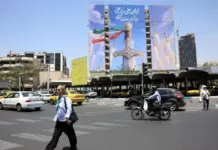
Merz, speaking with evident frustration, invoked the long shadows of Afghanistan and Iraq — two conflicts in which American military power ultimately failed to achieve its stated objectives — as cautionary precedents for the current war. He went further, suggesting that Washington is being ‘humiliated’ by Tehran‘s negotiating posture. Iran has refused to send delegates to meet US officials unless the blockade on its ports is first lifted, a condition Washington has so far declined to meet.
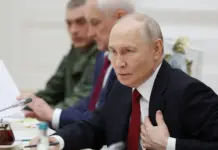
Trump, for his part, defended the war as an essential measure to prevent Iran from acquiring a nuclear weapon, insisting the country is now in a ‘state of collapse.’ He also renewed calls for the Strait of Hormuz to be reopened, a demand that has become a flashpoint with European allies who have declined both to participate directly in the conflict and to join any military effort to force the strategic waterway open. Trump has voiced repeated frustration at what he characterises as European free-riding on American military action.
The public spat carries a note of irony given the diplomatic warmth on display just weeks ago. When Merz visited the White House last month, Trump praised Germany as ‘a respected country’ and declared he had ‘a very good relationship’ with the chancellor. During that same visit, however, Trump threatened to cut off trade with Spain over its opposition to the war — a signal that allied dissent would not go without consequence.
The dispute also sits uneasily alongside Merz’s own record on the conflict. When Israel began bombing Iran last year, the chancellor declared that Israel ‘is doing the dirty work for all of us’ — a framing that drew criticism at the time but reflected a broader European ambivalence. Germany has been among the largest weapons suppliers to Israel throughout the conflict, complicating any portrayal of Berlin as a straightforward opponent of the military campaign.
Adding further complexity to Trump’s stated justification for the war, US intelligence chief Tulsi Gabbard told Congress that Tehran is not, in fact, building a nuclear weapon — a direct contradiction of the rationale Trump has publicly advanced. Trump has previously claimed that June 2025 US strikes on Iranian facilities ‘obliterated’ Tehran’s nuclear programme, and the US State Department has released a legal justification for the war citing collective self-defence of Israel and inherent US self-defence rights. Trump has also insisted that Israel did not persuade him to launch the campaign.
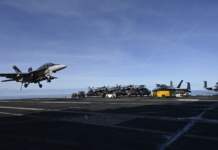
The conflict, which resumed in earnest on February 28 when Israel and the United States began a fresh round of bombing, has sent oil prices higher — an economic blow that lands with particular force in Europe. Germany and its neighbours are already navigating the compounding pressures of the COVID-19 pandemic’s economic legacy and the sustained costs of Russia‘s invasion of Ukraine, making the energy price shock especially unwelcome in Berlin.
The transatlantic row unfolded against a broader diplomatic backdrop. King Charles addressed the US Congress in a visit that underscored the symbolic importance of allied relationships even as substantive policy disagreements deepen. Meanwhile, Iran’s refusal to engage in pre-conditions-free talks has left the diplomatic track effectively stalled, with no clear pathway to de-escalation in sight.
For Merz, the public dressing-down from Trump represents a delicate political moment. Balancing Germany’s security dependence on the United States, its economic exposure to energy market volatility, and growing domestic unease about the direction of the conflict, the chancellor faces pressure from multiple directions. Trump’s willingness to air the dispute so publicly — and so bluntly — suggests that Washington’s patience with allied criticism, however muted, is wearing thin.