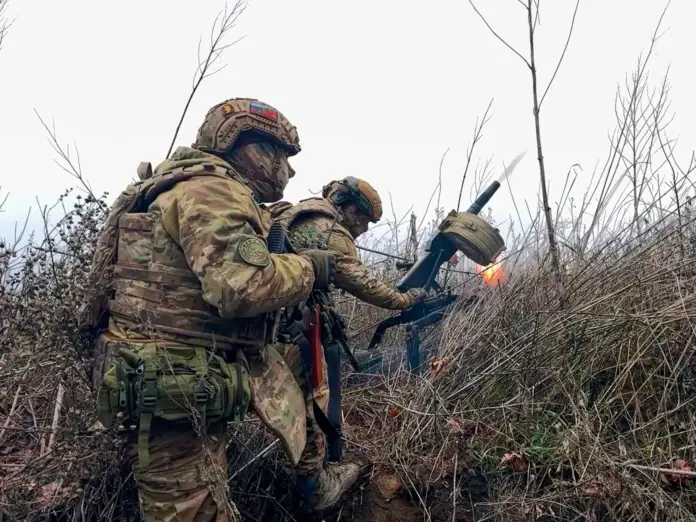
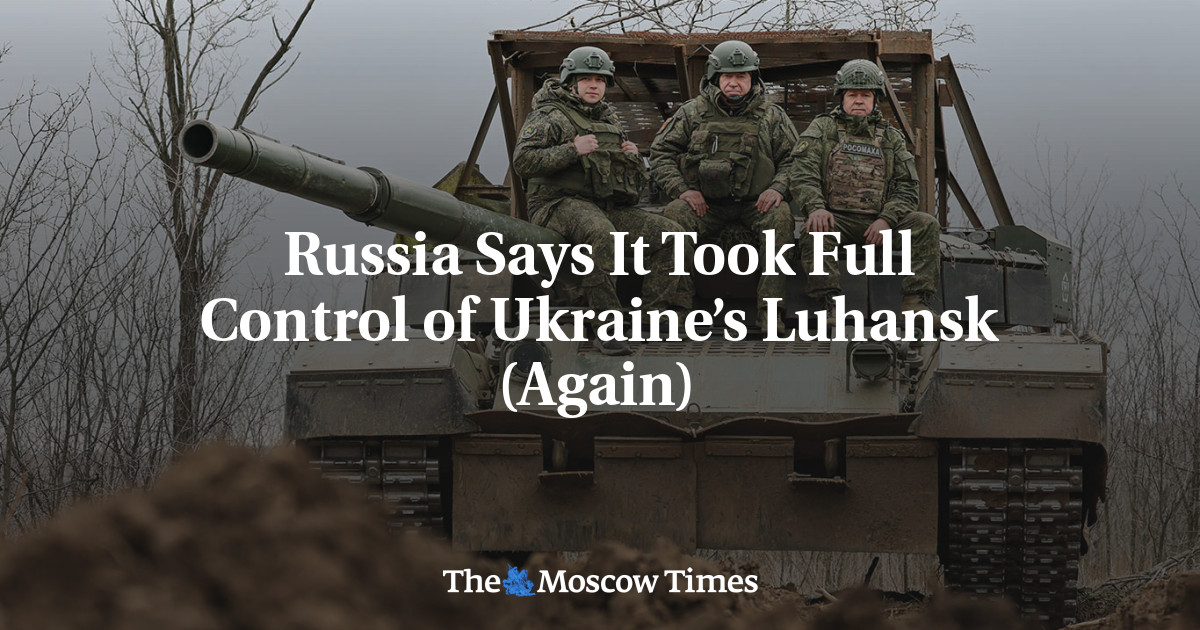
KYIV — Russia’s Defence Ministry declared Wednesday that its forces had achieved full control over the Luhansk region in eastern Ukraine, a claim that Kyiv did not immediately confirm and that independent military analysts have treated with scepticism — noting Moscow has made the same assertion at least three times since launching its full-scale invasion in February 2022.
The ministry stated that units of its ‘West’ military grouping had completed the so-called liberation of the Luhansk People’s Republic, the Kremlin’s preferred designation for the territory it illegally annexed in 2022 alongside three other Ukrainian regions. In reality, Russian forces have occupied nearly the entire 26,700-square-kilometre region since the summer of 2022, with more than 99 percent already under Moscow’s control before Wednesday’s announcement. Kyiv and the overwhelming majority of Western governments regard the annexation as illegal under international law.
The declaration carries symbolic weight ahead of what military analysts describe as a potential new Russian summer offensive. Moscow officials are believed to be preparing for another one to two years of war, even as the United States attempts to broker a negotiated settlement.
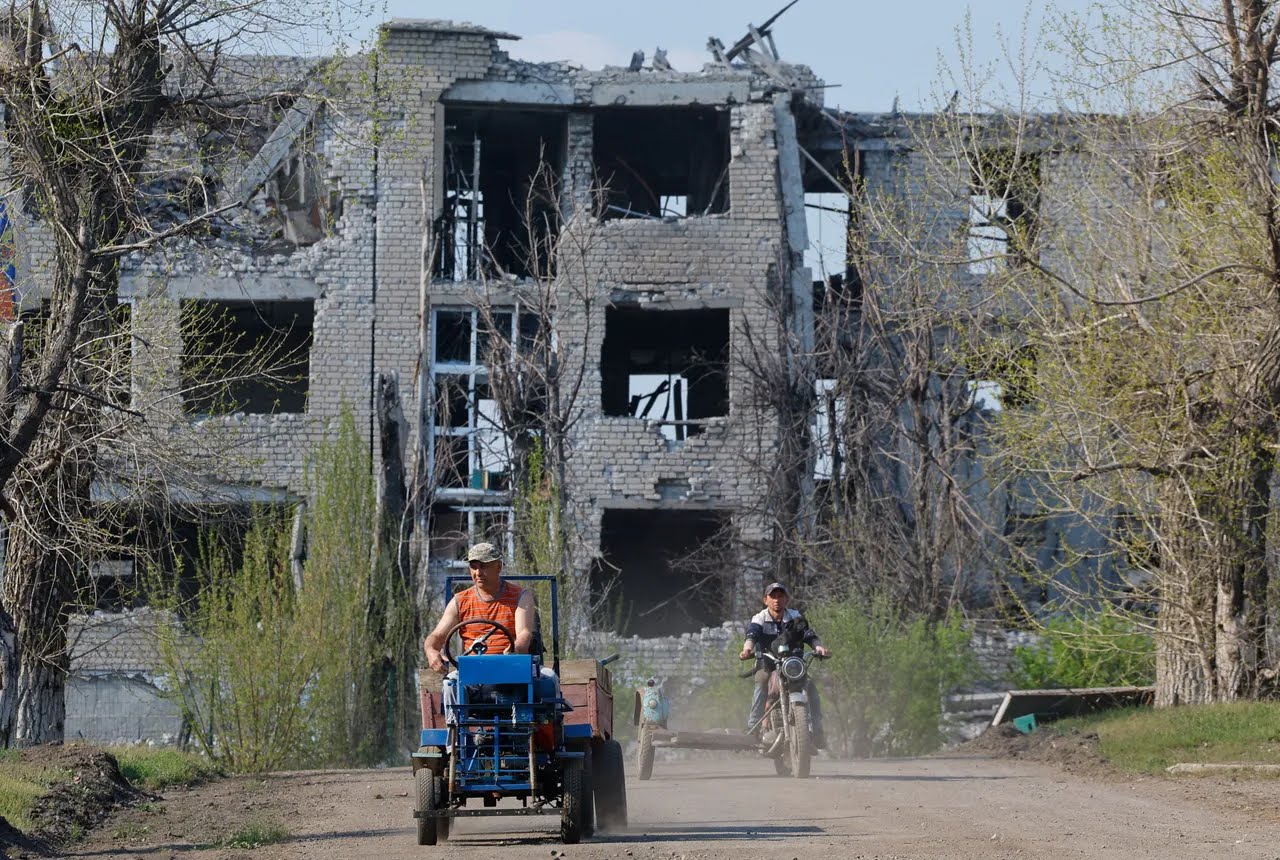
Kremlin spokesman Dmitry Peskov reinforced Moscow’s maximalist negotiating position on Wednesday, reiterating demands that Ukrainian forces withdraw from the entirety of Donetsk — the second region comprising the wider industrialised Donbas area — as a precondition for ending what he called the ‘hot phase’ of the conflict. Russia currently controls approximately three-quarters of Donetsk. Kyiv has repeatedly and categorically rejected any such withdrawal.
Ukrainian President Volodymyr Zelenskyy pushed back sharply, stating that Ukraine would only accept a ceasefire along current front lines and would not cede additional territory through political concessions. He also alleged that Russia had presented the United States with an ultimatum outlining peace settlement terms, including a two-month timeframe for Ukrainian withdrawal from the Donbas — a claim that underscored the widening gap between the two sides’ positions.
Zelenskyy was scheduled to hold a video call Wednesday with US envoys Steve Witkoff and Jared Kushner to discuss the stalled negotiations.
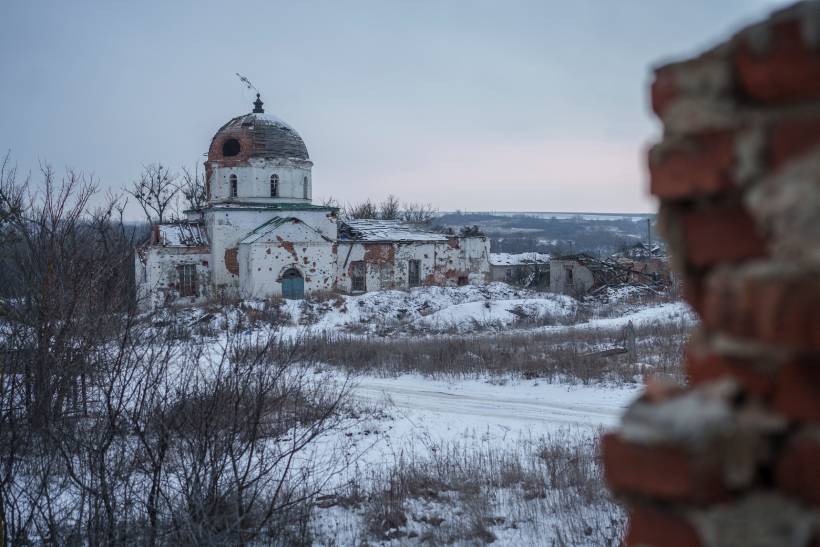
On the battlefield, Russia’s Defence Ministry separately claimed its forces had seized the village of Verkhnya Pysarivka in Kharkiv region and Boikove in Zaporizhia region. Neither claim was independently verified, and Ukraine offered no immediate response to either assertion.
The overnight period into Wednesday saw one of the war’s larger drone campaigns. Russia launched 339 Iranian-designed Shahed drones at Ukrainian territory, striking a warehouse in the western city of Lutsk, which caught fire. In Kherson region, a Russian drone struck a civilian vehicle on the front line, killing two women.
Ukraine’s own drone operations simultaneously generated a diplomatic crisis across northern Europe. Ukrainian drones struck Russia’s Baltic Sea port of Ust-Luga on Tuesday — the fifth such strike in ten days — but several appear to have gone significantly off course. Estonia’s armed forces reported multiple drones straying onto its territory while en route to Russia. Finnish police confirmed that a drone detected in Finland on Tuesday had been carrying explosives, while a separate Ukrainian drone crashed on Finnish soil on Sunday — the first time the war had physically spilled onto Finnish territory. Latvian police launched an investigation after drone debris was discovered in Latvia on Wednesday. Estonia, Latvia and Lithuania all reported drones of Ukrainian origin on their territory in connection with the Ust-Luga strikes.
Ukrainian Foreign Minister Andrii Sybiha addressed the incidents at a news conference Tuesday, stating unequivocally that Ukraine ‘never aimed drones at these countries.’ The episode nonetheless raised urgent questions about navigational control and the risks of the conflict bleeding into NATO member states along Russia’s northwestern flank.
The confluence of Russia’s symbolic territorial claim, its escalating drone campaign, and the Baltic drone incidents illustrates the conflict’s expanding complexity as both sides manoeuvre ahead of what could be a decisive summer on the battlefield and at the negotiating table.