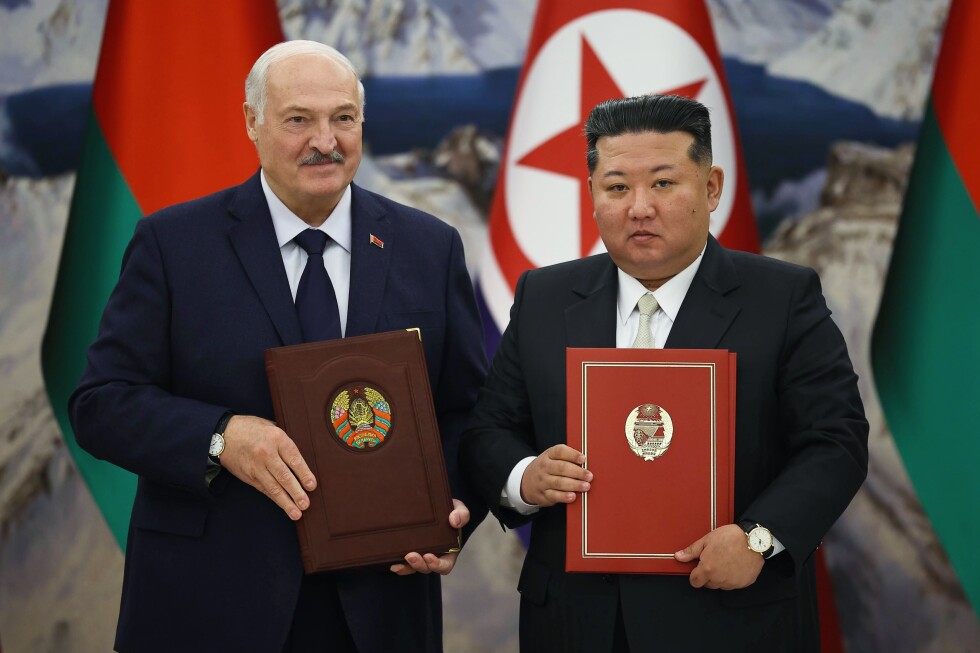
PYONGYANG — Belarusian President Alexander Lukashenko and North Korean leader Kim Jong Un signed a landmark friendship and cooperation treaty in Pyongyang on Thursday, cementing ties between two of the world’s most heavily sanctioned governments and deepening a partnership forged in the shadow of Russia’s war in Ukraine.
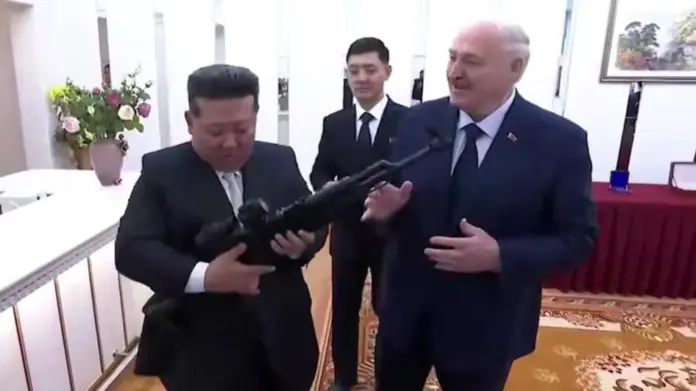
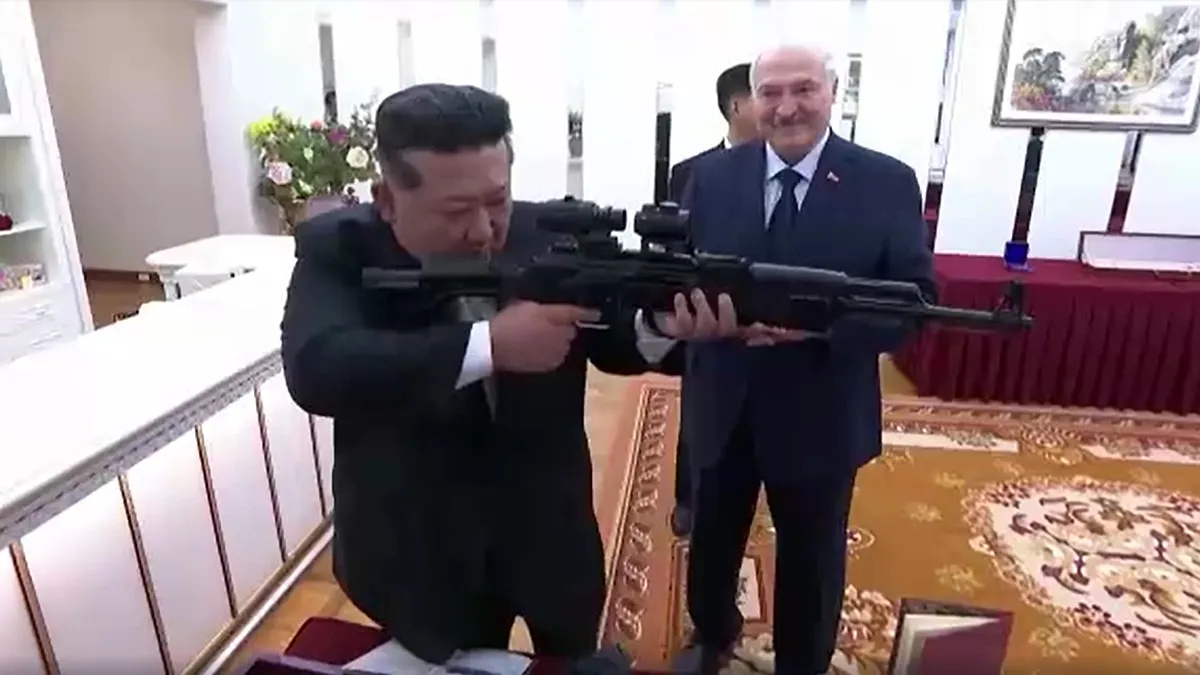
The signing ceremony capped a two-day official visit by Lukashenko to the North Korean capital — his first bilateral trip to Pyongyang — and was accompanied by a symbolic exchange of gifts that underscored the martial character of the relationship. Lukashenko presented Kim with an automatic assault rifle, quipping that he had brought it ‘just in case enemies appear.’ Kim responded in kind, presenting the Belarusian leader with a sabre, an ornate vase bearing a portrait of Lukashenko, and a gold commemorative coin. Lukashenko also brought traditional Belarusian products as part of the exchange.
Lukashenko described the signed document as ‘fundamental,’ while Kim said the treaty would ‘further guarantee the stable development of bilateral relations.’ Both leaders pledged to cooperate more closely and resist pressure from Western governments, with Lukashenko framing the partnership in explicitly geopolitical terms. ‘Countries need to cooperate in protecting their sovereignty and improving citizen well-being at a time when international law norms are being violated,’ he said.
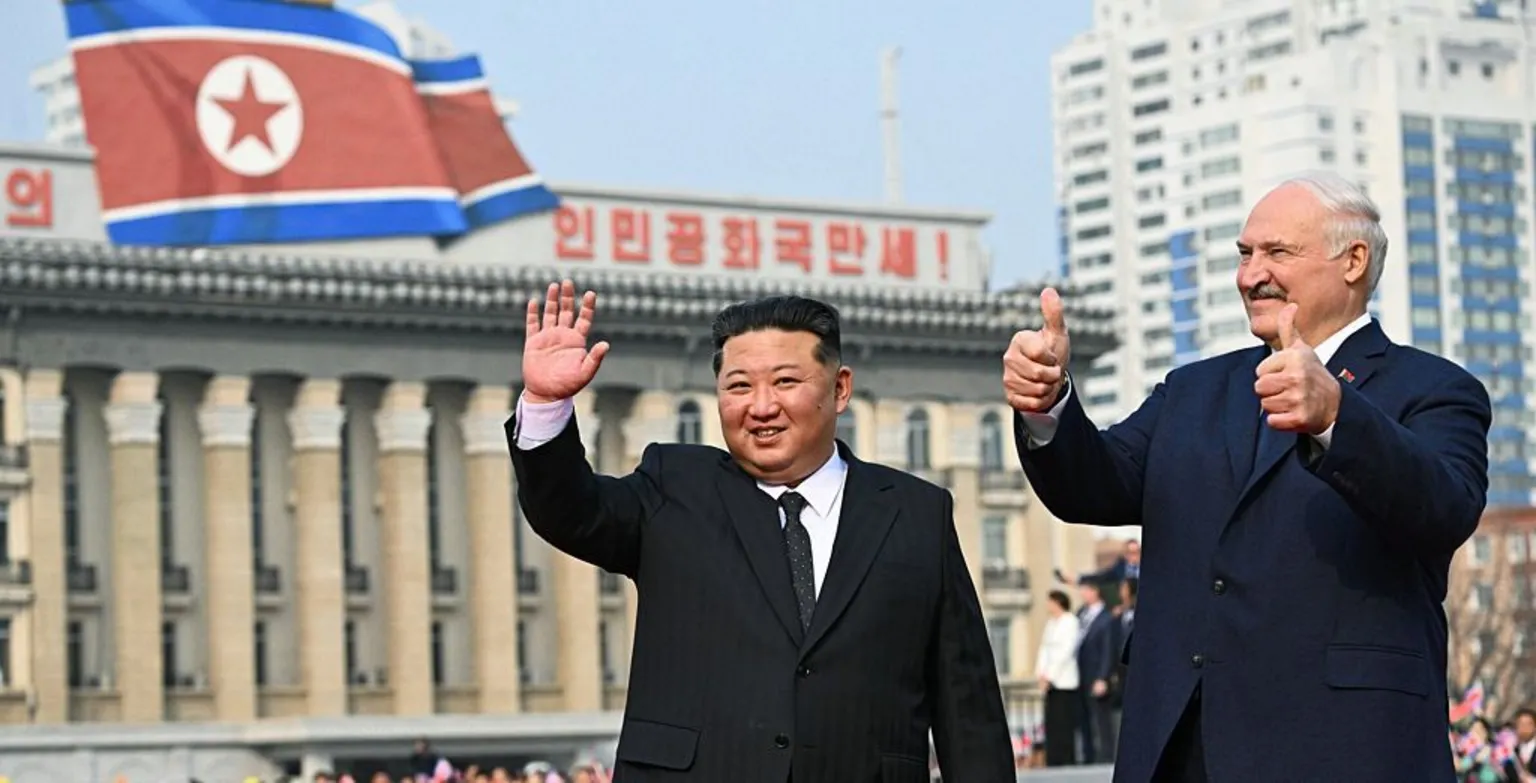
The two governments agreed to expand cooperation across a broad range of sectors, including agriculture, information technology, and public health. North Korea’s state news agency KCNA reported that the leaders also discussed boosting high-level visits and exchanges, signalling an intent to institutionalise the relationship beyond symbolic gestures. Lukashenko noted that cooperation between Belarus and North Korea had ‘significantly intensified’ in recent months.
The visit marks a deepening of an alignment that has grown increasingly consequential for the conflict in Ukraine. North Korea has dispatched thousands of troops to support Russia‘s military campaign, and Western officials estimate that approximately 1,000 of those soldiers died within the first few months of deployment. Pyongyang has also supplied large quantities of weapons and ammunition to Russian forces. Kim Jong Un has sent a direct message to President Vladimir Putin declaring that ‘Pyongyang will always be with Moscow.’
Belarus, for its part, allowed Russian forces to use its territory as a staging ground for the full-scale invasion of Ukraine that began in February 2022. Lukashenko subsequently authorised the deployment of Russian tactical nuclear weapons on Belarusian soil — a move that drew sharp condemnation from NATO and European governments. Ukraine has repeatedly accused Russia of using Belarusian bases to launch drone and missile strikes against Ukrainian targets.
Both Minsk and Pyongyang operate under extensive Western sanctions. Belarus faces penalties tied to alleged human rights abuses and its role in facilitating Russia’s war effort. North Korea carries additional sanctions related to its nuclear weapons programme, which has advanced significantly in recent years despite international pressure. Neither government has shown willingness to alter the policies that triggered those measures.
Lukashenko and Kim last met in September 2025 on the sidelines of a summit in Beijing, but Thursday’s encounter in Pyongyang represented their first dedicated bilateral engagement on North Korean soil. The formalisation of their relationship through a treaty framework suggests both governments are seeking to lock in institutional ties that could outlast the current geopolitical moment.
The Pyongyang summit arrives as the broader international order faces mounting strain. The G7 gathered in France this week, with discussions dominated by the ongoing conflict involving Iran, while Western governments continue to grapple with how to respond to the expanding network of partnerships linking Moscow, Minsk, and Pyongyang. For Lukashenko and Kim, the message from Thursday’s ceremony was unambiguous: their alignment is deepening, and neither leader intends to step back from it.