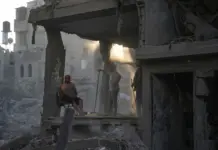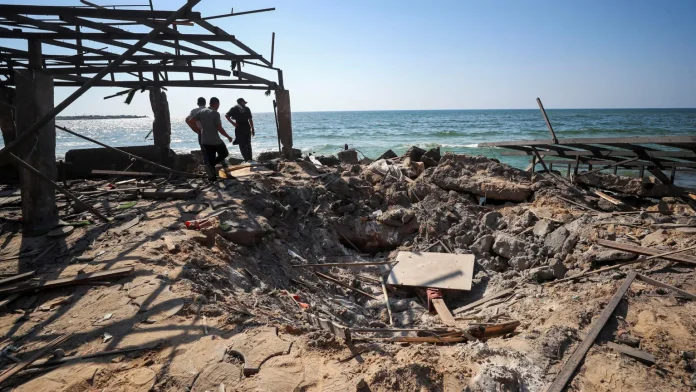
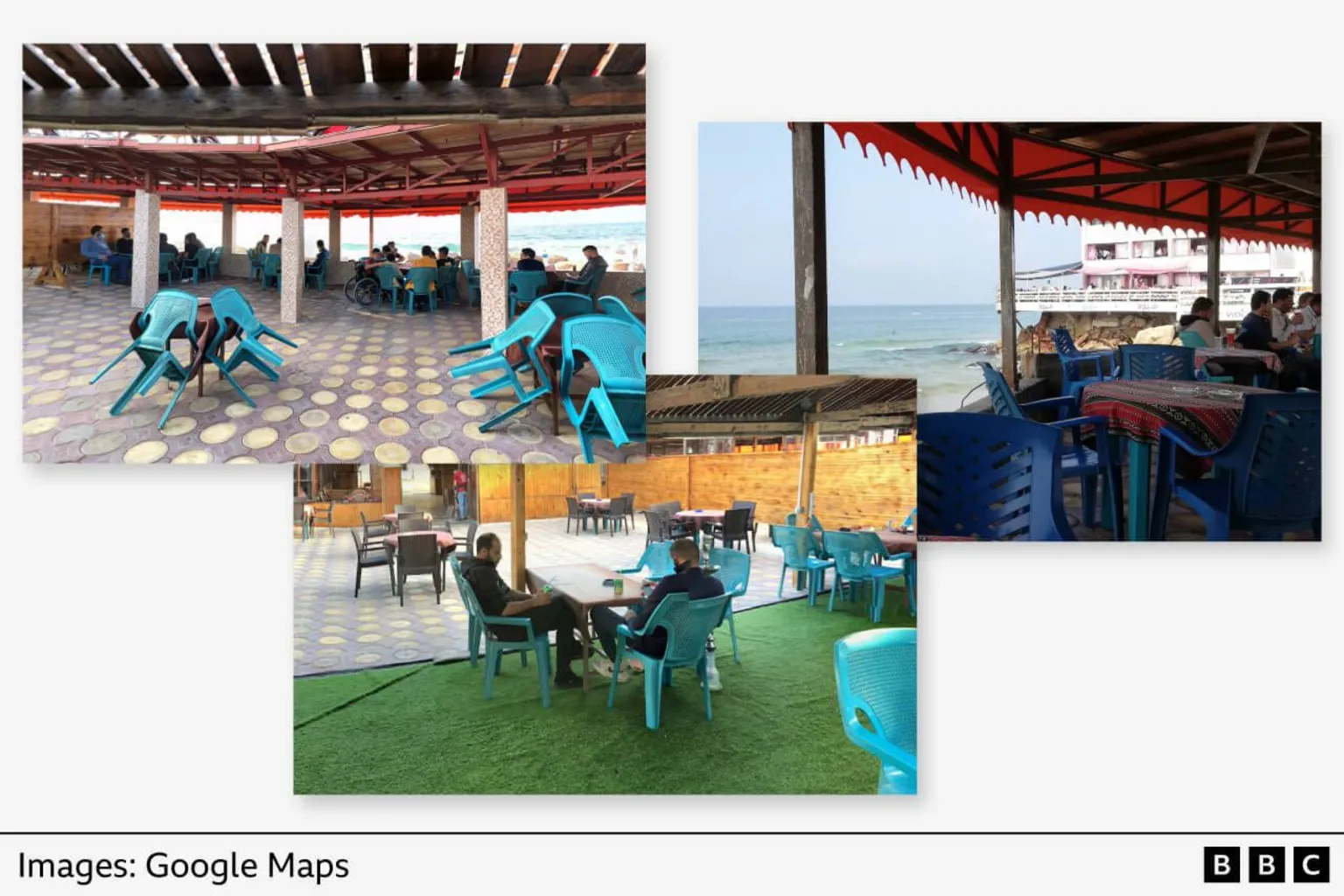
Just before a devastating explosion, a seaside cafe in Gaza City was abuzz with life as artists, students, and athletes gathered. Visitors at al-Baqa Cafeteria were engrossed in their phones, enjoying beverages, and connecting with friends. In one corner, a family sang “Happy Birthday” to a child, while a Hamas member, dressed as a civilian, took a seat overlooking the sea. Suddenly, an Israeli airstrike hit without warning, ripping through the building.
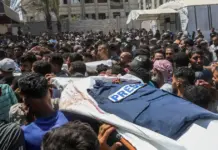
The blast sent people on the streets rushing to al-Baqa, desperately searching for survivors. Eyewitnesses described a heartbreaking scene filled with destruction, blood, and chaos. The bombing resulted in numerous casualties, with the BBC confirming the deaths of 29 individuals through various sources, including eyewitnesses and family members. These included artists, students, activists, and cafe employees, with at least nine women among the dead, alongside several children and teenagers.
The event has intensified scrutiny over the proportionality of Israel’s military actions in Gaza, which the Israel Defense Forces (IDF) state are directed at dismantling Hamas and rescuing hostages. Families both in Gaza and elsewhere expressed their grief and disbelief at the loss of loved ones. A young Palestinian in the U.S. shared his sorrow over losing friends Muna Juda, 21, and Raghad Alaa Abu Sultan to the strike. The number of casualties reported by the BBC was consistent with figures from Hamas-run agencies and the Palestinian Red Crescent.
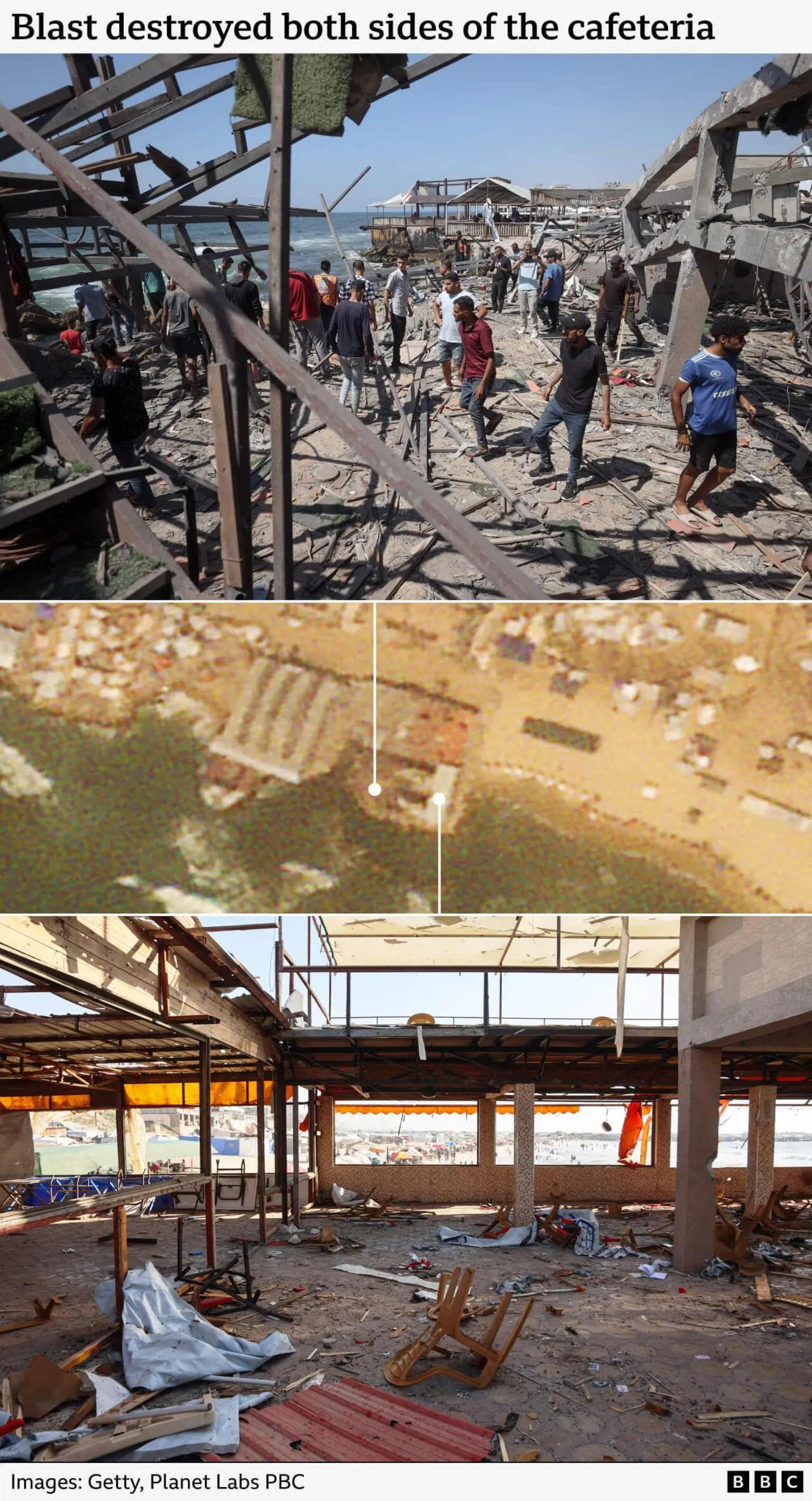
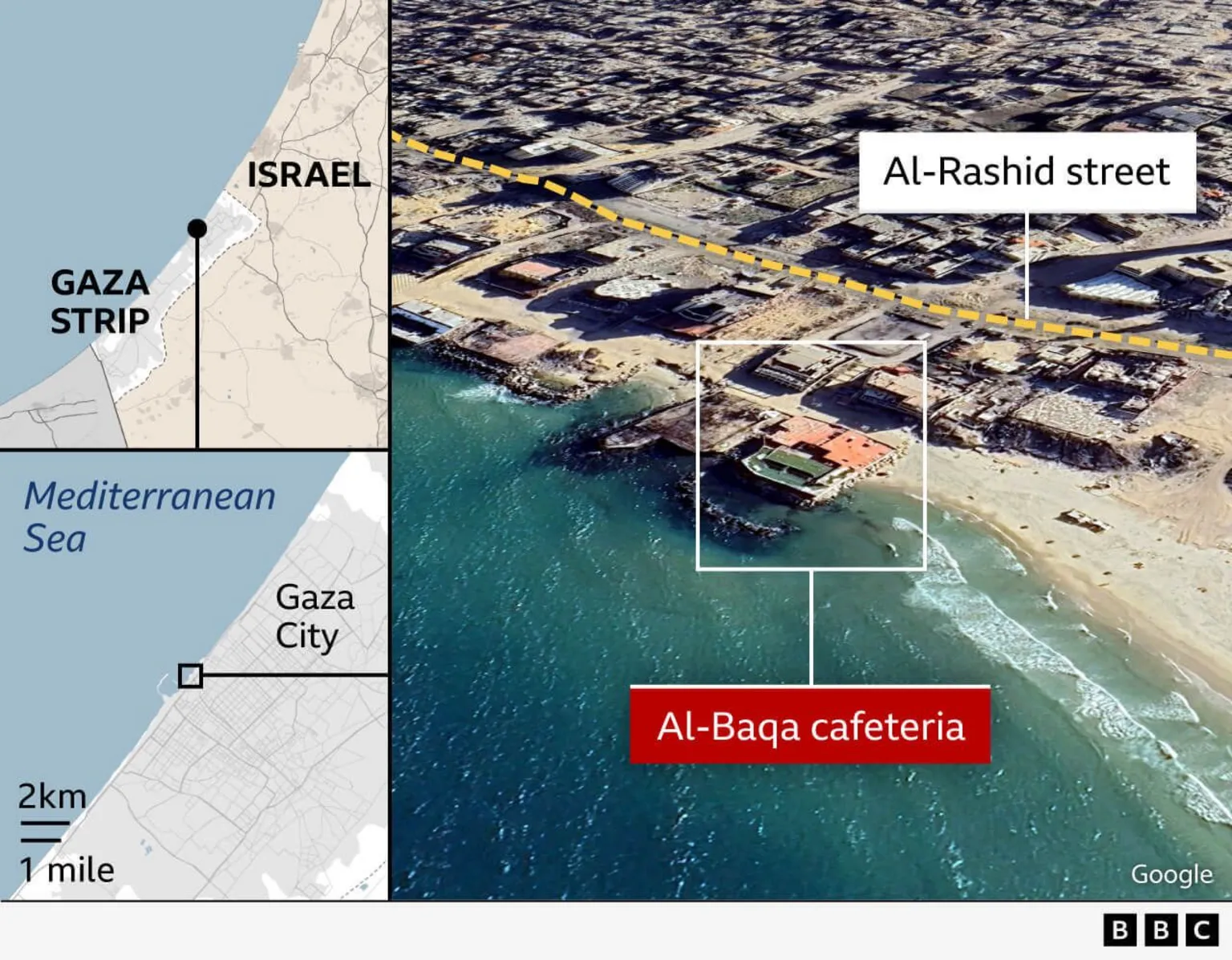
Medical staff at Shifa Hospital treated the dead and wounded, with 40 victims confirmed by Thursday, including some unidentifiable bodies, and 72 injured people suffering from severe burns and other serious injuries. The IDF claimed the airstrike was aimed at “terrorists” and that precautions were taken to minimize civilian harm. However, they did not provide details on the specific target or discuss the high civilian death toll. The al-Baqa Cafeteria, a well-loved spot in Gaza City with views of the sea and separate areas for men and families, was a popular meeting place due to its strong internet connection.
Despite the ongoing conflict, it had remained mostly intact until now. Witnesses described the impact of the explosion, believing it was caused by a large bomb. The IDF refused to specify the type of munition used. While some think the strike targeted multiple Hamas operatives, others suggested only one, mid-ranking operative named Hisham Ayman Mansour, a field commander in Hamas, was the focus.
Although Hisham was killed, there is uncertainty about his activities on that day, with speculation ranging from a financial transaction to simply seeking a reprieve from the ongoing conflict. The attack has drawn attention to the civilian toll of Gaza’s conflict, with personal stories emerging about other victims. Among them, young female boxer Malak Musleh was remembered by her coach for her determination and love for the sport, while artist Amina Omar Al-Salmi, known as Frans, was mourned by her family for her vibrant spirit and creativity. The IDF has issued a statement that they are reviewing the incident but have not addressed concerns about the targeting of civilians.
Meanwhile, the attack has left a scar on a community already strained by conflict, and the loss at al-Baqa continues to resonate deeply with those who remain.