BEIRUT — Israeli military strikes killed at least four people in southern Lebanon’s Nabatieh district on Saturday, continuing a pattern of operations that has persisted despite a ceasefire agreement with Hezbollah — and defying a three-week extension of that truce announced just days earlier by US President Donald Trump.
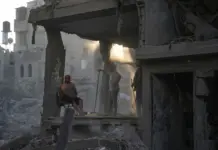
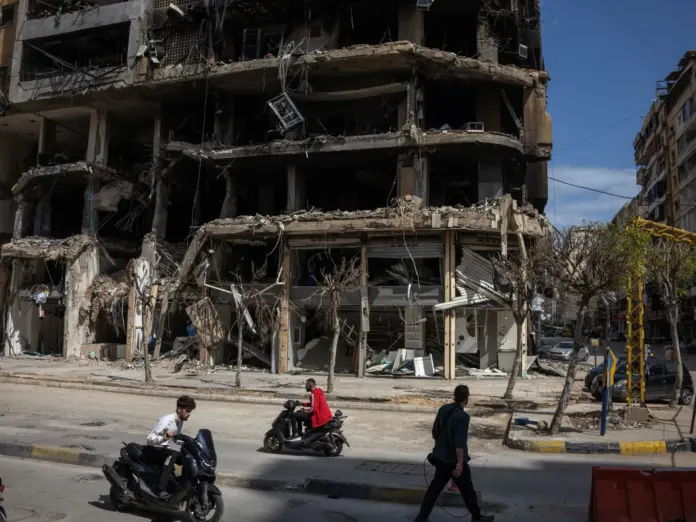
Two separate Israeli raids struck a truck and a motorcycle in the town of Yohmor al-Shaqif, with the deaths confirmed by Lebanon’s Ministry of Public Health emergency operations centre. Explosions reverberated across wide stretches of the south throughout the day, with Israeli forces also blowing up buildings in the city of Bint Jbeil on Saturday morning and carrying out bombings in Khiam, including strikes on residential blocks.
The strikes came within days of Trump announcing the ceasefire extension on Thursday. The Israeli military claimed it had eliminated six Hezbollah fighters in an exchange of fire near Bint Jbeil within hours of that announcement — a claim that underscored the fragility of the truce even as it was being prolonged.
The operations extended north of the Litani River, a boundary that Israel has unilaterally declared as the limit of its own stated operational zone. That contradiction has drawn increasing scrutiny, with Israeli forces conducting raids in areas beyond the line they themselves have defined.
Hezbollah lawmaker Ali Fayyad said the ceasefire had been rendered meaningless by Israel’s continued hostile acts, and stated that the group retains the right to retaliate. Prime Minister Benjamin Netanyahu, however, framed the ongoing operations as a defensive necessity, asserting that Israel was maintaining full freedom of action against any threat and accusing Hezbollah of attempting to sabotage the ceasefire pause.
A poll conducted by the Israel Democracy Institute added a domestic dimension to the crisis, showing that Jewish Israeli respondents overwhelmingly supported continuing military operations — even if doing so generated friction with the United States, Israel’s principal ally and the broker of the ceasefire arrangement.
Lebanese leadership has firmly rejected any suggestion that the country could be used as a bargaining chip in broader US-Israel negotiations with Iran, a position that reflects growing anxiety in Beirut about being drawn into a wider regional confrontation over which it has little control.
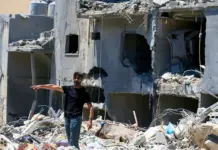
On the ground, the human cost of months of conflict remains starkly visible. Huda Kamal Mansour, a displaced resident from the village of Aitaroun, has been living in an empty stadium in Beirut for 45 days with her nine-year-old son. She described returning to find nothing left. "Israel did not leave one house standing in my village," she said, her account representative of tens of thousands of Lebanese civilians still unable to return to their homes in the south.
The situation presents a significant diplomatic challenge for the Trump administration, which positioned the ceasefire extension as a stabilising measure. With Israeli forces continuing to operate across southern Lebanon and Hezbollah signalling it reserves the right to respond, the gap between the diplomatic framework and the reality on the ground is widening. Whether the extension holds — or collapses under the weight of continued strikes — may depend on whether either side chooses restraint over retaliation in the days ahead.