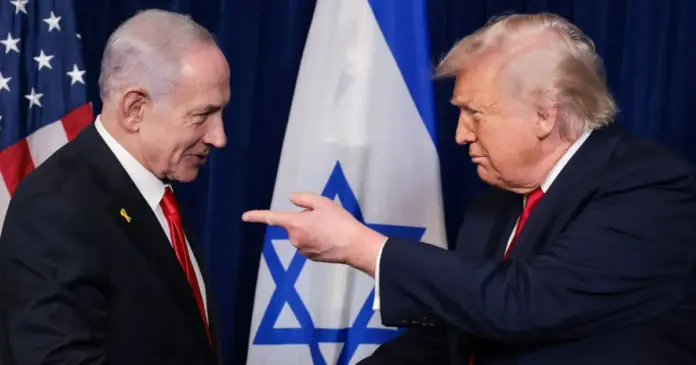
American envoys Steve Witkoff and Jared Kushner travelled to Pakistan for direct negotiations with Iran, sealing a diplomatic process that produced twin ceasefires in both Iran and Lebanon — deals brokered entirely without Israel‘s involvement. President Donald Trump subsequently announced a three-week extension to the Lebanon ceasefire, cementing an arrangement that has left the Israeli government politically exposed at home.
The exclusion of Jerusalem from the talks marks a striking departure from the traditional architecture of US-Israel coordination in the region. Israeli analysts are blunt about what it signals. The United States, they argue, now exercises greater influence over events in Lebanon and Iran than its Israeli partners — a reversal that has rattled both the government and the public.
For Prime Minister Benjamin Netanyahu, the ceasefires represent a painful gap between promise and outcome. He had repeatedly characterised Iran and Hezbollah as existential threats, vowed to deliver the ‘disarmament’ of Hezbollah, and pledged to the Israeli public an ‘end to the threat from the Ayatollah regime.’ When war with Iran was eventually launched at the end of February, those promises carried enormous political weight. The ceasefires have now arrived before either objective was achieved.
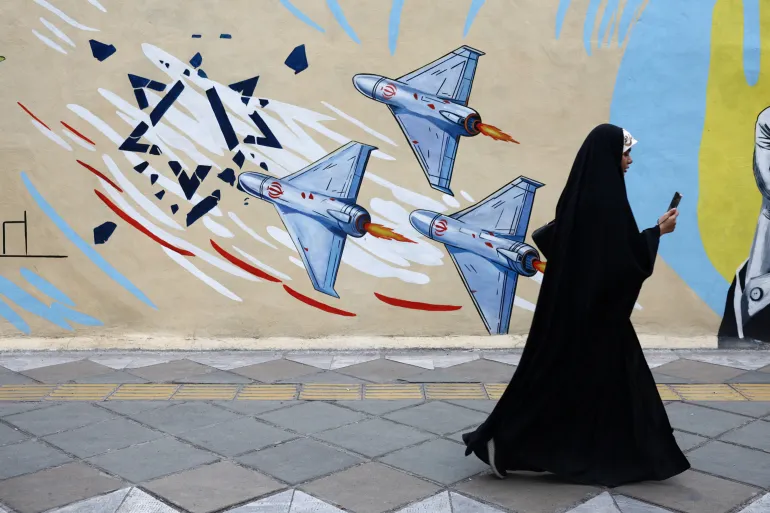
Both Hezbollah and the Iranian government remain standing. Damaged, yes — but standing. Alon Pinkas, a former Israeli ambassador and consul general in New York, put the situation starkly: the Iranian regime has not fallen, uranium stockpiles remain inside Iran, and the Islamic Revolutionary Guard Corps is arguably in a stronger position than it was before the conflict began. Israel, meanwhile, has repeatedly violated the Lebanon ceasefire — a pattern that has done little to strengthen its diplomatic hand.
‘The ceasefire is being imposed on Israel,’ said Gadi Eisenkot, the former Israeli chief of staff and chair of the centrist Yashar party, voicing what many in the security establishment feel but few say so directly. Opposition leader Yair Lapid sharpened the critique further, accusing the government of a fundamental failure to convert military achievements into diplomatic gains — the essential currency of any successful military campaign.
Public opinion reflects the frustration. A poll conducted by the Israel Democracy Institute found overwhelming support among Jewish Israeli respondents for continuing the conflict with Lebanon, even if doing so generated friction with Washington. Separately, a Hebrew University of Jerusalem survey found that two-thirds of Israelis opposed the ceasefire with Iran. Confidence in the government’s ability to shape events — rather than simply react to them — is low, according to analysts tracking Israeli public sentiment.
Daniel Levy, a former Israeli government adviser and prominent critic of current policy, and political consultant and pollster Dahlia Scheindlin are among the voices examining what the ceasefires mean for Israel’s long-term strategic posture. The central question is whether Netanyahu’s government can reframe the outcome as a tactical pause rather than a strategic defeat — a difficult argument to make when the adversaries it promised to neutralise are still operational.
The broader regional picture is one of recalibration. Trump’s decision to pursue direct engagement with Tehran — bypassing Israel in the process — suggests Washington is prioritising de-escalation over solidarity with its ally’s maximalist war aims. Whether that represents a durable shift in American policy or a transactional manoeuvre tied to the ceasefire’s three-week timeline remains to be seen.
What is clear is that the architecture of the Middle East’s latest conflict chapter is being written in Islamabad and Washington, not Jerusalem. For a prime minister who built his political identity around the Iranian threat, that is a deeply uncomfortable place to be.