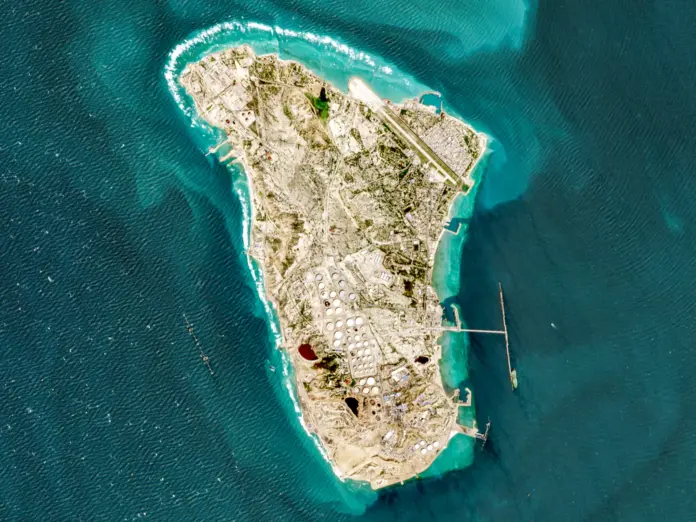
Iran’s parliament speaker Mohammad Bagher Ghalibaf issued a stark military warning on Wednesday, declaring that intelligence assessments indicate Tehran’s enemies are planning to seize an Iranian island — and that any such move would trigger relentless strikes on the vital infrastructure of a regional country believed to be facilitating the operation.
Ghalibaf said Iranian forces are actively monitoring enemy movements and would respond with continuous, targeted attacks if hostile action is taken. While he did not name the country he was threatening, analysts widely interpreted the warning as directed at the United Arab Emirates. The island in question is understood to be Kharg Island, a small but strategically significant landmass situated close to the Iranian mainland in the Persian Gulf.
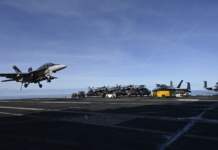
The warning comes as the Pentagon accelerates a significant military buildup in the region. Approximately 2,000 soldiers from the US Army’s 82nd Airborne Division have been ordered to deploy to the Gulf, while two contingents of US Marines are also en route. The first of two Marine Expeditionary Units, travelling aboard an amphibious assault ship, could arrive within days. The scale and composition of the deployment — combining airborne infantry with amphibious assault capabilities — signals a force posture designed for rapid, flexible intervention.
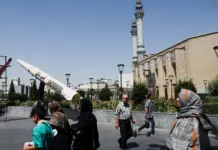
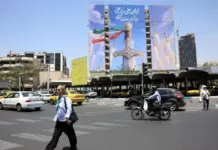
Iranians are acutely aware of the growing American military presence. The buildup of US ground troops and warships in the region has not gone unnoticed by the Iranian public, adding to an already tense domestic atmosphere.
Amid the military manoeuvring, the diplomatic picture remains deeply confused. US President Donald Trump claimed Washington is engaged in negotiations with Iran to end the conflict. Tehran swiftly rejected that characterisation, with Iranian officials denying that any direct talks are taking place. White House Press Secretary Karoline Leavitt struck an uncompromising tone on Wednesday, stating that Iran must accept defeat — and warning that failure to do so would result in being "hit harder than ever before."
Behind the public posturing, however, regional mediators are quietly working to relay messages between the two sides. The US has reportedly put forward a 15-point plan to end the fighting, while an Iranian official indicated Tehran has presented five conditions of its own for a cessation of hostilities. The parallel frameworks suggest both parties are at least engaging indirectly, even as they publicly dispute whether any engagement is occurring at all.
Iran is also signalling its capacity to widen the conflict well beyond the Gulf. Tasnim, Iran’s semi-official news agency, cited an unnamed military source warning that Tehran could open a new front at the mouth of the Red Sea if military action is taken against Iranian islands. The source specifically referenced the Bab al-Mandeb Strait — the narrow chokepoint between Yemen and Djibouti through which a significant share of global maritime trade passes — as a potential theatre of operations.
Critically, the same source indicated that Houthi rebels in Yemen, who are backed by Iran, stand ready to play an active role in controlling the strait if called upon. The Houthis have previously demonstrated their ability to disrupt Red Sea shipping through drone and missile attacks, and their potential mobilisation in a broader confrontation would carry severe implications for global commerce and regional stability.
The convergence of threats — a possible island seizure, a US military buildup, warnings of infrastructure strikes against Gulf states, and the spectre of Red Sea disruption — marks a dangerous escalation in an already volatile standoff. Whether the back-channel diplomatic efforts underway can produce a framework acceptable to both Washington and Tehran before military miscalculation occurs remains the central and urgent question facing the region.