ISLAMABAD/TEHRAN — A fragile diplomatic framework aimed at resolving the standoff over Iran’s nuclear programme has fractured sharply, with President Donald Trump cancelling a high-profile envoy mission to Pakistan and declaring that Tehran had failed to present an acceptable offer for a peace deal.
Trump’s special envoy Steve Witkoff and senior adviser Jared Kushner had been scheduled to travel to Islamabad for indirect negotiations, with Iran’s foreign minister Abbas Araghchi already on the ground presenting a diplomatic framework to potential mediators. Trump pulled the plug on the trip, saying the Iranian proposal was insufficient and that the journey would take too long. ‘We have all the cards, they have none,’ Trump declared, while also claiming — without providing evidence — that Iranian leadership were ‘fighting like cats and dogs’ among themselves.
Araghchi had arrived in Islamabad on Saturday and met with senior Pakistani officials before departing for Oman and then onward to Russia, with Iranian media reporting he is expected to return to Islamabad in a subsequent round of talks. He also held a telephone conversation with Turkey’s Foreign Minister Hakan Fidan regarding the Iran-US negotiation process, while Fidan separately spoke with Pakistan’s Foreign Minister Ishaq Dar. Araghchi additionally discussed diplomacy and ceasefire matters with Egyptian Foreign Minister Badr Abdelatty, underscoring the breadth of the regional consultations underway.
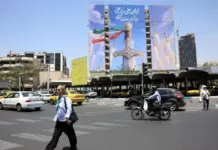
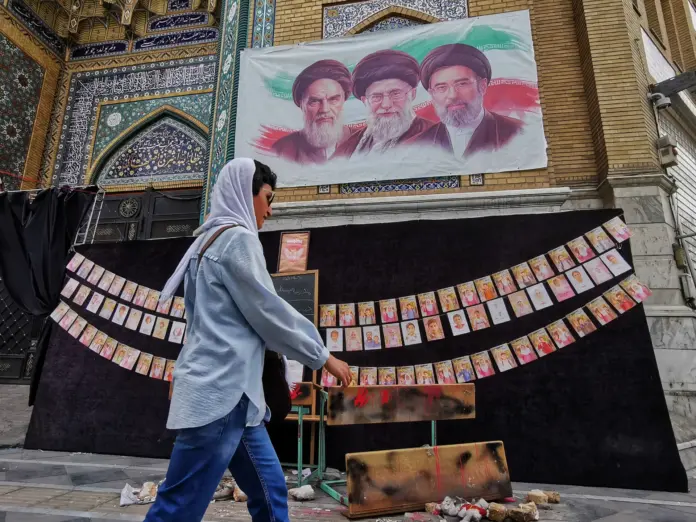
![Iranians walk past a large billboard of Iranian Supreme Leader Ayatollah Mojtaba Khamenei on a street in Tehran, Iran, April 20, 2026 [Abedin Taherkenareh/EPA]](https://world-tension.s3.us-east-2.amazonaws.com/articles/604/d79714df51964a02a72ee9b14905f35f.webp)
Iran’s President Masoud Pezeshkian reinforced Tehran’s position in direct terms during a conversation with Pakistan’s Prime Minister Shehbaz Sharif, stating that Iran will not enter negotiations under pressure, threats, or siege. Pezeshkian identified rebuilding trust as the central obstacle to any meaningful engagement, while Iranian officials pointed to a US naval blockade of the Strait of Hormuz as a concrete impediment to talks. Tehran has consistently denied that direct negotiations with Washington were ever planned, insisting any engagement would occur exclusively through mediators.
The hardline faction within Iran’s political establishment is pushing back forcefully against any compromise. Senior cleric and parliament member Mahmoud Nabavian called including the nuclear issue in negotiations a strategic mistake, while Mohammad Saeedi, the Friday prayer imam of Qom, said negotiating with the United States was meaningless. IRGC-affiliated news agencies Tasnim and Fars both argued against permitting any nuclear talks with Washington. A representative in the hardline-dominated parliament, Ali Khezrian, told state media that Supreme Leader Khamenei opposed any extension of negotiations conducted under threats from the US and Israel.
In a striking display of coordinated messaging, Iranian military, security, judiciary and government authorities released near-identical statements proclaiming national unity — a move widely interpreted as a rebuttal to Trump’s claims of internal discord. Iranian authorities also announced that more than 30 million people had registered in a state-run campaign expressing readiness to sacrifice their lives for the country, though no independent documentation was provided to verify the figure.
![Iranian Foreign Minister Abbas Araghchi meets Pakistan Army Chief Field Marshal Asim Munir, in a location given as Islamabad, Pakistan, released April 25, 2026 [Seyed Abbas Araghchi via Telegram/Handout via Reuters]](https://world-tension.s3.us-east-2.amazonaws.com/articles/604/e4005d1a6d2f4c048377ee2b3d33d760.webp)
The Islamic Revolutionary Guard Corps escalated its rhetoric further, with the Khatam al-Anbiya Central Headquarters warning that armed forces would retaliate against the United States if the naval blockade in Iran’s southern waters continued. The IRGC also brought a state television presenter aboard two vessels seized earlier in the Strait of Hormuz, in what appeared to be a deliberate show of force for domestic audiences.
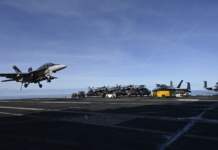
The military dimension of the crisis is intensifying on multiple fronts. US Central Command confirmed that a Navy helicopter is escorting the M/V Sevan — an intercepted vessel affiliated with Iran’s so-called shadow fleet — back to Iran. Three US aircraft carriers and their supporting battle groups are currently deployed in the Middle East, a concentration of naval power not seen since the buildup to the 2003 invasion of Iraq. Israel’s Defence Minister Israel Katz stated that Israeli armed forces are awaiting a greenlight from Washington to strike Iran’s central energy and electricity infrastructure.
Israel itself remains deeply enmeshed in the region’s overlapping conflicts. Prime Minister Benjamin Netanyahu ordered what he described as ‘forceful’ strikes against Hezbollah, accusing the group of sabotaging peace efforts, as Israeli forces carried out attacks in southern Lebanon. In Gaza, the Israeli military claimed to have killed three Hamas fighters, including a commander it identified as having participated in the October 7, 2023 attacks. The cumulative death toll among Palestinians in Gaza has reached at least 72,585 since October 2023, with at least 809 killed since a ceasefire agreement was reached last year.
![Police officers stand guard behind a barricade near Serena Hotel, as Pakistan prepares to host the US and Iran for the second round of peace talks, in Islamabad, Pakistan, April 25, 2026 [Asim Hafeez/Reuters]](https://world-tension.s3.us-east-2.amazonaws.com/articles/604/e3992b98dd4f402ab4bc2ebfe11a4958.webp)
Iran’s domestic situation reflects the strain of sustained conflict and isolation. Previous infrastructure strikes have damaged oil and gas facilities, steel producers, petrochemical firms, aluminium factories, airports, naval ports, bridges and railway networks. President Pezeshkian on Saturday called on citizens to reduce power and energy consumption, while the head of the national electricity authority announced rewards for citizens reporting illegal electricity use. Tehran’s Imam Khomeini Airport reopened for limited international flights, including services to Saudi Arabia for the Hajj pilgrimage. Iran has also endured a near-total state-imposed internet shutdown lasting close to two months.
In a separate but related diplomatic development, UAE President Sheikh Mohamed bin Zayed Al Nahyan met with India’s national security adviser Ajit Doval in Abu Dhabi, where the two sides discussed the evolving situation in the Middle East and its broader implications for regional and international security — a signal that the crisis is drawing in an ever-wider circle of stakeholders.