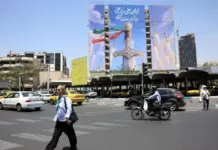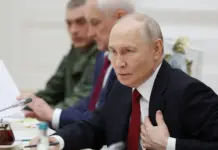
Iranian Foreign Minister Abbas Araghchi departed for Moscow on Monday to meet with President Vladimir Putin, seeking to consolidate diplomatic support as Iran faces a US-enforced naval blockade, a volatile ceasefire in Lebanon, and mounting pressure to negotiate an end to a conflict that has sent global oil prices to multi-year highs.
The visit came after Araghchi made a series of stops across the region, briefing Pakistani leadership in Islamabad, meeting the Sultan of Oman and his Omani counterpart in Muscat, and holding communications with officials in Qatar, Saudi Arabia, Egypt, and France. Talks in Muscat centred specifically on ensuring safe transit through the Strait of Hormuz, a chokepoint whose disruption has reverberated across global energy markets.
Senior Iranian lawmaker Ali Nikzad made clear that Tehran has no intention of restoring pre-war conditions in the strait. The blockade affects the flow of crude oil, liquefied natural gas, and liquefied petroleum gas from Iran, the UAE, Qatar, Saudi Arabia, and Israel, and has drawn responses from Romania, Switzerland, Italy, France, the United Kingdom, Ireland, and Greece.
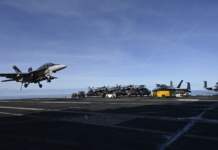
US Central Command has directed 38 ships to turn around or return to port as part of the blockade enforcement. Brent crude rose more than 2 percent on Sunday, standing at $107.35 per barrel as of 00:30 GMT — a 47 percent increase compared with prices before the conflict began. Asian equity markets showed mixed resilience, with Japan’s Nikkei 225 gaining approximately 0.4 percent and South Korea’s KOSPI rising about 1.5 percent in morning trading.
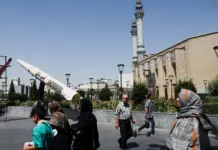
Russian lawmaker Alexey Pushkov offered a pointed assessment of the military balance, stating that the United States was "clearly unprepared" for a war against Iran. Pushkov noted that Iran has relocated virtually all of its missile facilities underground and has assembled a missile and drone arsenal numbering in the tens of thousands — a stockpile that significantly complicates any potential military campaign.
President Donald Trump struck a more ambiguous tone, stating publicly that Iranian leaders could call the United States if they wished to open direct talks. Trump simultaneously cancelled a planned visit by US envoys to Pakistan, which has been serving as a back-channel mediator between Washington and Tehran in pursuit of a permanent end to hostilities.
Gulf states have signalled they want a seat at any negotiating table, citing their deliberate exclusion from the 2015 Joint Comprehensive Plan of Action — the nuclear deal that collapsed after the United States withdrew from it — as a precedent they are unwilling to repeat.
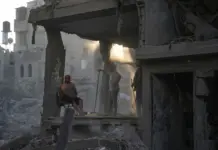
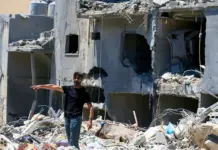
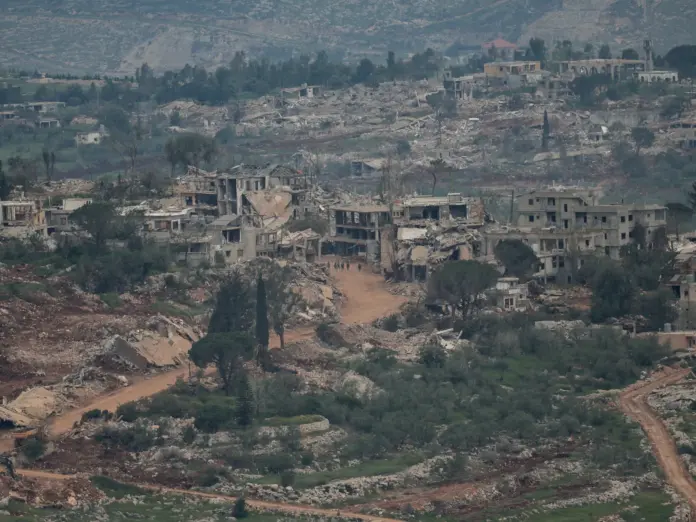
In Lebanon, the situation remained deeply unstable despite a ceasefire that took effect ten days ago and was extended for a further three weeks. Israeli forces continued to bombard southern Lebanon on Sunday, killing at least 14 people, among them two children. Thousands of residents have been forced to flee their homes. Hezbollah claimed multiple retaliatory attacks against Israeli troops, citing what it described as systematic Israeli violations of the ceasefire terms.
The overlapping crises — a naval blockade disrupting a critical global energy corridor, a fragile ceasefire in Lebanon threatening to collapse, and a diplomatic scramble involving Russia, Oman, Pakistan, and multiple Gulf states — underscore the breadth of the conflict’s reach. Araghchi’s shuttle diplomacy reflects Tehran’s effort to build a coalition of mediators and guarantors before any formal negotiations with Washington begin, while ensuring that Russia remains aligned with Iran’s strategic position.
Whether direct US-Iran contact materialises remains uncertain. Trump’s public invitation for a phone call stands in contrast to the cancellation of the Pakistan envoy visit, leaving the precise shape of any diplomatic off-ramp unclear as oil markets, regional governments, and military planners watch closely.