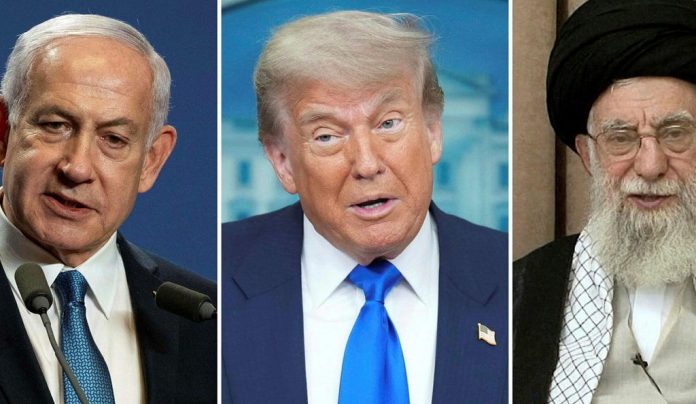
United States President Donald Trump has asserted that Iran has neither consented to inspections of its nuclear infrastructure nor halted uranium enrichment. Speaking to journalists aboard Air Force One on Friday, Trump expressed his belief that Iran’s nuclear ambitions had been “permanently curbed,” but acknowledged the possibility of the program restarting elsewhere. During his upcoming meeting with Israeli Prime Minister Benjamin Netanyahu at the White House on Monday, Trump plans to discuss Iran, amid expectations that a potential Gaza ceasefire will be a primary topic. As he traveled to New Jersey following an Independence Day event, Trump stated, “I think they’d need to recommence at a new site.
And if they do, it becomes a concern.” He emphasized his determination to prevent Iran from advancing its nuclear activities, adding that Iranian authorities have shown interest in engaging in discussions with him. The International Atomic Energy Agency (IAEA) announced that its inspectors were withdrawn from Iran amidst ongoing tensions regarding access to nuclear sites struck by the US and Israel. The US and Israel accuse Iran of enriching uranium with the intent to develop nuclear arms, a charge Iran denies, maintaining that its nuclear program is purely for civilian purposes. Both US intelligence and the UN nuclear watchdog, led by Rafael Grossi, have found no evidence of Iran focusing on nuclear weapon development.
Recently, Israel initiated military assaults on Iran’s nuclear installations during a 12-day conflict three weeks ago, with US forces conducting substantial retaliatory strikes on June 22. Due to the conflict, IAEA inspectors have been barred from accessing Iranian facilities, despite Grossi emphasizing the urgency of resuming monitoring and verification operations. Following the attacks, Iran, which reaffirmed its commitment to the Treaty on the Non-Proliferation of Nuclear Weapons (NPT), vocally rebuked the IAEA for not condemning the military actions by the US and Israel, and for a resolution passed on June 12 accusing Iran of non-compliance just before Israel’s assaults. Iranian President Masoud Pezeshkian has since commanded the cessation of ties with the IAEA, with the Iranian parliament and Guardian Council supporting legislation to halt collaboration.
Guardian Council representative Hadi Tahan Nazif highlighted that the decision honors “national sovereignty and territorial integrity.” The legislation specifies that suspension will continue until conditions such as security guarantees for nuclear sites and personnel are met, as reported by Iranian state media. Although the IAEA indicated no formal notice of suspension has been received, it’s uncertain when inspectors might return. On Monday, Foreign Minister Abbas Araghchi rejected Grossi’s proposal to assess the bombed sites. “Grossi’s push to visit under coverage of safeguards lacks meaning and may harbor ill intentions,” Araghchi commented. U.S. officials claim military actions either ruined or significantly impaired Iran’s main uranium enrichment sites, but details remain sparse concerning Iran’s stockpile of nine tonnes of enriched uranium, especially the over 400kg refined to 60 percent purity—below weapons-grade at 90 percent or higher.