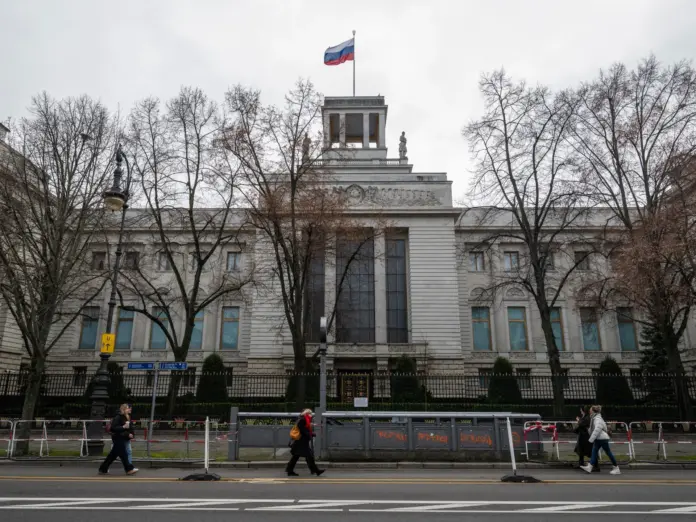
Berlin — Germany summoned the Russian ambassador on Monday in a sharp diplomatic rebuke after Moscow issued what officials described as thinly veiled threats against companies supplying weapons to Ukraine, including at least three German firms identified as drone manufacturers.
The Federal Foreign Office made clear that the threats were designed to erode German support for Ukraine and would not succeed. A ministry spokesman declared that threats and espionage on German soil are "completely unacceptable" and that Berlin would not be intimidated. The Russian embassy offered no comment on the summoning.
The confrontation was triggered by a list published Wednesday by Russia’s Ministry of Defence naming 21 companies it claims are subsidiaries of Ukrainian defence firms or key component suppliers. Among them, at least three German companies were identified as providing unmanned aerial vehicles — drones — to Ukrainian forces. The ministry stopped short of an explicit threat but made a pointed suggestion that the locations of companies producing UAVs "could be targeted," a formulation Berlin interpreted as a direct intimidation campaign.
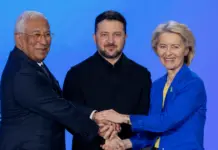
The timing is charged. Ukraine and Germany recently concluded a strategic defence partnership that deepens bilateral military cooperation across several fronts. The agreement includes joint drone production ventures, a commitment by Berlin to sustain support for Ukraine’s drone industry, and enhanced collaboration on air defence systems. Moscow’s publication of the company list appears calibrated to pressure German industry and government alike at the moment that partnership takes effect.
Compounding the diplomatic friction, Russia’s Federal Security Service announced Monday the arrest of a German woman in Pyatigorsk, a city in the Caucasus region. Authorities accused her of involvement in an alleged Ukrainian-backed plot to destroy a services facility, claiming she was found carrying an explosive device in her backpack. The German foreign ministry acknowledged awareness of the arrest but declined to comment further, citing privacy concerns — a cautious posture that reflects the sensitivity of the case amid already strained relations.
The dual developments — the threat list and the arrest — represent a significant intensification of Russia’s pressure campaign against European nations supporting Kyiv. Germany has emerged as one of Ukraine’s most consequential backers, and the new defence partnership signals Berlin’s intention to deepen that role rather than scale it back. By naming German firms publicly and hinting at their vulnerability, Moscow appears to be testing whether economic anxiety or security concerns within Germany’s industrial sector can be leveraged to slow the flow of military hardware to the front lines.
German officials have consistently rejected such pressure. The Federal Foreign Office’s language on Monday was unambiguous: external threats will not reshape Berlin’s strategic commitments. That posture aligns with a broader European consensus that capitulating to Russian intimidation would embolden further coercion across the continent.
The episode also underscores the expanding geography of the conflict. What began as a conventional ground war in eastern Ukraine has progressively drawn in European infrastructure, intelligence services, and now, explicitly, the industrial supply chains of NATO member states. Drone warfare has become central to both sides’ strategies, making the companies that manufacture and supply UAV components increasingly visible — and, according to Moscow, legitimate objects of attention.
Russia’s willingness to publish a named list of foreign companies and imply they face physical risk marks an escalatory step in its information and coercion strategy. Whether the Pyatigorsk arrest is connected to that broader pressure campaign or represents a separate intelligence operation remains unclear. What is evident is that the space between conventional diplomacy and open conflict is narrowing, and Germany finds itself squarely in the crosshairs of Moscow’s effort to fracture Western unity behind Ukraine.