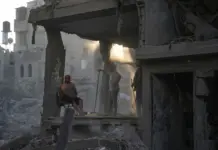
A devastating week of violence across Gaza and the West Bank has left dozens dead, hundreds displaced, and international aid flows severely curtailed, as Israeli military operations and settler activity intensify across Palestinian territories.
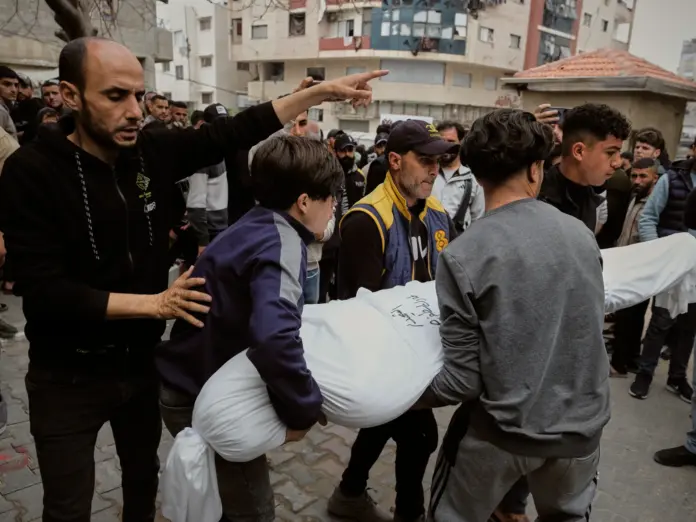
On April 14, an Israeli strike on a police vehicle along al-Nafaq Street in Gaza City claimed four lives, among them three-year-old Yahya al-Malahi. Hours later, a separate strike on the Shati refugee camp killed at least five more people. Two days later, brothers Abdelmalek and Abdel Sattar al-Attar were killed in Beit Lahiya in northern Gaza.
The bloodshed continued on April 17, when an Israeli drone killed brothers Mahmoud and Eid Abu Warda in Gaza City’s Shujayea neighbourhood. That same day, a drone strike on a water desalination facility in Shujayea killed one additional person, further crippling the territory’s already devastated civilian infrastructure.
The following day brought one of the week’s most alarming incidents: two civilian contractors delivering water on behalf of UNICEF were shot dead by Israeli troops in northern Gaza. The killing of humanitarian workers engaged in aid delivery drew immediate concern from international observers already alarmed by a sharp decline in assistance reaching the territory.
UN data shows that aid inflows to Gaza fell by 37 percent between the first and second three-month periods following the October ceasefire. Since that ceasefire, 777 Palestinians have been killed and at least 2,193 injured as of April 20. The overall death toll since October 7, 2023 now stands at 72,553, revised upward this week after 196 additional fatalities were formally certified.
In the West Bank, a parallel crisis is unfolding. On April 18, settlers launched simultaneous coordinated attacks on the villages of Khirbet Abu Falah, al-Mughayyir, and Turmus Aya, northeast of Ramallah. During the assault on al-Mughayyir, settlers stole 70 sheep from a livestock pen. Three new illegal outposts have been established near Ramallah over the past two months on privately owned Palestinian land in Area B. Neria Ben Pazi, the founder of one such outpost, is subject to international sanctions imposed by Australia, Belgium, France, and Britain.
Israeli forces also carried out lethal raids in the West Bank. On April 16, troops shot dead 17-year-old Mohammed Rayan during a raid on Beit Duqqu, northwest of Jerusalem. Two days later, Mohammed Suwaiti, 25, was killed in Khirbet Salama, southwest of Hebron.
The displacement crisis in the West Bank and East Jerusalem is accelerating. More than 2,500 Palestinians have been displaced in 2026 through demolitions, settler attacks, and evictions — among them more than 1,100 children. Settler attacks account for 75 percent of all recorded displacement this year, and March 2026 registered the highest monthly settler injury toll since documentation began in 2006.
In East Jerusalem, Israeli authorities demolished the home of 80-year-old cancer patient Abu Kamel Dweik in Silwan’s al-Bustan neighbourhood. Since January 2026, at least 86 Palestinian-owned structures have been razed in East Jerusalem, displacing more than 250 people. The extended Basha family — six households comprising 12 people — faces a court-ordered eviction from the Old City’s Muslim Quarter by April 26.
The political backdrop to the violence grew more charged when Israeli Finance Minister Bezalel Smotrich used a ceremony marking the re-establishment of the Sa-Nur settlement — dismantled by Israel in 2005 — to call for the full military occupation and settlement of Gaza. The Netanyahu government is simultaneously allocating approximately 1.2 million shekels ($400,000) to expand ultra-nationalist Jerusalem Day marches next month.
Israel’s High Court this week ordered National Security Minister Itamar Ben-Gvir to reach an agreement with the attorney general aimed at curbing his political interference in police operations, a ruling that reflects deepening institutional tensions within Israel over the conduct of senior officials.
On the diplomatic front, direct US-Hamas talks held in Cairo this week focused on implementing phase-one ceasefire commitments before any discussion of disarmament could proceed. No formal agreement was reached, leaving the path toward a broader resolution as uncertain as ever.