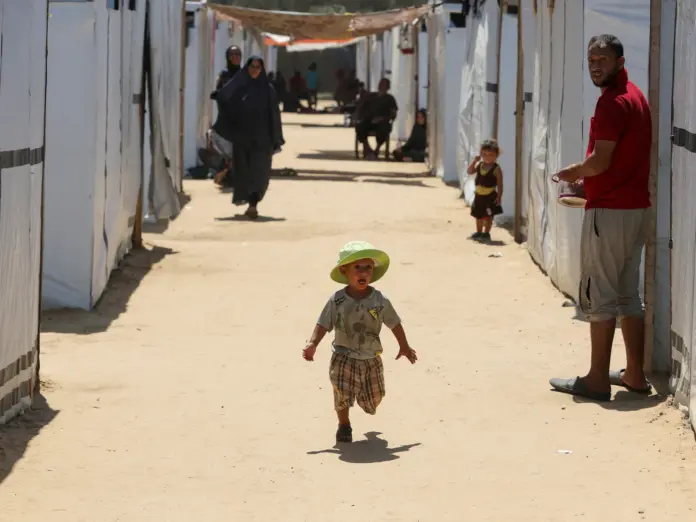
At the peak of the fighting in Gaza, surgeons were amputating the legs of up to 10 children every single day. Months later, with a ceasefire nominally in place, the children who survived those operations face a second crisis: there is almost no one left to help them walk again.
The World Health Organization estimates that between 5,000 and 6,000 people in Gaza have undergone amputations as of early October 2025, part of a broader toll of 42,000 Palestinians who have sustained life-changing injuries over the two-year conflict. The scale of the disability emergency is without modern precedent in the territory — and the medical infrastructure needed to address it has been systematically denied entry.
Only nine prosthetists are currently operating across the entire Gaza Strip. Critical components required to manufacture and fit prosthetic limbs remain in short supply, and international specialists who could train additional local teams have been barred from entering. Humanity & Inclusion UK, a humanitarian organisation specialising in disability support, has been unable to bring prosthetics or related supplies into Gaza since February 2025. All humanitarian materials entering the territory require approval from Israeli authorities, a process the organisation describes as highly unpredictable and frequently obstructive.
"The entry of humanitarian aid into Gaza remains deeply uncertain," the organisation has warned, noting that thousands of amputees are struggling with basic mobility and cannot access the rehabilitation care they need. Faced with no alternatives, many are fashioning homemade prosthetics in an attempt to resume daily life.
The situation has not improved since Israel and Hamas signed a ceasefire agreement in early October 2025. The United Nations estimates that more than 700 Palestinians have been killed and a further 2,000 injured since that agreement was reached. UN Human Rights chief Volker Türk has stated that basic movement has become a life-threatening activity for Palestinians in Gaza, with incidents of people being killed by Israeli forces while walking, driving, or simply standing outside recorded on an almost daily basis.
"Basic movement has become a life-threatening activity," Türk said, describing a pattern of lethal force applied against civilians engaged in ordinary activities.
Israel continues to restrict the flow of medical aid into the territory. Humanitarian organisations operating in Gaza say the unpredictability of the approval process makes it impossible to plan or sustain consistent care programmes. Without a reliable supply chain for prosthetic components, the nine prosthetists still working in Gaza are largely unable to meet demand — a demand that grows with every passing week as more patients complete the acute phase of their recovery and require rehabilitation.
The consequences extend well beyond physical mobility. Amputees who cannot access properly fitted prosthetics face heightened risks of secondary complications, chronic pain, and long-term disability. For children — who represent a disproportionate share of Gaza’s amputee population — the absence of appropriate care during critical developmental years carries lifelong implications.
Humanitarian groups have called on Israeli authorities to immediately lift restrictions on prosthetics and medical rehabilitation supplies, and to allow international specialists to enter Gaza to train local teams. They argue that the current restrictions constitute a compounding of the original harm: first the injuries inflicted during the conflict, then the deliberate obstruction of the care needed to treat them.
The two-year conflict has left Gaza’s health system in a state of near-total collapse. Hospitals have been damaged or destroyed, medical staff have been killed or displaced, and supply chains for even basic medicines remain fragile. Against that backdrop, the prosthetics crisis represents one of the most visible and enduring legacies of the fighting — a generation of Gazans, many of them children, navigating a shattered landscape on homemade limbs, waiting for help that has not been permitted to arrive.